Aluminum can recycling incentives are initiatives that compensate or encourage individuals to bring back utilized cans. The majority offer cash refunds, deposit return, or points for store credit. Rates generally hover between $0.05 and $0.10 per can in container deposit states, along with higher scrap yard bulk payouts by weight.
Energy consumption decreases by roughly 95% in aluminum recycling compared to producing new. To simplify your options, our guide outlines state policies, how much they pay, and savvy ways to cash in even more.
What Are Recycling Incentives?
Recycling incentives are a check or cash prize for bringing back aluminum cans and other recyclable materials. They encourage consumers and businesses to separate, return, and recondition materials, which increases recovery rates and reduces landfill-bound waste.
They deliver real economic gains: recycling aluminum saves about 95% of the energy compared to making new metal from bauxite, and one recycled can can power a TV for three hours. Centers are employment centers, with every direct job generating approximately 3.5 more in logistics, sales, and service.
- Common types include deposit refunds, reward programs, community payouts, business rebates, and tax credits.
1. Deposit Refunds
Deposit refund systems tack a tiny fee at checkout and give it back when empties return. Several laws establish deposits at 0.05 to 0.10 per container and allow for aluminum, glass, and PET, which achieves higher return rates because money is being exchanged.
These schemes reduce litter, provide mills with cleaner scrap, and accelerate the loop. An aluminum can can be shelved again in roughly 60 days, helping industry hit collection and recovery goals.
| Region | Deposit per container (currency) | Eligible containers |
|---|---|---|
| California (CRV) | 0.05 (≤710 ml), | |
| 0.10 (>710 ml) | Aluminum, glass, PET, steel | |
| Oregon | 0.10 | Aluminum, glass, PET/HDPE |
| Michigan | 0.10 | Aluminum, glass, PET |
| New York | 0.05 | Aluminum, glass, PET |
| GERMANY (PFAND) | 0.25 | ALUMIN, PET (SINGLE-USE) |
2. Reward Programs
A few retailers and haulers have loyalty programs in which sorted aluminum cans receive points, store credits, or discounts. These tie the action of returning clean cans to benefits consumers can redeem.
Partners usually implement digital wallets or QR bins to register drops and send coupons. Top platforms include local ‘pay-by-bag’ apps, smart reverse vending networks, and retailer tie-ins that track volume and quality.
Participation increases since they perceive immediate benefit, while the data assists in minimizing collection routes and enhancing purity.
3. Community Payouts
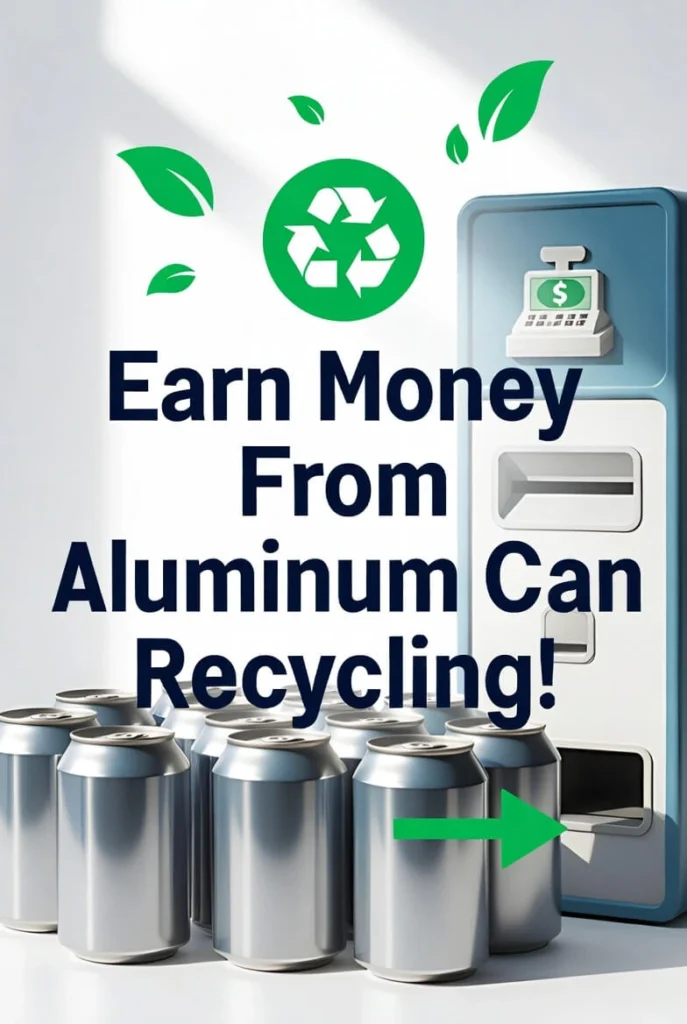
Schools, clubs, and NGOs hold drives where cans subsidize trips, equipment, or services. Community-wide group payouts reward collaboration and expand volumes rapidly.
Successful examples include citywide “can-athons,” school challenges that recycled 3.6 million beverage cans across 12 states, and charity events tied to public cleanups.
These programs develop pride, relieve landfill burden, and demonstrate how secondary aluminum, which now accounts for more than 80% of U.S. Production compared to 20 to 30% in the 1980s, fuels local economies.
4. Business Rebates
Rebates pay companies to implement or improve can collection, from indoor containers to balers. Some programs subsidize equipment and training, while others pay for dock carts or compactors.
Track weights by material, set monthly baselines, and apply for grants or utility-administered rebates. Results include reduced waste bills, tidier back-of-house processes, and steam for reusable or recycled-content packaging.
5. Tax Credits
Tax credits lower liabilities for investment in sorting infrastructure, recycling software, or recycled-content purchases. Some places provide credits for aluminum can recovery or for recycled procurement that exceeds minimums.
Consult local regulations for approved equipment, paperwork, and minimum diversion. Credits can direct investment toward high-efficiency furnaces and advanced sorting that reduce emissions and increase yield.
Need Fast & Reliable Waste Collection in Dubai?
Navyom Waste Collection Services offers same-day pickups, eco-friendly disposal, and certified recycling solutions for homes and businesses across Dubai.
Book Your Pickup NowHow Do Incentives Work?
Incentives push people and businesses to recycle by connecting a tangible reward to an easy behavior. The core flow is the same in most systems: collect cans, keep them clean, hand them in, and receive value.
Individuals and companies collect aluminum cans at home, in the office, or at events and exchange them for money, prizes, or discounts. With a deposit return program, customers pay a small deposit at checkout and then receive it back when they return the empty can to a reverse-vending machine or staffed location. Where there isn’t a deposit, buy-back centers pay by the kilogram, depending on the market, sometimes with a premium for clean, sorted cans.
Offices and venues conduct internal drives and then combine returns to support employee perks or community causes. Deposits increase recycling rates by making the reward immediate and clear, while wider financial incentives increase engagement and waste diversion.
Proper practice lifts the payout and keeps materials in the loop. This includes using labeled recycling bins, emptying cans, and not mixing with food waste or other materials. Light rinsing is always a help, and crushing the cans can certainly save room if your local regulations permit it.
Low contamination equals higher quality bales, fewer rejections at the depot, and quicker payments! Clear icons direct behavior as well. Studies show that viewing a symbol such as the Metal Recycles Forever icon prompts individuals to immediately recycle their packaging.
Incentives distribute to users through many different channels. Recycling centers provide cash or e-transfers at drop-off. Retailers reimburse deposits through machines or service counters, occasionally offering store credits or loyalty points.
The digital platform allows users to schedule pickups, monitor weights and convert rewards into payouts to e-wallets or bank accounts, which fits multi-family residences or micro-enterprises without vehicles. Community programs couple cash incentives with public recognition, which can be equally motivating for schools, clubs, and workplaces.
These extrinsic cues, along with public progress charts, frequently increase worker enthusiasm and involvement. Access and clarity fuel scale. Set return points near where people live and work, post straightforward rules in clear language, and stay open long enough to accommodate actual schedules.
Policy can lock in consistency. Deposit return systems and extended producer responsibility rules set common standards, stabilize flows, and raise recovery. The payoff is wide. Higher recycling rates, 95% less energy use versus new aluminum, lower greenhouse gas emissions, and stronger local economies.
Experts calculate that increased beer can recovery by itself might generate 100,000 new jobs and as much as $1.6 billion in new economic activity globally. Well-designed incentives transform tiny habits into consistent results.
The Economic Case
The economic argument for aluminum recycling highlights how aluminum can rewards transform garbage into a valuable commodity. Reliable buy-back rates ensure a steady stream of used cans that numerous recycling centers depend on to thrive. This market signal enables processors to invest in sorting lines and furnaces, facilitating the recycling process for manufacturers that require recycled materials.
Community Value
Local groups generate actual dollars when aluminum cans carry cash value. School clubs, youth sports, and neighborhood associations can run drives, redeem cans by weight, and reinvest proceeds in supplies, field upkeep, or scholarships. Measuring kilos gathered and euros or dollars in earned income renders impact explicit and replicable, especially when utilizing recycling rebates to incentivize participation.
Municipal programs that ramp up can recovery increase capacity to the broader recycling industry. Stuffed drop-off cages at transit hubs, reverse vending machines in libraries, and curbside bin upgrades put recycling within easy reach. This work functions as public education, allowing residents to see how these easy steps keep value in town while reducing household waste and promoting environmental sustainability.
Greater recycling rates could reduce disposal costs and emissions. By diverting cans, we not only avoid a portion of the 1.3 million tons of landfill waste reduced every year but also support climate targets through the recycling process, ultimately reducing up to 12.1 million metric tons of CO2 annually. That’s a message that plays well in classrooms and city halls.
Business Savings
Landfill tipping fees accumulate quickly. A mid-size office throwing 500 kg of cans into the garbage every month can save €60 to €150 in disposal fees, depending on rates, by separating cans. Redemption revenue then subsidizes labor and hauling.
Scrap has value. Companies can schedule pickups with recyclers, receive payments per kilogram, and secure volumes to negotiate for better pricing. Multi-site contracts increase efficiency and decrease contamination.
These activities satisfy reporting requirements. Transparent can-recovery information powers sustainability initiatives, amplifies brand credibility, and energizes supplier scorecards. For makers, recycled content trims energy because secondary aluminum requires roughly 5% of the energy of primary metal, reducing expenses and insulating against energy shocks. That enhances supply chain resiliency when ore or power prices fluctuate.
Circular Economy
Circular economy, done right. Aluminum cans travel from shelf to bin to smelter and back to shelf again, with less loss and fewer inputs.
Incentives round out this loop. Deposit-return schemes, pay-by-weight contracts, and procurement standards for recycled content nudge each step: collection, sorting, remelting, and remanufacture, so the cycle keeps moving.
| Partnership model | Who’s involved | Closed-loop outcome |
|---|---|---|
| Beverage deposit network | Brands + retailers + recyclers | Cans returned become new cans |
| Stadium take-back | Venues + haulers + smelters | Event cans remade into packaging |
| City procurement pact | Municipalities + MRFs + mills | Public buys cans with set recycled content |
Economic benefits are real. Ninety percent can recycling would add around 104,000 jobs and €1.6 billion of activity, with wages already close to €2.1 billion and headroom to grow to €5 billion as rates increase. Recent drops demonstrate policy and infrastructure still require upgrades, or the loop frays.
Measurable Environmental Impact
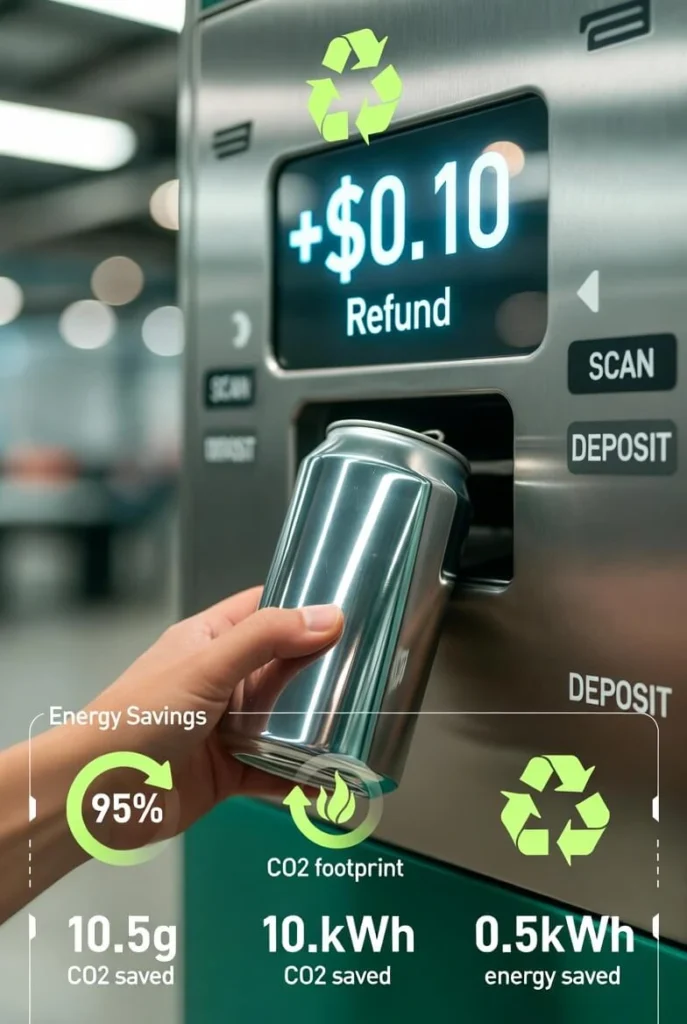
Aluminum can recycling incentives add up in tangible quantities. Recycling aluminum consumes significantly less energy than producing virgin metal from ore, resulting in reduced emissions and reduced strain on landfills and raw materials. These returns scale quickly as return rates increase.
Recycling aluminum cans saves approximately 95% of the energy compared to primary production. Converting used cans into new ones uses 92% less energy than producing them from virgin aluminum. That energy gap leads to similarly large emissions cuts because smelting bauxite is power-intensive and frequently connected to fossil grids.
If all cans were recycled, the energy saved could power 4.1 million homes for a year; this is an easy way to visualize avoided electricity and associated CO2 demand. Real output shows the potential at scale: nearly five million cans are recycled each hour in the United States, and 42.7 billion cans were recycled in 2019. Each recycled can closes the loop in weeks, not years, keeping material in use and reducing the demand for new mining, refining, and shipping.
Reduced landfill use is a second, immediate advantage. Aluminum doesn’t degrade in a landfill, so each can diverted saves space and all that embedded energy. Getting the recycling rate to 90% would divert approximately 1.3 million tons from landfill annually, reducing expenses for cities and the methane associated with mixed waste systems.
It shields bauxite deposits and mine-adjacent forests and watersheds. When cans return to smelters, manufacturers require less ore, fewer caustic chemicals, and less freight, leading to fewer impacts at mining sites and along shipping lanes. These material savings are measurable, predictable, and repeatable with greater returns.
Policy and program design influence these effects. The U.S. Consumer recycling rate for cans dropped below 50% in 2016, demonstrating how progress can plateau without robust motivators. In states with bottle deposits, recycling rates exceed 75%, while other states see roughly half that level of recycling.
That spread indicates how a minuscule per-can value and convenient return locations influence behavior at scale. High recycling rates are a lever for hitting corporate and city climate targets because this cut in energy and emissions is immediate, trackable, and attached to a ubiquitous product.
With clear goals, deposits or rebates, and reliable collection, a lagging 35% can be turned into a stable 75% or more in just a few years.
- Energy saved per can
- CO2e avoided per tonne recycled
- Landfill tons avoided per year
- Recycling rate (%) by region
- Recycled content (%) in new cans
- Return and contamination rates
- Cost per tonne collected and processed
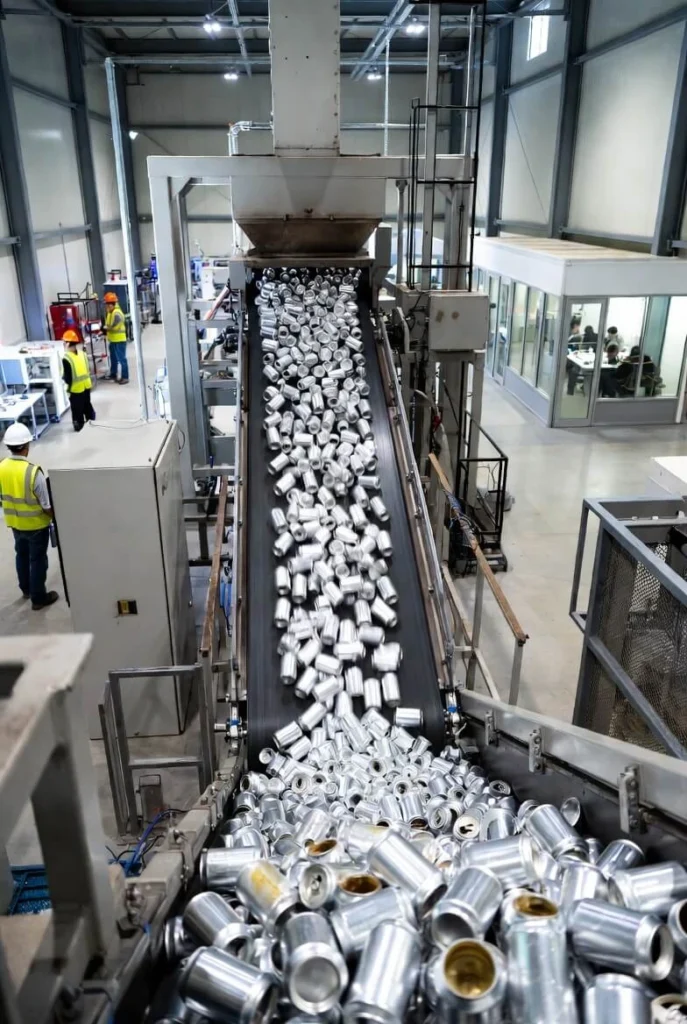
The Psychology of Participation
Recycling rewards are most effective when they match the way people evaluate effort, rewards, and social signals. Aluminum cans add a clear edge in the recycling industry. They hold high material value, recycle fast, and are widely collected, making them a popular choice for recycling centers.
Immediate monetary incentives push people from intention to action. Cash-for-cans, recycling rebates at the point of return, or instant mobile credits reduce friction and increase perceived control, a critical motivator in the theory of planned behavior. When the payback is swift and certain, attitudes bias positive, and the chore seems manageable for participants.
Reverse vending machines (RVMs) that scan and pay on the spot satisfy this desire. Research on RVM adoption highlights engagement, accessibility, education and rewards as the key drivers. Transparent price per kilo, in-one-visit guaranteed payouts and simple steps (scan, drop, cash) assist more than complicated plans that make the reward come later.
Social recognition and community pride forge norms that inform everyday decisions. They often align with what individuals believe their peers expect. When neighborhoods or offices share leaderboards, give quiet shout-outs to high-return participants, or publish monthly impact stats, norms shift significantly in favor of sustainable waste management.
Pride works when it is specific and fair: for example, “Building B recovered 120 kg this month, saving about 1,500 MJ of energy.” Human recipients spark more empathy than non-human ones, and so diverting some of the funds to local school funds or health clinics can boost involvement, particularly when the beneficiary is tangible and relatable. Charitable incentives differ by cause; child and health causes generally draw stronger responses than abstract environmental funds.
Visible progress feeds habits. Ripe, well‑signposted bins declare, “everyone else is doing it,” which decreases ambiguity and increases perceived behavioral control. Public dashboards that translate returns into simple metrics, such as kgs of aluminum reclaimed, energy conserved, and emissions forestalled, bolster the feeling that one person’s bag of cans makes a difference.
Most people participate when they think it counts. Regular, transparent progress updates make impact real and diminish the ‘drop in the bucket’ sensation. Campaigns fill participation gaps that stall action. Short, repeated messages work best: aluminum is infinitely recyclable, re-melting saves up to 95 percent of the energy compared to new metal, and cans can be back on shelves within weeks.
Link this to local how-to steps: where to return, hours, accepted items, and per-kilogram rates. Tackle perceived risk around RVMs, such as hygiene, payment failures, and queue times, with transparent design, cleaning routines, and trustworthy payout methods.
Social influence is important as well; display testimonials from residents for whom it was fast and safe. Include opt-in reminders before trash day and couple lessons with small experiments, like first-return bonuses, to cultivate engagement and ownership one step at a time.
Global Program Models
Nations rely on a combination of legislation, deposits, business initiatives, and grassroots campaigns to lift aluminum can return rates. Top systems drive can-to-can recycling to limit downcycling, as more than 20% of cans continue to wind up in engine blocks where alloys prevent reuse. With recycled aluminum use set to exceed 28 million tonnes in 2023, the stakes are high to maintain a closed loop for cans.
Today, 33% (some 140 billion) of cans end up back in cans, versus 7% for PET and 20% for glass. A global call to action is needed to lock in material and economic value. Models vary, but the best exchange data, transparent rules, and robust logistics.
- Beverage container coalitions and initiatives:
- Metal Packaging Europe: design-for-recycling guidelines and DRS advocacy.
- Can Manufacturers Institute: “Every Can Counts,” grant-funded sortation upgrades.
- Aluminium Stewardship Initiative (ASI): chain-of-custody standards.
- International Aluminium Institute: data on closed-loop targets and scenarios to 2050.
- The Recycling Partnership: MRF upgrades, curbside access, education toolkits.
- Ardagh Metal Packaging programs: buy-back, can-to-can partnerships with smelters.
Government Mandates
Bottle bills and DRS set deposits of €0.10 to €0.25 per container, enforce redemption via retail or reverse vending, and drive 80 to 95 percent return rates in Germany, the Nordics, and pockets of Canada. Universal recycling rules and landfill bans put pressure where DRS is missing.
Statutes often establish minimum recycling rates and mandate deposit refunds with producer-funded schemes. They channel fees into infrastructure: sortation tech, urban depots, and school collection points, and public education on how a can can be back on shelf in under two months.
Measure redemption, leakage, and can-to-can shares to identify downcycling and validate advancement.
Corporate Initiatives
Beverage brands and can-makers finance sorting innovations, introduce high-recycled-content cans, and test QR-linked deposit returns. Partnerships such as The Recycling Partnership and Ardagh Metal Packaging increase capture at MRFs and provide clean UBC feedstock.
A lot have 2030–2040 targets for 85–100% collection and increasing recycled content, then report annually with external validation. That generosity lifts the closed-loop shares.
A modeled path of raising can-to-can from 47% to 87% could produce 685 billion cans by 2050, slashing energy consumption, since one recycled can saves enough power to run a TV for three hours.
Grassroots Efforts
Local groups, schools and clubs fill gaps with can drives, contests and drop-off hubs that operate in rural towns and dense cities alike. Small steps solve access and trust issues.
Examples include school “two-month loop” challenges tied to the quick remelt cycle, sports venue take-back nights, and neighborhood buy-back pop-ups tied to producer funds. They demonstrate tangible increases in capture and localize global best practice to local standards and regulations.
Community buy-in keeps programs honest and data flowing.
Conclusion
Aluminum can recycling rewards work best with transparent objectives, equitable compensation, and convenient disposal. They separate more cans if the actions seem quick and neat. Cities get consistent return rates. Brands reduce raw ore consumption. Landfills accept less. Energy use drops by as much as 95 percent compared to new metal, which saves real money and slashes CO₂.
Good programs appear in the most direct ways. Store refund per can. Smart bins, scan tags. Weight-tracking mobile apps that pay fast. School drives with fixed prices per kilo. Each trail establishes a specific trigger, an immediate payoff, and a habit that sticks.
So, you up for a pilot test? One site, one rate, one tracker. Post share results in 30 days. Then scale the winning bits.
Frequently Asked Questions
What are aluminum can recycling incentives?
Incentives, such as recycling rebates and cash refunds, are inducements to recycle used aluminum cans. These aluminum can recycling incentive programs not only help increase recycling volumes but also promote sustainable waste management by reducing waste and saving energy. In some areas, deposit return systems allow you to pay a little extra and receive it back when you return the can.
How do deposit-return systems for cans work?
When you purchase drinks in aluminum cans, you pay a small deposit. Returning the empty can to a recycling center or reverse vending machine allows you to reclaim your deposit. This model not only boosts return rates but also enhances the quality of recycled materials for the aluminum recycling ecosystem.
How much money can I earn from recycling aluminum cans?
Income depends on area and commodity values, especially in states with deposit laws that pay a flat refund per aluminum cans. Scrap yards often pay by the pound, making regular returns a financial incentive that can significantly benefit families, organizations, or businesses with high can numbers.
Why are aluminum can incentives economically effective?
Aluminum cans can be recycled repeatedly without any loss in quality, making them a valuable resource in the recycling industry. Recycling grants and incentives increase collection rates, reduce landfill expenses, and support jobs in sorting and processing, ultimately enhancing the recycling process and boosting commodity prices.
What is the environmental impact of recycling one aluminum can?
Recycling a single aluminum can not only saves energy to light an average LED bulb for hours but also significantly cuts greenhouse gas emissions compared to virgin ore. When multiplied by millions of cans, the energy savings contribute to the overall impact of the recycling industry on sustainable waste management initiatives.
What motivates people to participate in can recycling programs?
Transparent monetary incentives, such as possible recycling grants and recycling rebates, along with convenient redemption stations and social conventions, spur involvement in the recycling industry. Immediate rewards and progress apps increase participation.
Which global models for aluminum can incentives work best?
Deposit-return systems, often supported by recycling grants, yield the greatest return rates, reaching 80 percent or more. Pay-by-volume, retailer take-back, and curbside with bonus payouts work effectively. Countries with a confluence of deposits, convenient infrastructure, and public reporting observe the most robust outcomes in the recycling industry.