Life cycle assessment in EIA is a method that measures a project’s environmental impacts from raw material extraction to end-of-life, and links those results to decision-making in an environmental impact assessment. It maps inputs and outputs across various stages, including sourcing, manufacturing, transportation, use, and disposal. Analysts set a clear goal and scope, build a life cycle inventory, assess impact categories like global warming potential, water use, and land change, and then interpret results.
Many teams use ISO 14040 and 14044 as the base standard to keep work consistent and traceable. Used well, LCA in EIA spots trade-offs, shows hot spots, and supports clear mitigation plans. The next sections break down steps, tools, and simple examples for common project types.
What is Life Cycle Assessment in EIA?
Life cycle assessment (LCA) is a systematic method to measure environmental impacts across all stages of a product or system, from raw material extraction to end-of-life. In the context of environmental impact assessments, LCA quantifies the environmental footprint by measuring greenhouse gas emissions, resource use, and waste, thereby providing a comprehensive overview that extends beyond the project fence line. By integrating life cycle models into the evaluation process, stakeholders can gain insights into the entire life cycle of a product, enhancing their understanding of sustainability initiatives and energy efficiency.
1. The Core Concept
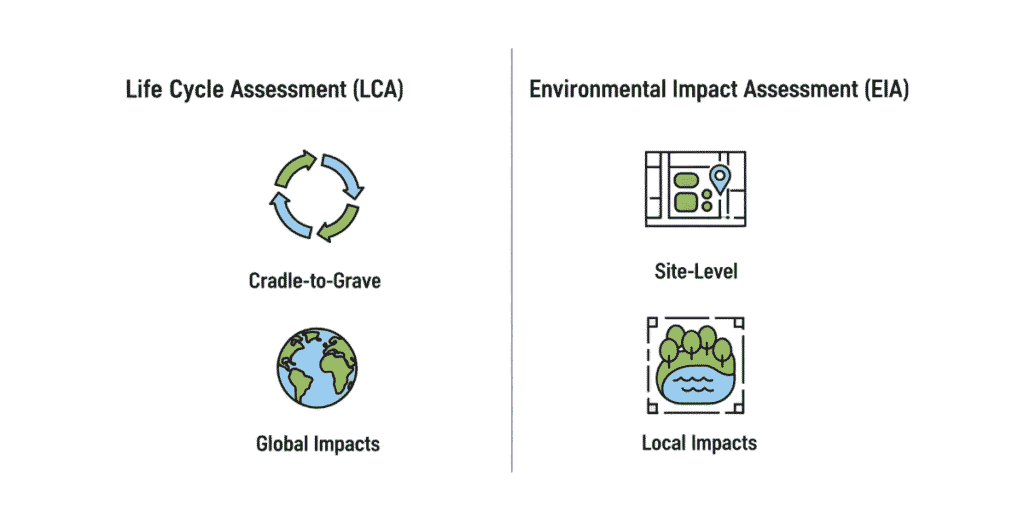
LCA covers cradle to grave: extraction, manufacturing, logistics, use, and disposal or recycling. It appears to be end-to-end, not simply at the plant gate.
It follows inputs such as energy, water and materials and outputs such as CO2e, NOx, wastewater and solid waste at each stage. A washing machine, for instance, might demonstrate most impact in the use phase due to electricity.
Methods adhere to ISO 14040/44 to maintain studies consistent and comparable. Results highlight hotspots, such as a battery’s cobalt sourcing or a building’s cement content, directing transformation where it’s most impactful.
2. The Four Phases
The phases of the life cycle assessment include goal and scope, life cycle inventory (LCI), life cycle impact assessment (LCIA), and interpretation. The goal and scope set the question, audience, system bounds, and the functional unit (e.g., 1 kWh delivered, 1 m2-year of flooring). LCI gathers data on energy, materials, emissions, and waste for all stages and geographies.
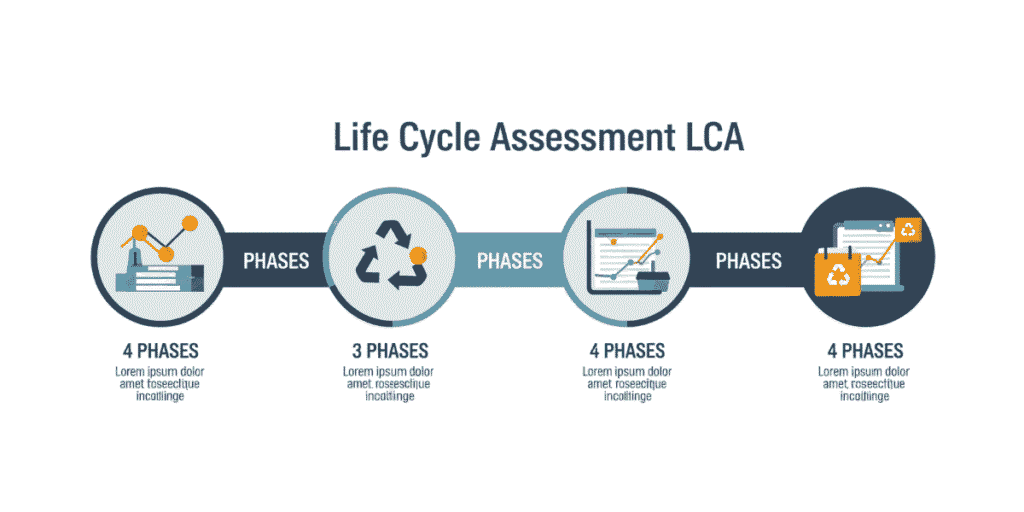
LCIA translates inventory flows into impacts, such as climate change, resource depletion, and ecological effects, using chosen life cycle models. Interpretation checks data quality and assumptions, tests sensitivity, compares options, and turns findings into clear actions.
3. The EIA Connection
LCA supplements EIA with life cycle depth. It uncovers upstream and downstream burdens missed by site-only reviews, such as mining impacts for a solar farm’s panels or disposal of wind turbine blades. It underpins compliance, procurement rules, and net-zero plans with defensible numbers, enhancing transparency for regulators and communities.
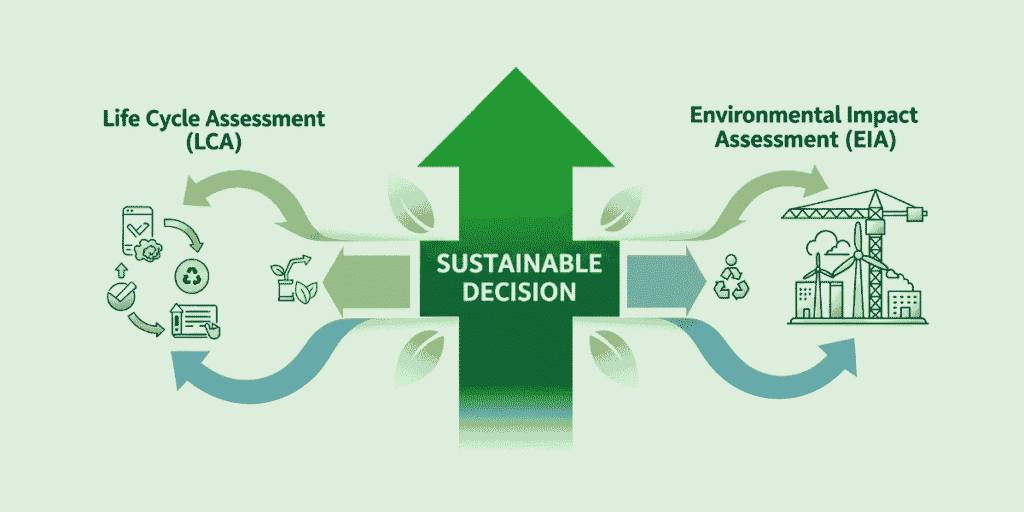
Together, LCA + EIA results in better, more defensible, decisions.
4. The Scope Difference
EIA often focuses on local air, water, noise, and habitats in the vicinity of a site. LCA injects global supply chains and multi-decade impacts.
| Aspect | LCA | EIA |
|---|---|---|
| Boundaries | Cradle-to-grave | Site and vicinity |
| Scale | Global to local | Local to regional |
| Focus | Many impact categories | Prioritized local effects |
| Use | Design and policy choices | Permitting and compliance |
Apply them both when comparing choices, such as concrete vs. Timber structures.
5. The Data Needs
LCA needs broad data: material flows, energy (kWh, MJ), water (liters), emissions (kg CO2e, SO2), and waste streams across all stages and regions. EIA relies on site baselines, monitoring plans, and legal limits.
Quality is important. Outcomes vary by data sources, time spans, and assumptions. Use vetted databases/tools and to manage gaps/uncertainty.
Checklist for LCA-in-EIA data:
- Process data from suppliers and contractors
- Regional electricity mixes and transport modes
- LCA databases (e.g., ecoinvent) and LCA software
- Waste and recycling streams, rates of returns and EOL
- Sensitivity ranges for key assumptions
How LCA Impacts Environmental Impact Assessment
LCA expands EIA by following environmental impacts outside of site boundaries to what occurs prior to and after a project. It injects rigor, information, and consistency, ensuring life cycle assessments favor lower-impact alternatives.
Broader Scope
LCA covers the full chain: raw material extraction, processing, transport, construction or manufacture, use and upkeep, and end-of-life steps such as reuse, recycling, or disposal. This product life cycle scope spans global supply chains, not just the host country, which is significant because research indicates that over 80% of a product’s environmental impact resides in the supply chain. It looks at many impact categories in one—climate change (carbon footprint), water use, land use, resource depletion, eutrophication, acidification, and human and eco-toxicity—so trade-offs are visible.
This integrated approach, in concert with ISO LCA standards, allows teams to compare alternatives and forecast scenarios on a shared ground, whether that be cradle-to-grave, cradle-to-gate, or well-to-wheel. For EIA work, map the extended boundary at the start: define life cycle stages, data sources, suppliers, geographies, and impact categories. Then employ that map to establish data requirements and design life cycle assessments interpretation plans.
Hidden Impacts
LCA finds impacts hidden in upstream and downstream processes that conventional site-focused EIAs can overlook.
- Critical minerals mining; supplier power mix; transportation and packaging decisions; process chemicals; water used in material refining; refrigerant leakages; spare parts; disposal routes; land-use change for bio-feedstocks; sub-tier suppliers’ emissions and waste.
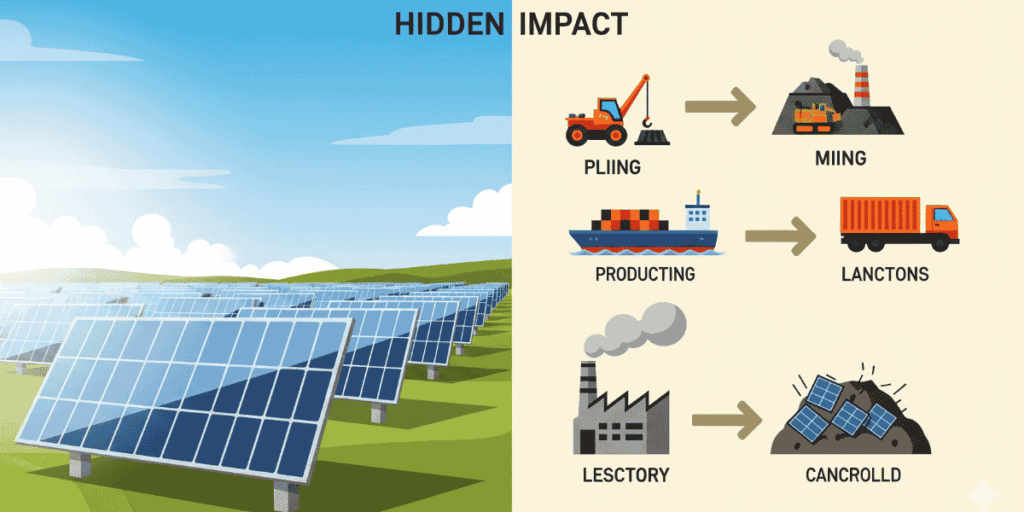
These results reveal aggregate impact over multiple minor actions. That clarity, in turn, often directs actions that reduce impacts by up to 30%, by addressing energy consumption, greenhouse gases, or material intensity in the places that most need it.
List embedded impacts early in scoping documents, updating as supplier data gets better.
Cumulative Effects
LCA sums burdens over the full life: repeated fuel burn in logistics, recurring maintenance, gradual efficiency losses in use, and aggregated end-of-life flows. It links stage-level results into lifecycle impact assessment (LCIA) totals, which support checks on long-term sustainability and ecosystem health. Using the LCA framework, teams compare alternatives across cradle-to-grave, cradle-to-gate, or well-to-wheel models, then interpret results under ISO guidance to avoid biased calls and to surface real trade-offs.
Utilize LCIA summaries to redirect design, materials selections, and disposal schemes, and to direct next generation products toward less energy consumption, fewer emissions, and a more compact footprint.
Why LCA is Important for Sustainability in EIA
LCA is crucial in environmental impact assessment (EIA) as it reveals impacts throughout the entire life cycle—raw material, production, use, and end-of-life. By providing hard data on greenhouse gas emissions, water use, and energy efficiency, teams can set targets, evaluate options, and effectively reduce their environmental footprint.
Beyond Compliance
LCA propels projects beyond minimum rules by quantifying what counts across the entire life cycle and temporal horizon. It quantifies carbon in kg CO₂e, water in m³, and energy in kWh for each life cycle stage, helping teams identify the hotspots that fuel transformation. A transit project can compare steel versus recycled aluminum for frames; a housing plan can compare low‑carbon concrete mixes; a power upgrade can compare photovoltaic additions versus grid electricity mixes.
LCA tests the completeness and sensitivity of studies, ensuring results withstand scrutiny and inform credible decisions. This cradle‑to‑grave view supports policy goals for climate and resource use, while facilitating life cycle assessments that build a loop of improvement: set a baseline, make a design shift, re‑run the LCA, and verify the gains. Consequently, enterprises advance from reactive patches to proactive design constraints, such as material caps, fixability goals, or take‑back programs that cement improved results across collections.
Circular Economy
LCA guides teams to design in reuse, repair, and remanufacture from the beginning.
- Cut virgin inputs by opting for recycled feedstock where impacts are less.
- Design for disassembly and material recovery at end‑of‑life
- Extend product life with modular parts and repair paths
- Reduce process waste through industrial symbiosis and by‑product use
- Opt for performance packaging with less mass and more recyclability
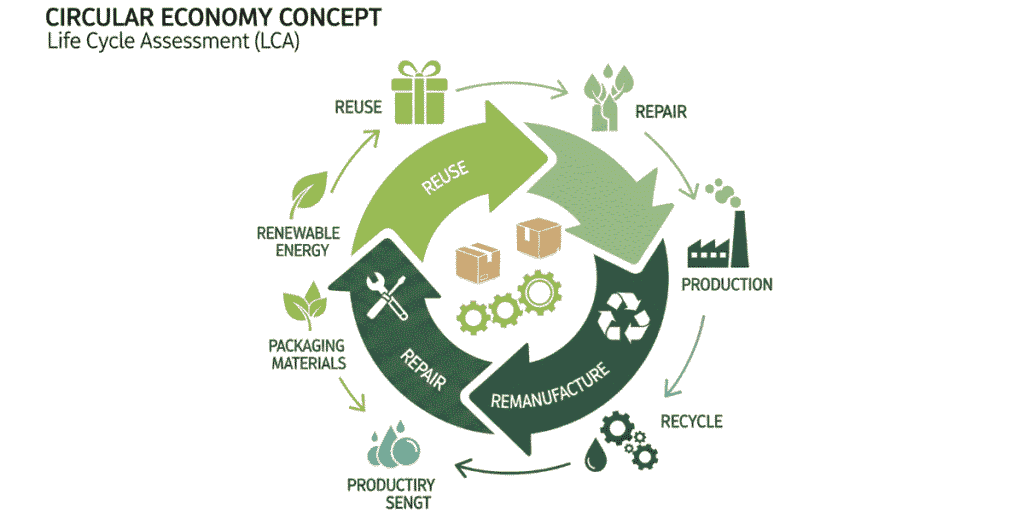
It helps you find places loops can close, whether it’s moving from single‑use plastics to refillables, or diverting heat from one process to another facility.
It supports lifecycle management: define service life, maintenance cycles, and take‑back logistics that lower total impacts while meeting performance needs.
Informed Decisions
LCA gives you the quantification needed to select materials, tech, and processes with lower impacts. It can reveal, for instance, that a closed‑loop cooling system reduces water by thousands of cubic meters annually, or that a recycled‑content steel beam has less CO2e per kg than a virgin beam at equal strength.
Use results to rank actions: switch to renewable power where grid intensity is high, redesign packaging that drives transport weight, or change to a higher‑yield process step. Stakeholders then select alternatives that align with sustainability objectives and minimize impact in a transparent, justifiable manner.
Integrating LCA and EIA
Integrating life cycle assessments (LCAs) and environmental impact assessments (EIAs) provides a more complete view of project impacts in both temporal and spatial dimensions. This integration helps sharpen impact predictions and flags trade-offs early, even if methods and assumptions can clash. The most frequent route is the subset integration approach, employed by 17 surveyed studies, where a focused LCA informs critical EIA inquiries. Although integrated studies, as the evidence shows, help decisions, 36 reviewed studies used a panoply of different indicators, complicating comparisons across life cycles.
Methodologies
| Domain | Method | What it covers | When to use |
|---|---|---|---|
| LCA | Process LCA | Process-level inventories, cradle-to-grave | Detailed manufacturing or service chains |
| LCA | Hybrid LCA | Process + input–output links | Complex supply chains, data gaps |
| LCA | Consequential LCA | Market-driven changes and marginal effects | Policy shifts, technology adoption |
| EIA | Screening/Scoping | Issue selection and receptor focus | Early-stage project planning |
| EIA | Impact Prediction | Models for air, water, noise, ecology | Permitting and design choices |
| EIA | Alternatives Analysis | Design, site, and process options | Avoid/mitigate high-risk choices |
| ERA | Environmental Risk Assessment | Exposure pathways, probabilities | Contaminated sites, hazardous materials |
Choose the LCA style that aligns with the environmental impact assessment (EIA) choice. Apply ISO 14040/44 to set goals and scope, functional unit, and system boundary, while utilizing life cycle assessments to evaluate options on an equal footing. Practical steps include aligning objectives with the functional unit during scoping, co-developing data templates, and agreeing on impact categories. Run sensitivity and scenario tests, report both midpoint results (e.g., kg CO2e) and endpoint results, and include quality checks. LCA and EIA pair well to cover chronic loads and acute risks.
Boundaries
To define appropriate system boundaries for life cycle assessments, it is essential to prevent blind spots or double counts. Match temporal windows (e.g., 30-year asset life) and spatial scales (site, watershed, regional grid) across both tools. Cover all life cycle stages — raw material supply, production, transport, use, maintenance, and end-of-life — even if EIA is local. Visually map the scope with flow diagrams for LCA processes and spatial layers for EIA receptors. For example, in mineral waste reuse or contaminated site cleanup, include upstream reagent supply and downstream transport to accurately capture environmental impact.
Metrics
Core LCA metrics include greenhouse gases (kg CO2e), energy use (MJ), and water use (m3), which are essential for understanding the environmental impact of products. It is crucial to anchor environmental impact assessments (EIA) categories to decision-making processes, focusing on metrics like air quality and biodiversity. Selecting measurable metrics such as mg/L nutrients and habitat-hectares enhances the effectiveness of life cycle assessments in product development.
A common metrics list for reporting in LCA and EIA can significantly inform decisions about sustainability initiatives. Integrated results from life cycle assessments today can offer a more comprehensive view, although they may sometimes present trade-offs, like lower carbon emissions but higher water usage. Thus, clear guidelines for addressing these trade-offs are necessary, especially in the context of life cycle analysis.
Research into remediation and mineral reuse emphasizes the importance of having common data to navigate tensions between various environmental aspects. This highlights the need for proper life cycle assessment methods to ensure that both the environmental footprint and resource efficiency are optimized throughout the entire life cycle of products.
Challenges and Limitations
Embedding life cycle assessments (LCA) into environmental impact assessments (EIA) presents both technical and pragmatic challenges. Projects must trace impacts throughout the entire life cycle, from raw material extraction to end-of-life disposal, which adds pressure on time, budget, and capabilities. Data quality issues can be inconsistent across regions and suppliers, complicating effective product management. Modeling complete supply chains in a project footprint is challenging, and uncertainty can significantly influence final EIA conclusions.
Data Intensity
LCA requires extensive amounts of detailed data on inputs and outputs at each stage–extraction, processing, transport, use, disposal. Gathering and measuring these flows can be tedious and difficult to scale, particularly for ambitious endeavors like public transit or global supply chains for wind farms.
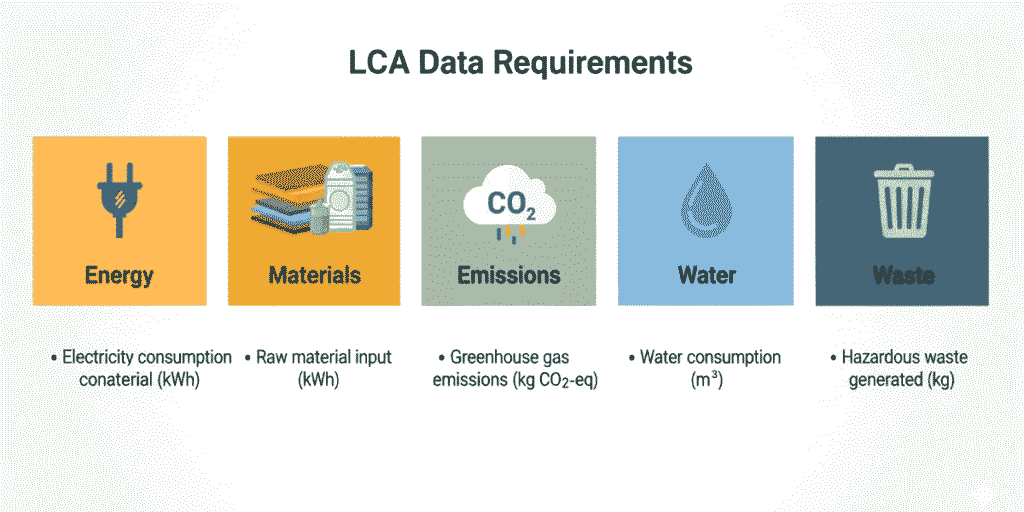
Real-time inventory information is not always readily available, and exclusive or geographic holes are typical. Missing values can distort results, preferentially benefit local suppliers, or minimize upstream emissions. This can result in partial or prejudicial evaluations.
Set a data strategy early: define clear boundaries, agree on the functional unit, map key suppliers, and prioritize high-impact processes. Utilize vetted databases, data logs, and version control. For difficult-to-fill holes, use recorded proxies and mark them for sensitivity audits.
Complexity
While environmental impact assessments (EIA) limit their scope to a defined site and project, life cycle assessments (LCA) models dozens of interconnected processes, often across countries and industries. Bringing these perspectives into alignment requires dedicated LCA software and training, which is essential for effective product management. It implies painstaking decisions on system boundaries and distribution policies, which vary by product category and stakeholder interests.
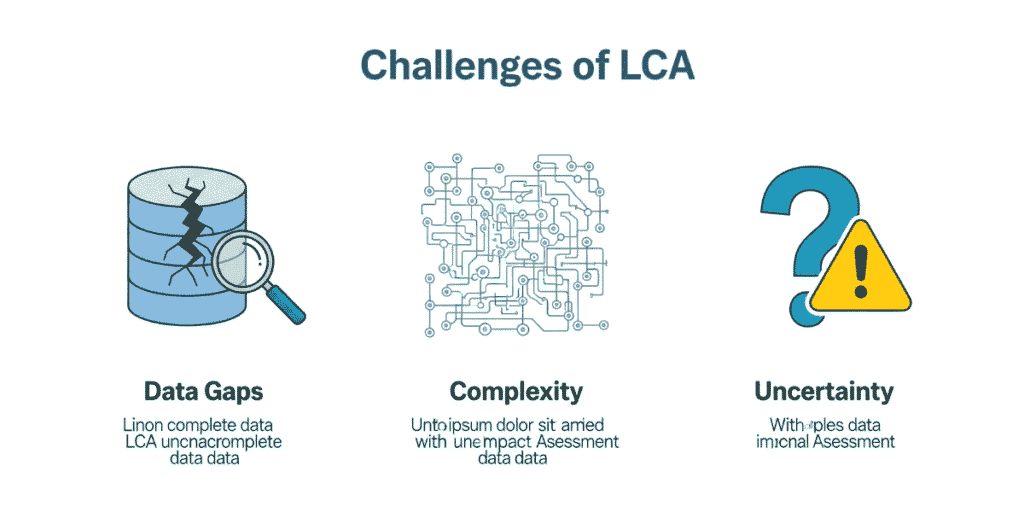
Interpreting results is not always straightforward, and different impact categories — such as climate change, eutrophication, or resource use — can indicate different “best” choices. Comparison shopping brings an additional dimension—when functional units aren’t the same, or when product category rules (PCR) are absent or under development, apples-to-apples comparison is hard. All of which increases time and cost. One pragmatic route is to begin with screening models, coarse-grain where signals are weak, and retain fine-grained modeling for the few processes that fuel most life cycle impacts, thereby maintaining fidelity where it counts.
Uncertainty
Uncertainty creeps in through the changing data, modeling decisions and assumptions on lifetimes, recycling rate or transport distances. Outcomes can vary with selected impact techniques, rendering evaluation partially interpretive and potentially influencing faith in EIA conclusions.
Record assumptions, conduct sensitivity and scenario analyses, and report uncertainty bounds or confidence intervals. Decision makers require the spread, not just the point estimate.
The Strategic Blind Spot of Traditional EIA
Traditional EIA tends to halt at site boundaries and near-term effects, often overlooking the broader environmental impact. Upstream and downstream impacts sit beyond its line of sight, as do cumulative effects across multiple projects. This narrow scope, combined with antiquated tools and a compliance-first mindset, leaves long-term and indirect consequences underexamined.
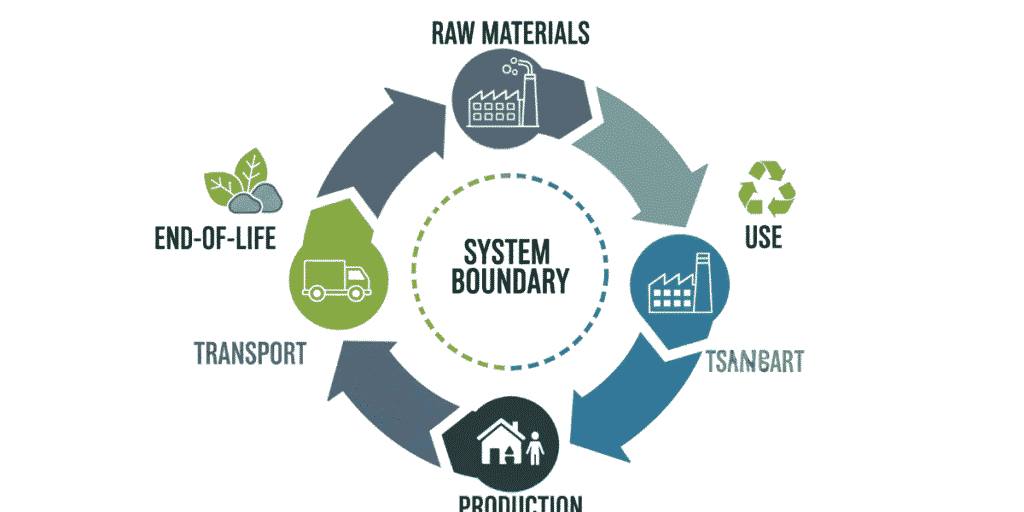
Life cycle assessments (LCA) close this gap by tracing flows of energy, materials, and emissions across the full product life cycle, making outcomes more credible. Case studies are helpful to illustrate where EIA missed major burdens that LCA subsequently uncovered.
Upstream Burdens
Traditional EIA might miss raw material extraction, processing, and transportation. A solar farm EIA could examine habitat loss on-site, but miss the copper mining and solvent use and maritime shipping that fuel panel manufacturing.
LCA charts these flows. It measures resource scarcity, energy demand, and emissions in upstream tiers — kilogram CO2e per kg lithium, or cubic meters water in bauxite refining. It can flag hotspot suppliers and routes.
This is important for planning. Teams can transition to lower-impact cement blends, select recycled aluminium, procure timber with certified provenance or move freight from air to rail. Common upstream impacts LCA uncovers: metal ore depletion, water stress in arid basins, methane from gas supply, sulfur dioxide from smelters, land-use change tied to bio-based inputs, and transport-related black carbon.
Downstream Legacies
Downstream activities typically fall outside traditional environmental impact assessments (EIA), which conclude at commissioning. However, life cycle assessments (LCA) encompass what happens when products are used, serviced, and ultimately disposed of. For a wind project, this includes gear oil changes, blade wear, and end-of-life treatment. In the case of a packaged food plant, it accounts for refrigerant leaks, consumer refrigeration, and packaging fate.
Recognizing these impacts promotes sustainable design and management for decades, not just during production. A lifecycle framing utilizes impact categories to summarize legacies, such as climate change (kg CO2e), human toxicity, and landfill mass, capturing design decisions that reduce environmental footprint, like modular components for repair and extended producer responsibility.
Systemic Shifts
Traditional EIA overlooks system-level change—policy shifts, grid decarbonization, rebound in demand, or technology learning curves. LCA can model scenarios: how a battery plant’s footprint changes as the grid drops from 600 to 100 g CO2e/kWh; how telework cuts travel but raises data center loads; how a biofuel mandate raises land pressure and affects Indigenous communities’ rights if governance is weak. It helps plan for cumulative effects across co-located projects, not one permit at a time, and it encourages long-term monitoring that EIA often shortcuts.
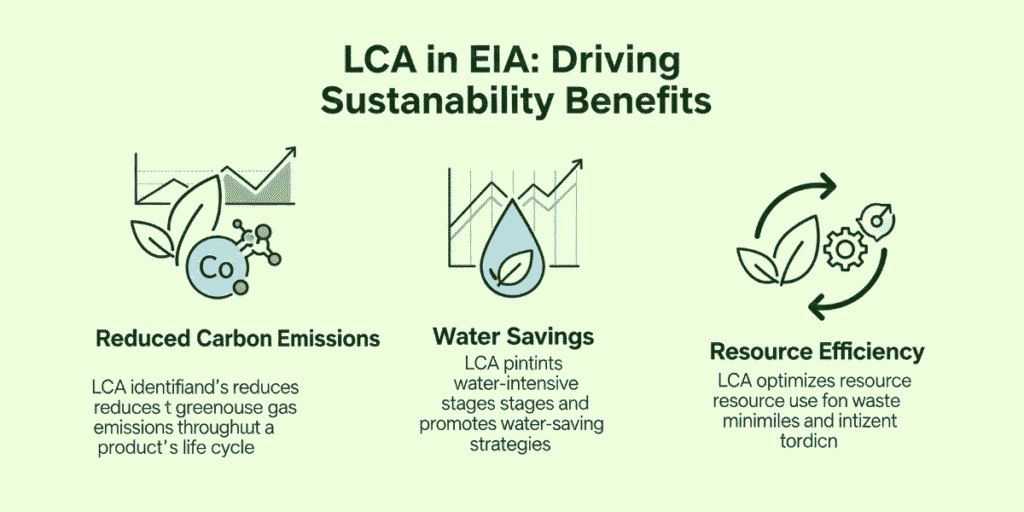
Practical steps: use LCA-informed baselines, test future energy mixes, engage Indigenous groups early on supply risks, set design-for-disassembly targets, require post-approval monitoring, and align procurement with verified low-impact suppliers.
Conclusion
LCA provides EIA reach and grip. Teams witness cause and effect from beginning to end. Not a blind spot. No guess work. You can identify hot spots, select lean processes, and eliminate actual waste.
The payoff comes in incremental, obvious successes. Switch a high carbon steel to a low carbon mix. Switch road freight to rail. Reuse warm water onsite. Choose a low-VOC paint. Every step cuts weight and expense. Every step garners confidence from users and fellow academics.
Boundaries remain. Data gaps can bog down pace. Time and budget pinch. Regular, straightforward checkpoints keep work focused.
Want a next action? Request an LCA quick start list, or share your case and objectives to strategize the first pass.
Frequently Asked Questions
What is Life Cycle Assessment in EIA?
Life Cycle Assessment (LCA) in Environmental Impact Assessment (EIA) evaluates a project’s impacts from raw materials to end-of-life. It measures energy use, emissions, and resource depletion across the full life cycle. This comprehensive approach allows for a more complete picture than project-only assessments, highlighting the importance of life cycle impacts in product management and sustainable design.
How does LCA improve EIA decisions?
LCA uncovers hidden upstream and downstream impacts, allowing you to compare options in terms of total environmental footprint, not just construction or operation. This results in smarter material selections, decreased greenhouse gas emissions, and minimized costs throughout the product life cycle, enabling more defensible environmental impact assessment decisions.
Why is LCA important for sustainability in EIA?
LCA connects decisions to actual environmental impacts by utilizing life cycle assessments to target hot spots such as energy intensity, water use, and waste. This approach lowers greenhouse gas emissions, saves resources, and prevents phase or regional shifting impacts.
What stages does LCA cover in an EIA?
LCA covers the entire life cycle, including raw material extraction, manufacturing, transport, construction, operation, maintenance, and end-of-life. Other studies may utilize cradle-to-gate or cradle-to-cradle boundaries, and clear scope definition enables consistent, verifiable results in life cycle assessments.
How can I integrate LCA into an EIA process?
Begin early in scoping by considering the entire life cycle of the product. Set goals, boundaries, and functional units based on sound databases while adhering to ISO 14040/14044 standards. Compare design options using life cycle assessments on an apples-to-apples basis.
What are the common challenges and limitations?
Major challenges in conducting life cycle assessments include data gaps, diverse data quality, regional differences, and allocation methods. Results can be assumptions-sensitive, making transparent documentation and sensitivity analysis essential for enhancing robustness and building trust.
How does LCA address EIA’s strategic blind spot?
Conventional environmental impact assessments miss supply chains and end-of-life impacts. Life cycle assessments address this lacuna by measuring upstream and downstream effects, promoting climate awareness and resource efficiency through informed decisions.