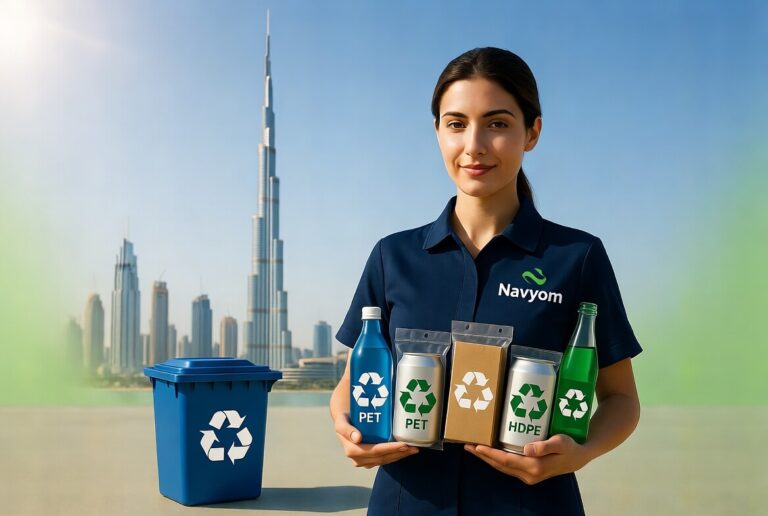
Plastic waste in Dubai represents the torrential flow of single-use and packaging plastics from households, shopping, and visiting, managed by municipal pick-up, recycling centers, and dump sites.
City policy adds surcharges to carrier bags and phases in bans on single-use. New sorting lines and a waste-to-energy plant in Warsan seek to cut landfill and emissions.
Tourism high points boost amounts, as do efforts to reuse. To frame trends, the sections below describe origins, laws, and remedies.
Key Takeaways
- Dubai’s own plastic waste is powered by fast-paced urban development, excessive consumption, and tourism – impacting the beaches, marine life, and even the city’s neatness. Slash your daily rubbish for reusable water bottles, bags, and beyond – and say goodbye to the disposables.
- Retail, hospitality, and bottled water use, and commercial and industrial activities are all major producers of plastic waste. Divide your waste at home and in the office, for clean PET bottles and recyclables go into separate contamination-reducing bins.
- Recyclable plastics like PET and some polypropylene are not the same as hard-to-recycle foams and multi-layer films reaching landfills or water. Know the local rules, avoid multi-material packaging, and label clearly for better recycling.
- Dubai’s unified waste system covers collection, sorting, recycling, energy recovery, and landfill, although recycling rates could still improve. Utilize current blue and green bins, door-to-door collection, and back facilities, including advanced sorting and chemical recycling.
- Policies such as fees, bans, and producer responsibility are simultaneously driving compliance and enabling a circular economy. Comply with new rules, report breaches, and remunerate businesses that utilize recycled content and disclose ESG performance.
- Acting in communities or through corporate actions, these steps do a lot to address not just plastic’s price tag, its health implications, and reputational risks. Kickstart community cleanups, refill and take-back initiatives, and finance smart bins, AI sorting, and waste-to-energy for zero-to-landfill goals.
The Plastic Reality
Dubai’s plastic waste woes mirror accelerated urban growth, immense buying power, and an all-season tourist powerhouse. With the food delivery/retail spikes, single-use plastic gets shoved into daily living. In a region where plastics may take millennia to degrade, this taxes landfills, streets, beaches, and the Gulf’s shallow waters.
Sources
Plastic waste in Dubai mainly originates from consumer products and packaging, especially in the retail and tourism industries. Malls, supermarkets, hotels, and quick service brands depend on a constant stream of plastic items like bags, cups, cutlery, wraps, and bottles to meet hygiene standards.
The plastic waste processing initiatives need to get on top of this surge, particularly during peak tourist periods when single-use items outpace local demand.
Oh, and building and shipping and light manufacturing throw pallets and shrink wrap and drums and strapping into the mix as well. As commercial and industrial nodes accumulate waste geographically, the actual recycling processes become more feasible, but the volumes are still massive.
With such a strong population growth and overseas tourism, daily plastic consumption – especially in food service and bottled beverages – is through the roof, particularly in the warmer months.
- Supermarket bags, produce wrap, and takeaway containers
- Bottled water (still and sparkling) in PET
- E-commerce mailers, stretch film, and bubble wrap
- Hotel amenities, event giveaways, and catering ware
- Construction sheeting, protective foam, and strapping
- Beverage cups and lids from food courts and cafés
To address the plastic pollution challenge, the UAE government is emphasizing sustainable plastic management. These encompass bolstering recycling infrastructure and deploying pioneering recycling technologies to guarantee consumer plastic waste is responsibly handled and converted into recycled materials.
This approach not only reduces environmental impact but supports a circular economy, incentivizing sustainable products and behaviors.
Types
Virtually all of the visible plastics are PET (drink bottles), HDPE (detergent and milk jugs), LDPE (bags/film), PP (food tubs, straws, caps), and PS/Styrofoam (trays, cups), and multilayer films. PET and HDPE are the most widely recyclable when clean; LDPE film and PP have markets but depend on sorting.
Many snack packs and laminated pouches aren’t easy to recycle. Toxic plastics-particularly chemical barrels, medical disposables, and contaminated lab ware-have to be managed and destroyed with approval and sign-off, to avoid worker or waterway contamination.
Recyclable doesn’t mean recycled. Food residue, commingled bales, and soft end-market prices routinely send “recyclables” to landfill.
| Major Type | Polymer | Common Items | Recyclable? |
|---|---|---|---|
| PET | Polyethylene terephthalate | Water/soda bottles | Often, if clean |
| HDPE | High-density polyethylene | Milk, detergent jugs | Often |
| LDPE | Low-density polyethylene | Bags, stretch film | Sometimes |
| PP | Polypropylene | Tubs, caps, straws | Sometimes |
| PS | Polystyrene/Styrofoam | Trays, cups | Rarely |
| Multilayer | Mixed laminates | Chips, sachets | No |
Scale
Plastic pollution is a top issue worldwide, with the Middle East alone generating in excess of 50 million tonnes a year. Of this plastic waste, roughly 10% is recycled, and about 6kg per capita finds its way to the ocean annually—the highest rates in the world.
The Dubai integrated waste management strategy aims to tackle this challenge by optimizing plastic recycling in the region. Dubai’s profile fits this regional picture: bottled water use is heavy, and single-use packaging is common.
Coastal resorts are a magnet for windblown debris, with plastics and Styrofoam comprising nearly 90 per cent of floating ocean litter. The urgency to address plastic waste is essential to safeguard marine ecosystems and combat pollution.
Local audits indicate large proportions of city plastics flow to landfills, while a bit trickles to wadis, storm drains, and the Gulf, where sea life faces entanglement risks. The UAE is developing its recycling infrastructure as the plastic waste problem continues to grow.
Regional estimates expect plastic waste to rise to around 2.5, 3.7, and 5.4 million tonnes by 2030, 2040, and 2050, of which 48–65% may end up in landfill without more efficient recycling methods. It highlights a design, sorting, and re-use system opportunity.
A lot of UAE locals are already very sustainable, packaging and circular economy-wise. This focus on sustainable plastic management demonstrates an increasing consciousness towards the ecological consequences of plastic creation and use.
| Year | Direction | Notes |
|---|---|---|
| 2018–2020 | Up | Tourism and e-commerce growth |
| 2021–2022 | Up | Post-pandemic rebound; food delivery |
| 2023–2024 | Mixed | Fees on bags; early reuse pilots |
Dubai’s Management System
Dubai operates an integrated system that links collection, sorting, recycling, energy recovery, and landfill diversion. Dubai Municipality makes policy, licensing, and compliance, while private contractors run fleets, MRFs, and specialty plants. Smart systems direct routing and monitoring, incorporating sustainable waste management.

It pairs a green tariff on single-use plastic bags with recycling center investments to ramp up plastic waste reduction and recovery.
1. Collection
Households, malls, offices, and tourist sites use color-coded streams: blue bins for recyclables, green bins for general waste, plus specialized plastic bin dealers serving large generators like hotels and logistics hubs. Public spaces installed double bins with separate chutes to promote neat sorting at the source.
Neighborhoods and business parks have door-to-door pickups of plastic bottles and packaging. Smart containers compress waste automatically – boosting volume up to 8x – cutting spills and truck journeys.
With a citywide smart waste management platform that tracks bin fill levels and routes, collection, storage, and transport efficiency is boosted by 80%. However, soiling—food in PET, mixed films, and labels—still impacts bale quality, and many locations need more specific guidance on what can go in each bin.
2. Sorting
Sorting is the hinge between collecting and true recycling. Facilities use a mix of manual picking for odd items and automated lines: conveyors, screens, magnets for metals that sneak in, eddy current separators for aluminum caps, near-infrared scanners for PET, HDPE, and PP, and optical color sorters for clear versus colored streams.
Air classifiers flake off light films. Washing lines remove labels and organics. When source separation is slow, plants must slow lines, raising costs and waste. Better pre-sorting at buildings, standardized bin signage across neighborhoods, and cleaner feedstock all boost yields and decrease rejects.
Supplementing existing sorters with AI-powered vision, hyperspectral sensors, and robotic pickers can boost accuracy on flexible plastics and multi-layer products that current sorters can overlook.
3. Recycling
Mechanical recycling dominates: shred, wash, sort by polymer, then regranulate for use in packaging, textiles, or pallets. Dubai’s first PET recycling factory delivers food-grade rPET to beverage and personal care brands, reducing imports of virgin resin and facilitating local bottle-to-bottle loops.
End markets like rPET sheets, rHDPE pipes, PP crates,
and construction boards are made from mixed films. Public procurement could anchor demand.
Constraints remain: limited capacity for flexible films, color-mixed plastics with low value, and overall recycling rates that lag targets, despite the waste department’s goal to lift program efficiency.
4. Energy Recovery
Non-recyclable plastics are sent to energy recovery. It’s scaling up huge waste-to-energy capacity for mixed residues, fueling power as well as diversion that’d otherwise head to landfills.
The more sophisticated pyrolysis pilots, meanwhile, aim to convert certain plastic fractions—such as PE films—into synthetic oils, which can, in turn, serve as feedstock for virgin polymers, consistent with circular economy ambitions.
Energy recovery beats landfill both in space and methane avoidance. It demands strict emissions control and careful life-cycle auditing to ensure it supplements, not substitutes, high-quality recycling.
5. Landfill Disposal
Landfill is for contaminated or unrecoverable plastics. Policies shut what can be landfilled – with higher fees and diversion requirements that push materials further upstream to separation or recycleng, ng or energy pathways.
Risks are well known: plastic build-up, microplastic migration, leachate management, and methane from organic co-disposal.
Smart tracking of bins, routes, and processing supports Dubai’s shift from landfills, in line with its smart city map and broader drive towards a better, sustainable quality of life.
Policy and Governance
Dubai addresses plastic waste as part of the wider UAE ecosystem, integrating bans, standards, and market tools. Policies focus on minimizing single-use plastics, enhancing recycling, and advocating sustainable plastic management to achieve a circular economy transition across all emirates.
Regulations
Dubai’s laws dovetail with federal and emirate-level policies seeking to curb high plastic use tied to rapid growth over the past decade. The UAE has moved ahead with bans and stricter controls, policymakers review research results to refine what works.
- Single-use restrictions: Dubai’s single-use plastics ban took effect on 1 January 2024, with Dubai Municipality issuing guidance for businesses after a resolution by the Crown Prince and Chair of Dubai’s Executive Council. Includes carrier bags and rolls out to other disposables in a phased manner.
- Segregation and recycling: Building codes, municipality permits, and waste contracts require source separation, labeled bins, and handover to licensed collectors and material recovery facilities.
- Producer responsibility: Importers, retailers, and brand owners face growing duties to reduce, label, and take back packaging, with pilots for deposit-return or buy-back schemes under review.
- Product standards: Limits on Oxo-degradable Plastics, Labeling Rules, and Recyclability Criteria guide what can be sold or imported.
- Procurement: Public buyers are steered to recycled-content goods and reusable options to pull demand.
- Reporting: Large firms may need waste data disclosure, audits, and proof of proper disposal.
Penalties may extend to fines, permit suspensions, and even potential confiscations for repeat offenders. Incentives come in the form of fee waivers, discounted landfill fees for source-separated loads, and good recycling performance awards.
Scale contains a ban by 2023 and limits plastic waste by 2040. Prior efforts, including 2013’s “Say No to Plastic Bags,” which sought a 20% decrease in roughly 2.9 billion annually, paved the way.
Enforcement
Compliance is validated by licensing haulers, periodic and risk-based inspections of malls, hospitality and industrial sites, GPS-monitored collection routes, and weighbridge data from transfer stations and recovery plants.
Dubai Municipality leads day-to-day enforcement, supported by environmental agencies that set technical standards and conduct audit reviews. Hotlines and apps enable citizens to report littering and illegal dumping, and fee schemes incentivize clean, well-sorted loads.
Cross-emirate coordination matters: Abu Dhabi’s Center for Waste Management (CWM) oversees integrated controls there, and Sharjah’s 100% landfill diversion target in early 2015—run with a private partner—shows how firm goals tied to contracts can deliver results.
Public-private action underpins this system: retailers shift to reusables, waste firms invest in sorting and washing lines, and producers redesign packaging. UAE research results guide levy, prohibited product, and enforcement instrument revisions.
Future Goals
Dubai’s Integrated Waste Management Strategy and Circular Economy Policy show higher recycling rates, landfill diversionn, and annear-zeroro plastics to landfill in the early 2030s.
They’re also planning for super sorting, plastics-to-plastics reprocessing, digital tracking of bales, producer fees that fund take-back, and selective waste-to-energy for unrecyclable residues. Its investments will be in material recovery facilities, food-grade PET and HDPE lines, and logistics hubs to serve regional markets.

Targets tackle UN SDGs on responsible consumption, climate, and life below water, and are tracked by material recovery rates and reduced leakages to the Gulf.
Stakeholders flow aligns product design, contracts, and data reporting, global best practices,s and uses new research to fine-tune policy and scale what works.
Technological Innovations
Dubai is transforming waste management with data, automation, and clean power to fight plastic pollution and increase recovery. It’s a city that uses AI, I,oT and robotics, complementing initiatives such as “Zero Waste to Landfill,” with the UAE now targeting 75% plastic recycling by 2041. This cutting-edge recycling infrastructure encompasses smart bins, reverse vending, and cutting-edge recycling processes — all customized with input from international suppliers and sustainability experts.
Smart Bins
Sensor bins are critical for smart plastic waste management, noting fill levels, detecting contamination, and triggering route changes so crews pick up only when necessary. Automatic compression units don’t just add capacity, they keep streets clear – and many are solar-powered to reduce burden on the grid too, because that’s cool and sustainable.
IoT dashboards feed operators with live data, and QR-coded recycling bags help households sort consumer plastic waste more cleanly by type, enabling the magic of plastic recycling. Reverse vending machines in malls and metro stations thank customers with prizes for plastic bottles.
App-based points encourage repeat engagement, and tech partners are expanding reach across public spaces, educational institutions, and transit hubs, connecting hardware to city data platforms for planning. A public, real-time map of smart bins and reverse vending locations would greatly reduce friction in recycling.
Coupling it with the city’s recycling app for directions, hours, and perks would push sustainable solutions and community involvement even more.
AI Sorting
Recycling centers are eager to embrace new recycling technologies, like AI vision and near-infrared scann,, ers to tackle plastic waste. These innovations assist in identifying, collecting, and quickly sorting plastics by resin and color — ultimately minimizing plastic waste and streamlining recycling.
By eliminating manual risks on the lines, plants can increase bale quality and provide purer recycled content for bottle-to-bottle and food-grade pathways. When AI processes bin data upstream, plants can tune their lines for the anticipated mix, yielding improved throughput and lower rejects.
Facilities purchasing these AI-powered material recovery lines get higher grade PET,,, and PP, enabling sustainable plastic management and waste reduction. Finally, the use of AI and automation in recycling systems renders scaling to citywide volumes more feasible — enabling much more effective municipal waste recycling and moving towards a circular economy.
Advanced Recycling
Chemical recycle,, ing (ie pyrolysis, depolymerization) converts films, multilayer sachets, and mixed plastics into oils or monomers that loop back into manufacturing. Modular recycling units can sit near logistics hubs and malls, minimizing transport and handling waste.
They convert hard-to-recycle fractions into stable industrial feedstock. Dubai pilots 3D printing using recycled plastic pellets for street furniture and site fixtures, connecting design demand to local waste flows.
City exhibitions and trade shows attract international experts, assisting intestingt new reactors, catalysts, and quality controls. Off‑take from industry leaders can be secured in partnerships, and fund and train, so advanced recycling scales up in parallel with mechanical recovery and WtE capacity.
Community and Corporate Action
Solving plastic waste in Dubai depends on citizens, NGOs, businesses, and the city working together. This area generates over 50 million tonnes of plastic waste every year, and with just about 10% being recycled, it’s time that we take steps together. While a lot of cities already prohibit single-use plastic bags, cups, and styrofoam, a few are enacting country-wide bans by 2026. Dubai is following with citywide initiatives and regulations that steer transformation.
Grassroots Movements
Various local NGOs and volunteer groups organize cleanups of dive sites, surface waters, as well as creeks and canals, often with federal and local backing by both businesses and the public. We see that the ocean plastic litter has decreased in the last two years, which shows us that community efforts combined with efficient plastic waste management give results.
Especially, federal law no. 24 of 1999, which forbids dumping waste into the sea. There are weekly shoreline sweeps across Dubai Creek and Jumeirah beaches, sort-and-weigh stations to record plastic types, dive-team removals of nets and bottles from popular reefs, and even converting shredded fishing nets into bags or mats.
Community refill drives tied to city water stations have served more than 15 million liters to avoid single-use plastics. Repair-and-reuse pop-ups swap plastics for durable, refillable options, cultivate sustainable habits with at-home sorting guides for efficient recycling.
Residents can engage in open events, contribute equipment, or host micro-cleanups at apartment buildings and classrooms. Simple steps help: carry a reusable bottle, say no to extra bags, and sort consumer plastic waste by resin code to match local recycling streams.
Private Sector Roles
Companies generate demand and can easily curb plastic waste with effective plastic waste laws and design changes. Retailers can switch to paper or certified compostable packaging, offer take-back points for films and bags, and reward refills.
Hotels can get rid of single-serve toiletries, put in refilling taps and source in bulk, while caterers switch to reusable crates and crockery for events. Manufacturers can shift to one polymer, trial components for robotic sorting, and incorporate reclaimed content.
They can then buy back deals with recyclers. Tie-ups with material recovery firms, deposit-return pilots, and logistics that keep plastics clean back a circular economy. EPR schemes — where producers finance collection and recycling — push this shift forward, even as details vary by sector.
Brands should publish ESG reports with plastic footprints and reduction targets and third-party audits. With shared metrics, progress is transparent and comparable.
Public Awareness
Good policy still needs people who know what to do in the kitchen and the office. Dubai Municipality and partners can maximize outreach through schools, community centers, and multi-lingual media, educating people on what to sort, where to drop, and why it counts.
Big activations and online platforms access diverse audiences. Live demos at malls, webinars for property managers, and bin QR codes can make sorting easy. Post short videos and infographics of bin colors, eerrorss and bottle-to-pellet-to-new-product journeys.
For tangible assets, print apartment and office one-pagers, break room printables, signs, and refill/drop-off location maps. Obvious, unavoidable reminders convert awareness into action.
The Unseen Costs
Dubai’s plastic waste has hidden expenses that pile on top of budgets, health, and reputation, persisting far beyond where single-use plastics are tossed.
Economic Burden
Waste puts its insistent hand on the public purse. The landfill fee shift — from 10 aed per visit, to 100 aed per ton,of non-recyclable waste — signals that disposal is getting more expensive. Plastic waste fuel, labor, fleet, transfer stations, and sorting lines are causing municipal spending to soar.
When litter blocks drains or damages shore infrastructure, repairs drain funds and suspend work,— leading to a loss in productivity. Landfill space and remediation drive costs up. Leachate control, catching windblown litter, and beach cleanups — all of these still need staff and equipment on a year-round basis.
As plastic breaks into micro-pieces, recovery requires years—not months. Recycling that leaves value on the table. Clear PET, HDPE, and clean films may fuel local manufacturers, but contamination, mixed streams, and minimal collection rates send great material to the landfill anyway.
In 2019 alone, the UAE is believed to have consumed 11 billion single-use items—approximately 4.8 kg per capita. A low recovery rate would offset virgin resin imports and lower emissions, making sustainable plastic management imperative. Cost-saving steps are plain: standardize recycling bins and labels across sites, design packaging for easy sorting, and secure long-term offtake contracts to stabilize recycling markets.
Refill, reuse, and bulk are upstream cuts that are essential to lightening collection and landfill loads before they start. These eco-conscious habits are key to combating plastic waste.
Health Implications
Health risks don’t end there. Microplastics, sloughed off from plastic packaging containers and synthetic fibers, traverse air, food, and water. Studies link various plastic additives and fumesto endocrine disruption and possible cancer-causing properties, sparking fear in a country with a large plastic footprint. Smart plastic waste management is crucial to reducing these dangers.
Plastics leak into lakes and rivers, and seas–19-23 million tonnes per year globally–pathways that run into the Gulf and impact its fisheries. Ocean pollution harms animals — and it bounces back on humans, with the camels in the area perishing in their thousands every year after eating plastic, and it’s all ingested by the fish and turtles that enter local food chains. The rest of the world is probably a lot better off without plastic waste in Dubai.
Mismanaged dumps and open burning emit fine particles and toxic fumes that tax lungs and hearts. Plastic strains the safe water supply. Fouled intakes, clogged pumps, and extra filtration steps drive up utility costs and service disruption risk, underscoring the need for recycling infrastructure.
Policies that help: curb single-use items with clear bans or fees, enforce litter controls at construction and industrial sites, improve stormwater capture, mandate safer additives, and expand monitoring of microplastics in drinking water and seafood, with public reporting to guide exposure reduction.
Reputational Risk
Dubai markets itself as clean and modern, and forward-looking. Plastic debris drifting, fouled sshorelineses or oiled nurdles undo that image and betray claims of sustainability.
Tourism and hospitality rely on white sand beaches and crystal clear water. Tourists encounter plastic on beaches, debris bobbing through marinas, and suffering marine life. The economic link is direct: fewer returns, lower spending on leisure, and pressure on coastal hotels and tour operators.

International events, global media, they magnify what they observe. A hard line—sound bottle return programs, vendor take-back mandates, venue reuse pilots, and open accounting—puts Dubai at the head of the pack, not the tail.
With public-private coalitions and regional standards can lock in progress and keep the brand credible.
Conclusion
Dubai moves fast on plastic trash. That city has bins and charges and easy rules. Tech to the rescue. All inspire – intelligent sort. Line, improved film wash, trash to clean fuel. Stores and businesses offer swap and refill. So do beach clean-ups and school drives for many.
It still costs. It damages sea life, clogs drains, and deflates community pride. Change is a lot of hard work — not glitz and glamour. Little picks accumulate. Refill water, Malls. Take a canvas bag. Prefer glass oa r can to oversized plastic.
Take bit aa ck to the shop. Try a cup of coffee in a café. Follow your own plastic for a week. Pass what works on to a friend or team. Ready to turn the page one step today.
Frequently Asked Questions
What is Dubai doing to cut single-use plastic?
Dubai banned single-use plastic bags in 2024 and encourages refilling via Dubai Can. Many venues are ditching plastic straws and cutlery. The emirate is boosting its recycling infrastructure and energy recovery to curb plastic pollution and landfill waste.
Where can I recycle plastic in Dubai?
Recycle with Dubai Municipality stations, community drop-off poins,, and building collection bins. Plastic collection sites are popular in supermarkets and malls. Certified recyclers offer collection for businesses.
ALWAYS RINSE AND SORT BY TYPE if indicated to UP the plastic recycling game.
How does Dubai manage plastic waste today?
Dubai emphasizes efficient plastic waste management, prioritizing segregation, material recovery,rand revolutionary waste-to-energy initiatives. The massive Warsan plant converts unrecyclable waste to energy. Its futuristic sorting center upgrades recycling and educates the public.
Are plastic water bottles still allowed?
Yeah, but the city encourages refills in an eco-conscious manner. Dubai Can offers many public water stations around the city, promoting reusable packaging. There are dispensers in hotels, oofficesces and gyms.
What policies affect businesses handling plastic?
Companies should follow the low single-use bag ban and local plastic waste rules. A lot of industries are shifting to reusable and refillable, and certified recyclable packaging!
Partner with authorized collectors, monitor and trace waste, and train employees on segregation.
What can residents and tourists do immediately?
Bring along reusable bags and bottles, goodbye to packaging, and sorting recycling. Pledge to recycle your plastic waste in Dubai at Can kiosks and a number of recycling centers.
Choose low-plastic and refill/reusable venues for sustainable practices.
What are the hidden costs of plastic waste in Dubai?
Plastic waste spoils marine ecosystems and adds to plastic pollution, increasing the cost of collection and disposal. It contributes to greenhouse emissions from plastic production and waste management. This affects tourism and health.