Crushed pop cans recycling is a smart way to save space, cut transportation costs, and boost metal recovery—when your local rules allow it. Aluminum is one of the most valuable recyclable materials, keeping up to 95% more energy in the loop compared to producing new metal. Whether crushed or left intact, clean and dry cans move efficiently through sorting lines, reduce contamination, and support near-infinite recycling cycles. Curbside programs mostly take them as well, though a few request uncrushed cans for optical sorting, so local regulations count.
Aluminum maintains its value in virtually infinite cycles, with up to 95 percent less energy consumption than virgin metal and a bin-to-shelf turnaround of around 60 days. Clean, dry cans keep paper from contaminating the mix and increase recovery rates. To select the optimal approach at home or at work, the following sections discuss when to crush, how to prep cans, program rules, and tips for maximizing redemption value.
Key Takeaways
- Recycling aluminum cans saves up to 95% of the energy required to make new aluminum and reduces greenhouse gas emissions. Rinse them out, keep them dry, and abide by them to preserve the quality of the material.
- Preservation is better when the cans are recycled over and over, lessening the need for bauxite mining and preserving habitats. Keep food, labels, and adhesives out to maintain high-quality recycling.
- Sure, crushing them saves valuable space and can increase the efficiency of transportation. Other plants do not want crushed cans since they have automated sorting processes. Check your local program or deposit-return scheme before crushing to stymie rejected loads.
- Sorting keeps contamination out and gets the job done faster at MRFs. Simply toss loose cans into the right bin, no plastic bags unless your town says otherwise.
- These sorts of recycling systems vary all over the world. Some are single stream, some are multi-stream, and some are deposit-return. Check local rules so your cans get taken and credited.
- Clean, dry, properly prepared cans enable the circular economy, reduce landfill strain, and lessen water pollution. Establish a habit of rinsing, drying, sorting, and checking rules to maintain your recycling impact.
Environmental Benefits of Recycling
By recycling empty aluminum beverage cans, we reduce the need for raw bauxite, decrease energy consumption and emissions, divert waste from landfills, and maintain recyclable materials in a cycle that sustains local employment and resilient supply chains.
1. Energy Conservation
For example, recycling aluminum beverage cans consumes as much as 95% less energy than producing new metal from ore. The processes in closed-loop recycling, particularly with aluminum beverage containers, use just around 5% of the energy required for primary production, which depends on electricity-intensive smelting. One can saved can power a television for three hours, making it an easy means to visualize the magnitude at home.
Plants that melt and roll recycled feedstock, such as empty aluminum beverage cans, consume much less electricity per kilogram, thereby reducing peak demand on power grids. For producers, the reduced energy intensity translates into lower unit costs, which can buffer prices for consumers during energy surges.
Over a year, those return rates really accumulate. For each ton of aluminum recycled, the energy conserved is equivalent to about two thousand three hundred fifty gallons of gasoline.
2. Resource Preservation
Every can recycled means less bauxite mined and less red mud from refining alumina. This saves landscapes from open-pit mining, road construction, and tailings ponds that wreak havoc on ecosystems.
Aluminum retains its quality through multiple cycles, so soda and beer cans can be recycled repeatedly with little degradation. This lengthens the lifespan of a limited resource and frees up more metal for shipping, construction, and products.
Households and firms assist by pre-sorting clean cans, which increases yield and maintains scrap value.
3. Emission Reduction
Selecting recycled aluminum reduces carbon dioxide and other greenhouse gases associated with mining, refining, long-haul transport and smelting. Primary smelting produces significant emissions. Some estimates credit it with approximately 14.1% of the industry’s annual greenhouse gases all on its own.
Recycling produces approximately 97% less water pollution than producing new aluminum. Municipal and private programs that prioritize recycled content assist agencies in achieving air quality and climate objectives while reducing the product footprint.
4. Landfill Aversion
The cans that end up in landfills can linger for centuries instead of returning to the economic cycle. Diversion from landfill means that materials are being put to their highest and best use and keeping reusable materials out of the landfill.
Clean streets, too. Deposit systems and buy-back centers reduce roadside litter and illegal dumping. Recycling itself may divert, according to the EPA, 1.7 billion pounds of waste from landfills annually.
5. Water Protection
By preventing cans from reaching dumps, it reduces the potential for metal fragments and coating residues to leach into the soil and groundwater. Less landfill load means less risk of toxic runoff during storms.
By keeping debris out of rivers and coasts, recycling protects aquatic habitats and those communities that depend on them for food, work, and recreation. With clear bin labels, curbside pickup, and take-back points, we promote proper disposal and reduce waterborne pollutants.
To Crush or Not?
Pop can crush increases the recycling flow of aluminum beverage cans. Many programs prefer uncrushed cans since recycling centers can sort them easier, so consult local regulations in advance, as recycling programs differ from city to city and state to state.
Sorting Systems
High tech sorting lines employ magnets for steel and eddy current separators for aluminum. These machines generate an alternating magnetic field that throws non-ferrous metals, such as cans, into the proper flow. This operates on both intact and flattened cans, although shape still counts for weight equivalency at certain plants.
Uncrushed cans are simpler for optical sensors, density checks and quality control staff to identify. Flat metal can emulate paper or tiny “fines” which can induce single stream mis-sorts.
Some plants adjust their eddy current belts, blowers, and screens to handle crushed and uncrushed beverage cans. Still others put screens up for 3D shapes. Respect posted rules from your local center. If instructions say ‘leave cans uncrushed’, do so to reduce contamination.
Transportation Impact
Can crushing is volumetric compression, so more fits in a bin, cart, or depot bag. For haulers, the greater packing density translates into fewer trips, less fuel use, and fewer emissions per tonne moved.
That said, a few systems, particularly deposit-return or pay-by-weight measures, require uncrushed cans for barcode scans, fraud checks, or tallies. A common example is that parts of the Twin Cities advise residents not to crush, as it does not aid their sorting process and adds error risk.
Offset space gain with local requirements. If the center takes crushed cans, flatten gently and maintain them clean and dry. If they like uncrushed, nest or lightly pinch to preserve a little room for air without pulverizing them.
Recycler Guidelines
Always check local rules before you switch your habit. Numerous programs post ‘do lists’ and national or regional recycling locators can direct you to up-to-date guidance.
Squeeze out liquids. No labels, the very thin coating and ink only contribute a little bit of weight and they combust as thermal fuel during re-melting. Caps from hybrid-material lids follow local directions.
Recycling aluminum saves approximately 95% of the energy compared to new metal. The UK recycles more than 90 percent of drink cans collected, usually re-melted in Europe, demonstrating that straightforward regulations and unpolluted feedstock get the job done.
How to Recycle Crushed Cans
Of course, empty aluminum beverage cans recycle best when they are clean, dry, and sorted as your local laws require. Crushing comes in handy in a lot of places if your recycling program permits.
Clean
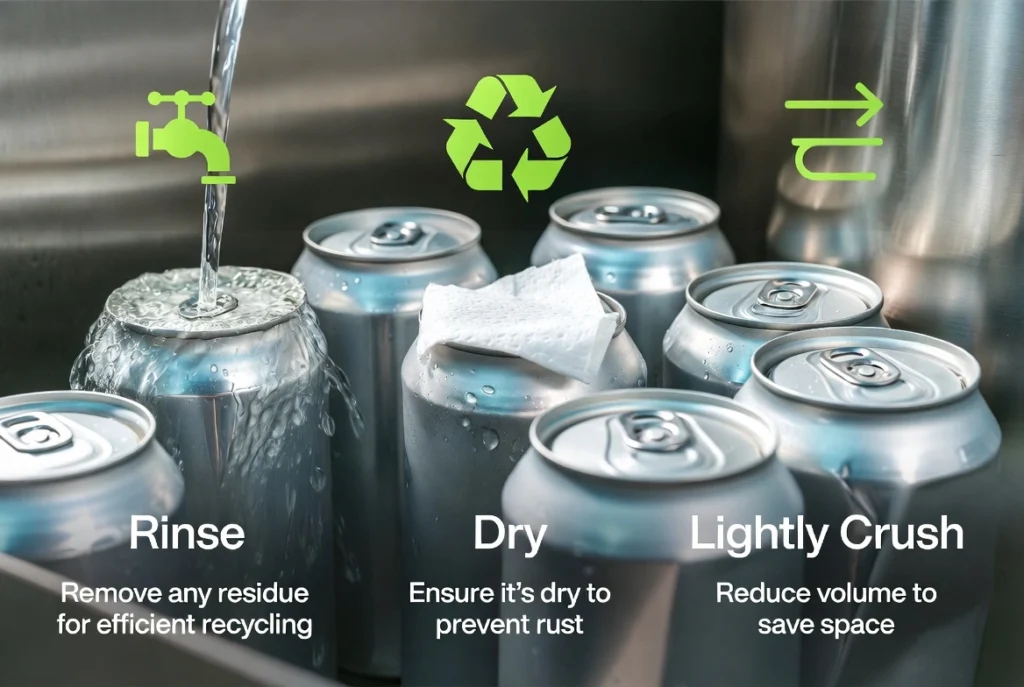
Rinse soda and beer cans immediately. A quick rinse with water washes away sugars and acid that rot other recyclable material and attract bugs. If you intend to save cans for a month or longer, cleaning first is even more important.
Peel off sticky wrappers or paper sleeves when they slide off easily. Swab any syrupy patches. Forget harsh scrubbing; you just want them ‘visibly clean’ not pristine.
Don’t chuck unrinsed cans into the stream! Dirty cans can leak, mold, and reduce the value for the entire load.
Allow cans to air-dry before binning. Dry cans reduce odors and prevent mold, which is crucial if you bag or stockpile them.
Crush
Crush only if your curb or drop-off site allows. Most single-stream systems employ eddy currents that separate aluminum nicely and crushed cans aren’t an issue there.
To crush manually, pinch the middle of the long side, then fold a bit. Wear hardy shoes and stomp the pinched can flat. A little wall-mounted can crusher works and will take cans down to a small fraction of their size.
A few programs request side-crushed cans so the label can’t be seen. Some others require uncrushed cans for optical sorting. Space savings are real. Crushed cans nestle closer together and pack tighter, so you can store more in a 30 to 60 liter bin or bag and make transport easier.
Watch for updates. If rules change, adjust your approach accordingly.
Contain
Throw crushed or uncrushed cans directly in the designated recycling bin. If your area prohibits bagged recyclables, leave them loose.
Don’t bag them in plastic unless your program says that they’re permitted. Bags can jam sorting lines or simply get landfilled unopened.
If the site is multi-stream, separate aluminum from glass, plastic, and cardboard. Take out straws, caps, and lids and recycle them according to your local regulations.
Check
Check your city or county recycling page or mailed guides for their current steps regarding aluminum beverage cans. Verify if they accept crushed cans and any size, label, or contamination policies. Employ bins with the recycling emblem and proper color coding to streamline recycling materials. Review notices every season as programs adapt to changes in markets and technology.
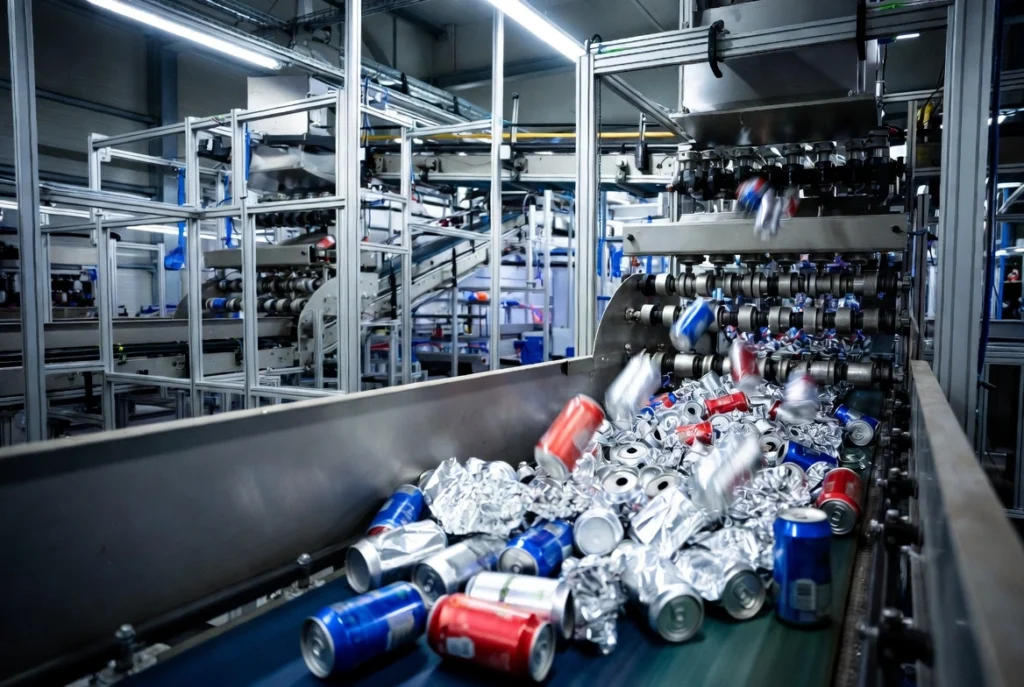
The Hidden Economics of CRUSHED POP CANs RECYCLING
Crushing empty aluminum beverage cans shifts costs, speed, and quality throughout the recycling chain. Gains appear in bin capacity, plant throughput, and final metal value, but local regulations are different, so customize your recycling setup to the system you supply.
Collection Efficiency
Crushed cans occupy less space, so both carts and dumpsters contain more per collection. A 50 L bin, for example, can accommodate approximately two to three times more crushed cans than loose ones, assisting homes, offices, and event locations that fill rapidly.
Less volume can translate to fewer trips, reducing fuel and service charges for haulers and municipal programs. That counts in places where pick-up budgets are lean and drives are long. It aids small businesses and schools that stockpile cans pre-drop-off.
Drives and office initiatives experience cleaner spaces and less overflow problems when cans are crushed and bagged. This keeps staff time low and increases participation because bins remain usable longer.
Track results with simple metrics: kilograms collected per bin, bin fullness at pickup, and diversion rate changes. More efficient capture of aluminum shifts the needle because aluminum commands robust scrap pricing, frequently as high as one thousand three hundred sixty-seven dollars per tonne, over plastic or glass.
Processing Speed
Plants go quicker when they get dense, even feed. Uncrushed cans are bulky. Loads cube out before they weigh out, which slows conveyor usage and baler cycles.
With crushed cans, balers attain desired weight in fewer strokes and conveyors empty faster. That increases throughput and cuts man-hours per ton at MRFs. Faster flow reduces the loop from curb to smelter to new stock, which serves to satisfy constant demand for can sheet and industrial alloys.
Note: Some facilities prefer uncrushed cans for optical sorting or eddy-current tuning. One plant tech on Reddit put it plainly: every facility runs different kit. Ask yours first before you alter prep habits.
Material Quality
Quality maintains high value and low waste. Please rinse cans. Flies will lay eggs in leachate and it can contaminate entire loads. Leave out food, liquids, and non-metal items that jam screens or dilute bales.
Look for rules on crushing and coatings. A lot of plants take regular beverage laminate cans, but labels, plastic tops, and adhesives should be light. Clean, dry, single material loads minimize bale downgrades.
Premium aluminum fuels infinite cycles—fresh soda cans, car components, and construction materials. Every tonne recycled bypasses 10 tonnes of CO2 and saves 90 to 95 percent of the energy compared to virgin bauxite, which is why speedy, clean streams get prioritized.
Need Fast & Reliable Waste Collection in Dubai?
Navyom Waste Collection Services offers same-day pickups, eco-friendly disposal, and certified recycling solutions for homes and businesses across Dubai.
Book Your Pickup NowRecycling Contamination
Contamination devalues loads and can cause recyclable materials, such as empty aluminum beverage cans, to end up in a landfill for years. Avoid recycling contamination by keeping food waste, liquids, and non-recyclables out of bins to ensure effective crushed pop can recycling.
Food Waste
Rinse empty aluminum beverage cans thoroughly to eliminate product residue, which is one of the biggest sources of recycling contamination. A quick swish with water removes sugars and acids that can gum up paper fibers on mixed lines and impede optical sorters. Clean beverage cans flow better on eddy current separators, increasing both throughput and quality.
These sticky remnants invite pests and stink up common collection centers and depots. This situation fuels complaints and can cause trash haulers to refuse bins. A quick 5 to 10 second rinse reduces odors and helps recyclable materials stack neatly until collection.
Forget about cans with gobs of food stuck on. Heavy residue can leach onto cardboard or paper, preventing those materials from being recycled and decreasing the value of the entire bale. Contaminated loads are more expensive for recyclers to re-sort, and we sometimes have to landfill them.
Share simple rules with family or colleagues: empty, quick rinse, air dry. Clean inputs accelerate processing and help maintain low costs and contamination for all.
Wrong Materials
Keep non-recyclables out: plastic bags, chip bags, plastic lids, and Styrofoam are not accepted in most curbside bins. They either don’t have markets or melt at the wrong temperatures, fouling equipment.
Keep aluminum beverage cans separate from glass, paper and cardboard if your program requests it. Mixed inputs confuse sorting and increase the risk that clean metal is lost. Smashing aluminum cans doesn’t create issues. Flattened cans are still caught by eddy-current systems.
Never put hazardous waste, such as paint, solvents, automotive fluids, or batteries, with cans. They require special handling at drop-off sites and create hazards at the plants.
Consult your local accepted items list. They vary by location and technology, and policies may adapt as markets evolve.
Bagged Recyclables
Don’t bag cans unless your program specifically allows it. Plastic bags wrap screens, jam belts and motors. Some plants shut down daily just to cut them out.
Puts cans loose in the bin so sorters and machines can spot and salvage them fast. That small step increases capture rates and decreases downtime.
Hang clear signs in common areas—”Empty, rinse, no bags”—to maintain habits and reduce contamination month after month.
Understanding Global Systems
Crushed pop can recycling weaves in and out of systems that influence your behavior at home and downstream. These systems vary by country and city, and regulations shift over small distances. Global rates fluctuate as well, with areas such as East Asia and the Pacific recovering more aluminum beverage cans than other areas. Aluminum is a bright spot; the global recycling rate for aluminum beverage reached about 75% in 2023, yet data gaps still hide real performance in many places.
Single-Stream
All recyclables go in one bin: aluminum cans, glass bottles, paper, and some plastics. Plant then sort the blend with screens, magnets, and eddy currents for aluminum, near-infrared scanners, and air jets. They can output molten aluminum that is as much as 99% pure. It is strong enough to feed directly back into new cans.
The tradeoff is pollution. Food residue, wet paper, or glass shards decrease quality and can result in good cans being landfilled. Rinse out cans, drain liquids, and don’t bag unless your program requests it. Check your local rules on crushing. Some initiatives will request you to retain cans uncrushed to assist with recognition, while others permit light crushing to preserve space and minimize transport emissions.
Adhere to published directions from your hauler or city website. Small steps bring down rejected batches and keep energy savings real. One recycled can power three hours of TV.
Multi-Stream
You separate by type prior to collection. Metal with metal, glass with glass, paper with paper. This reduces cross-contamination and increases recovery, enabling local mills and smelters to purchase cleaner feedstock.
Aluminum must be separated from steel and from glass fines. A lot of programs take flattened cans and check if labels or pull tabs must be removed. With improved sorting at the curb, neighborhoods typically achieve increased recycling rates and enhanced end-product quality, which can drive closed-loop can-to-can recycling.
Always stick to your program’s bin colors and prep steps, as specifics vary by municipality and even by building.
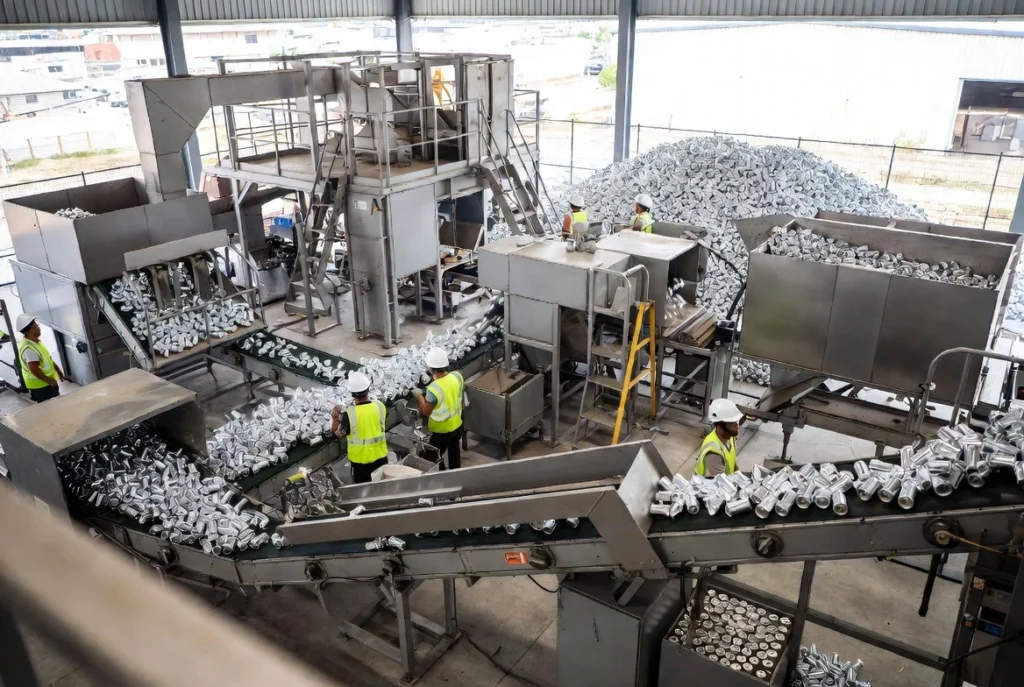
Deposit-Return
When you purchase beverages, you pay a small deposit and receive it back upon returning empty aluminum beverage cans to a reverse vending machine, depot, or store counter. These bottle bill programs, active in many states and parts of Europe and Australia, not only reduce litter but also boost return percentages, often achieving rates of 80% or higher.
To ensure a smooth return process, make sure your aluminum beverage cans are clean and not crushed flat, especially if your machine scans barcodes. Utilize a national locator or your retailer’s map to find the right recycling centers, as acceptance standards vary, and some locations only take products they sell.
By enhancing aluminum recovery, deposit programs significantly contribute to the recycling setup, though reporting gaps still limit global visibility. Better data and transparency can help benchmark systems, guide policy, and link local practices to broader global objectives.
Frequently Asked Questions
Should I crush aluminum cans before recycling?
It varies by your local recycling program. Many curbside recycling systems specifically prefer uncrushed aluminum beverage cans, as it simplifies the sorting process for their machinery. Conversely, drop-off centers or reverse vending machines typically accept crushed beverage cans. Always check your city’s rules to ensure proper recycling.
Why does crushing cans sometimes cause recycling contamination?
Sorting machines detect objects by size and shape, particularly focusing on empty aluminum beverage cans. A crushed can can resemble paper or flat plastic on conveyor belts, directing it to an incorrect stream. Mis-sorts bring down bale quality and raise expenses, which is why many recycling programs request uncrushed beverage cans.
What is the best way to recycle crushed cans if allowed?
Rinse, air-dry, and lightly crush empty aluminum beverage cans lengthwise for space-saving. Save them in a separate, transparent bag or bin marked ‘Aluminum.’ Avoid commingling with paper and take them to a recycling center that accepts crushed beverage cans.
Do crushed cans still get the same recycling value?
Right, the value of aluminum beverage cans comes from the metal, not the form. Mis-sorted recyclable materials like crushed cans can be downgraded or sent to the garbage dump. Proper preparation preserves value and ensures the cans reach the appropriate recycling center.
How much energy does aluminum recycling save?
Recycling aluminum beverage cans requires approximately 95% less energy than creating new aluminum from ore. This process reduces greenhouse gas emissions and conserves bauxite. A single recycled beverage can could be back on shelves in as little as 60 days, enabling a circularity system.
Can I crush cans for deposit return schemes?
Frequently, yes, but laws differ. Certain reverse vending machines actually require undamaged barcodes and shape, while others accept empty aluminum beverage cans crushed by the pound. Look up your recycling program’s guidelines; if a machine won’t accept a crushed can, bring uncrushed ones instead.
What global factors affect whether I should crush cans?
Sorting tech and rules for recycling aluminum beverage cans differ in every country and city. Areas with more sophisticated optical and eddy current systems might fare better with crushed beverage cans. In regions with manual or rudimentary sorting, uncrushed aluminum beverage cans minimize mistakes. Always adhere to your local recycling program instructions for optimal outcome.
Conclusion
To understand crushed pop can recycling, concentrate on the basics. Certain locations require flattened cans. Some don’t. Shifts occur by city and facility. MRFs that sort with shape cues can mark flattened cans as paper. Deposit systems usually take both. Listen well to local advice.
To reduce waste, rinse cans. Dry them. No lids in the can! Bag loose cans only if your program calls for it. For drop-off sites, clear bags are optimal. For curbside bins, loose and clean rules apply in most cities.
To save time and cash, verify your region’s regulations. A fast check leads to fewer problems. Need assistance? Call us or mail us at Sales@navyom.me.