Construction waste in Dubai is no longer just a site-level inconvenience. In 2026, it has become a direct financial, regulatory, and reputational liability for contractors, developers, consultants, and project managers.
Mixed construction waste now triggers:
- Higher disposal and transport fees
- Waste Transfer Note (WTN) rejections
- Inspection delays and re-handling costs
- Lower compliance scores with authorities
- Reduced competitiveness in tenders
What once felt like a minor operational shortcut—throwing everything into one skip—now quietly erodes project margins and increases exposure to enforcement action.
This updated guide breaks down the true cost of mixed construction waste in Dubai, including disposal pricing, transport inefficiencies, Dubai Municipality enforcement practices, WTN risks, and lost recycling value. It also explains why proper segregation has become a competitive advantage rather than an administrative burden.

What Is Mixed Construction Waste?
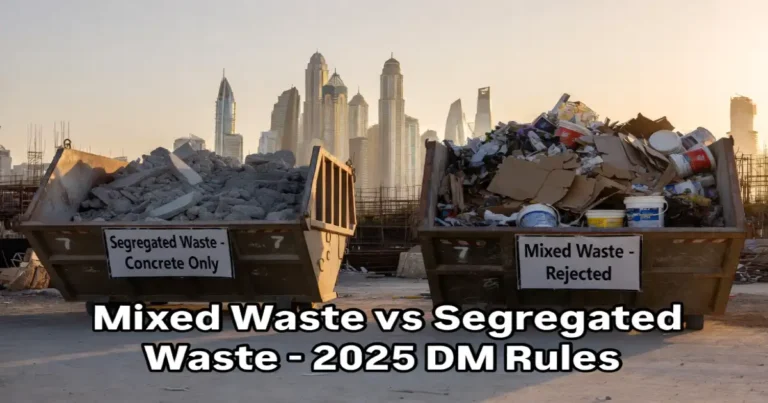
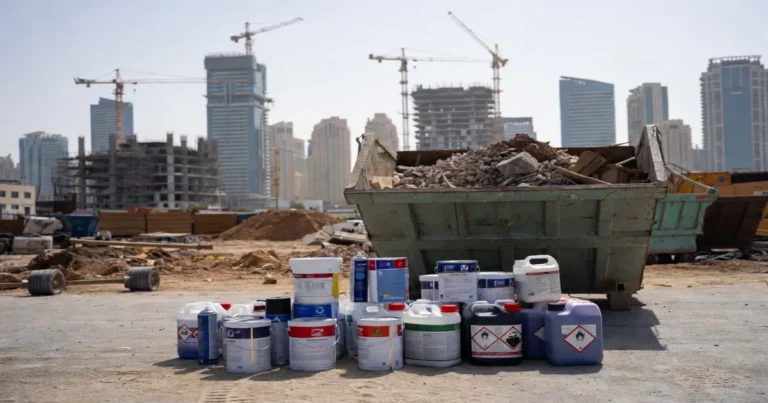
Mixed construction waste refers to unsorted construction and demolition materials collected in a single skip, container, or truckload.
Typical materials found in mixed loads include:
- Concrete, blocks, bricks, and rubble
- Wood, pallets, and shuttering formwork
- Gypsum boards, insulation, and false ceiling waste
- Metal scraps, rebar off-cuts, wiring
- Plastic packaging, polythene sheets, site debris
Under Dubai Municipality regulations, mixed loads are treated as high-risk waste streams because they:
- Slow down recycling processes
- Increase contamination rates
- Require manual sorting and secondary handling
- Raise environmental management costs
For a detailed breakdown of approved categories, disposal paths, and compliance requirements, see: Construction Waste Management in Dubai.
Why Mixed Construction Waste Costs More in Dubai (2026)
1. Higher Disposal Fees
In 2026, mixed construction waste typically costs 30–50% more per tonne than segregated waste.
Why?
Because mixed waste cannot move directly into recycling streams. Licensed facilities must:
- Separate materials manually or mechanically
- Remove contaminants
- Process residual waste before landfill or recovery
Those extra steps increase operational costs—and those costs are passed directly to the waste generator.
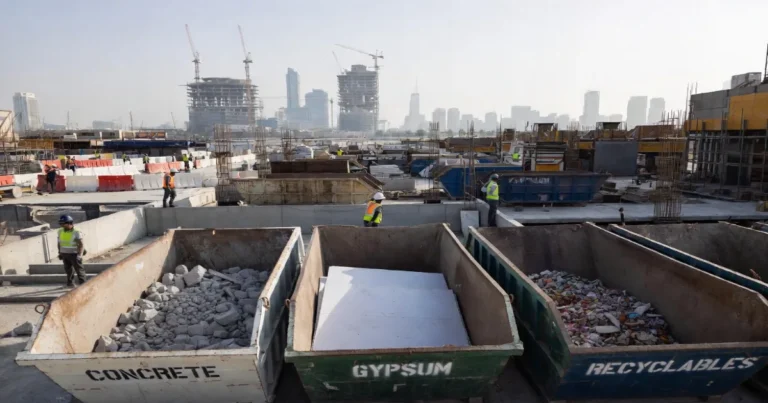
Segregated waste, on the other hand (concrete-only, metal-only, wood-only), moves straight into recycling or recovery channels with minimal handling.
2. Increased Transport and Handling Charges
Mixed loads create inefficiencies long before they reach a disposal facility.
Common cost drivers include:
- Overloaded trucks due to uneven density
- Additional trips when loads exceed weight thresholds
- Longer queuing and unloading times
- Re-weighing or partial offloading
Across a medium-to-large project, these inefficiencies can quietly add thousands—or tens of thousands—of dirhams in logistics overhead without appearing as a single visible penalty.
Cost Comparison Table: Mixed vs Segregated Waste (Dubai 2026)
| Cost Factor | Mixed Waste | Segregated Waste |
|---|---|---|
| Disposal fee per tonne | High | Lower |
| Transport efficiency | Poor | Optimized |
| WTN approval rate | Risky | High |
| Unloading time | Longer | Faster |
| Recycling recovery | Low | High |
| Inspection risk | Elevated | Reduced |
| Compliance score impact | Negative | Positive |
WTN Rejections: The Hidden Cost Contractors Miss
One of the most underestimated risks of mixed construction waste is Waste Transfer Note (WTN) rejection.
Dubai’s digital WTN system has evolved significantly. In 2026, it now relies on:
- Image verification at collection and disposal points
- Declared waste category vs actual load comparison
- Pattern-based compliance monitoring (repeat errors matter)
If a load is declared as “concrete waste” but visually contains wood, plastic, or gypsum, the WTN can be rejected.
What Happens When a WTN Is Rejected?
- The load may be stopped or redirected
- Re-classification is required
- New approvals may be needed
- Disposal is delayed
- Site waste accumulates
- Labour and equipment wait idle

These indirect costs often exceed the original disposal fee.
For a deeper explanation of common errors and how rejections affect timelines, read: Why WTNs Get Rejected in Dubai.
Regulatory Pressure Is Increasing, Not Decreasing
Dubai’s construction waste framework is now aligned with long-term sustainability objectives, including Net Zero 2050 and Zero Construction & Demolition Waste to Landfill by 2030, under the oversight of Dubai Municipality.
In 2026, enforcement is no longer symbolic or educational—it is operational and data-driven.
Authorities increasingly expect:
- Site-level waste segregation plans
- Clearly documented waste categories per trade
- Verified disposal destinations
- Consistent alignment between declared and actual waste
Sites that repeatedly submit mixed loads may experience:
- Increased inspection frequency
- WTN scrutiny on future submissions
- Fines or stop-work notices
- Lower compliance credibility for future permits
Short Answer Snippet: Why Is Mixed Waste a Compliance Risk in Dubai?
Mixed construction waste increases disposal costs, raises the likelihood of WTN rejection, slows inspections, and lowers compliance scores—making it both a financial and regulatory risk in Dubai’s 2026 enforcement environment.
The Environmental Cost (And Why Clients Now Care)
Mixed waste does not just cost money—it damages sustainability performance.
When recyclable materials are contaminated:
- Recovery rates drop
- More waste ends up in landfill
- Recycling credits are lost
- Diversion metrics look weaker
This matters because many developers, consultants, and government entities now track:
- Waste diversion percentages
- Recycling performance by contractor
- ESG and sustainability indicators
Poor segregation can negatively impact:
- Tender evaluations
- Contractor prequalification
- Sustainability reporting
- Long-term brand reputation
Even if a project performs well in other areas, mixed waste can quietly undermine its environmental profile.

Real-World Cost Impact Over a Medium Project
On a typical mid-scale construction project:
- Mixed waste increases per-tonne disposal costs
- WTN rejections create re-handling expenses
- Transport inefficiencies add logistics overhead
- Compliance delays affect schedules
By contrast, consistent segregation often delivers:
- Predictable waste budgets
- Faster site clearance
- Smoother inspections
- Cleaner audit trails
Over the project lifecycle, segregation can save tens of thousands of dirhams—without slowing construction activities.
How to Reduce Mixed Waste Costs on Your Site
1. Segregate at Source
Source segregation delivers the highest return with the lowest effort.
Best practices include:
- Dedicated skips for concrete, metal, wood, and general waste
- Clear colour coding and signage
- Placement near work zones to reduce “convenience mixing”
2. Train Site Teams
Most mixed waste issues stem from habit, not intent.
Simple actions help:
- Toolbox talks explaining why segregation matters
- Visual posters near disposal areas
- Clear responsibility for skip monitoring
When teams understand that segregation prevents delays and rework, compliance improves naturally.
3. Align Waste Categories With Actual Loads
Ensure that:
- Declared waste categories match what is physically collected
- Loads are visually checked before dispatch
- Supporting photos reflect real conditions
This alignment dramatically reduces WTN rejection risk.
4. Use Licensed and Approved Waste Routes
Approved operators and facilities understand:
- Correct waste classification
- Accepted contamination thresholds
- Documentation expectations
For an overview of compliant collection and routing practices, see: Dubai Waste Management Services.
Why Mixed Waste Is a Business Risk in 2026
In Dubai’s current regulatory climate, mixed construction waste is no longer a technical oversight—it is a risk management issue.
Projects that ignore segregation face:
- Unpredictable disposal costs
- Schedule disruption
- Compliance exposure
- Client dissatisfaction
Projects that manage waste properly gain:
- Faster approvals
- Cleaner reporting
- Stronger tender positioning
- Higher operational confidence

Final Takeaway
The true cost of mixed construction waste in Dubai is not limited to landfill fees. It includes delays, rejections, compliance pressure, environmental underperformance, and lost efficiency.
In 2026, segregation is no longer optional.
It is one of the smartest financial, operational, and environmental decisions a contractor can make.
Frequently Asked Questions (FAQs)
Why is mixed construction waste more expensive in Dubai?
Because it requires additional sorting, handling, and processing at licensed facilities, increasing disposal and transport costs.
Can mixed waste cause WTN rejection?
Yes. If the declared waste category does not match the actual contents, Dubai Municipality may reject the WTN.
Is waste segregation mandatory in Dubai?
While regulations vary by project type, enforcement expectations in 2026 strongly favor on-site segregation and documented waste streams.
Does segregation slow construction work?
No. When planned properly, segregation improves logistics flow and reduces delays caused by rejected loads or re-handling.
How does mixed waste affect tender evaluations?
Poor waste segregation can weaken sustainability scores and compliance credibility, which may impact tender competitiveness.