Waste Management as a Competitive Edge: How to Win More Tenders in 2026
In many tenders, the spread between bidders is small. Prices come in tight. Timelines look similar. Everyone has “experience” and “quality.” What separates winning bids from average ones is often the evidence of control: how clearly a contractor shows they can deliver without compliance issues, inspection delays, or avoidable project disruptions.
Waste management sits right in the middle of that evaluation. It is operational, measurable, and visible. It creates documentation trails that can be checked. It also exposes weak site discipline faster than most other parts of a method statement. That’s why procurement managers and bid teams increasingly treat waste as more than a site housekeeping item.
This guide is written for procurement teams and bid managers who want to use waste management to improve technical scores, reduce risk flags, and demonstrate sustainability leadership to Tier-1 developers. No slogans, no vague promises—just what evaluators can score and what contractors can deliver.
1) Why waste management affects tender outcomes
Waste management influences tender outcomes for a simple reason: it represents risk and performance in one package. If waste is handled poorly, the project faces knock-on effects: blocked work areas, failed audits, rework, repeated inspections, and reputational issues. If waste is handled well, you get smoother site logistics and cleaner compliance records—two things clients care about because they protect schedule and reduce surprises.
For government-linked clients and Tier-1 developers, waste is also tied to broader reporting needs. Sustainability reporting is not just a corporate document anymore. It has become something the supply chain is expected to support with data: diversion rates, disposal routes, and proof of outcomes. Waste is one of the easiest places to test whether a contractor can provide that evidence consistently.
What procurement teams are really reading between the lines
- Control: does this contractor run a structured site, or do problems get fixed only when audits happen?
- Predictability: are waste movements and approvals likely to cause delays?
- Compliance readiness: do they understand documentation workflows and responsibilities?
- Accountability: is someone named as the owner, or is it “everyone” (meaning no one)?
A solid waste section answers these questions without sounding defensive. It shows the evaluator that you have systems in place, not just intentions.
2) The big mistake in bids: vague waste promises
Many bids still include lines like “we will recycle wherever possible” or “we will dispose responsibly.” From a procurement viewpoint, those statements create uncertainty. They’re hard to score because they aren’t measurable, and they aren’t tied to a method. Most evaluators have seen those lines in hundreds of bids.
If a commitment cannot be linked to a process, a role, a checklist, or a reporting output, it will usually score low because it cannot be verified.
The fix is simple: replace claims with delivery. Not longer writing—clearer writing. Your waste section should read like an operational plan that can be executed on a real site.
3) How waste management improves technical scores
Technical scores reward clarity, risk control, and deliverability. Waste management helps in all three areas when it is written as a controlled workflow rather than a general promise.
At a minimum, a strong waste response shows: expected waste streams, segregation method, inspection controls, documentation flow, reporting, and corrective action. When these are present, evaluators can assign marks confidently.
Scoreable components evaluators commonly reward
- Waste stream mapping by phase: excavation, structure, MEP, fit-out, demolition—each produces different waste.
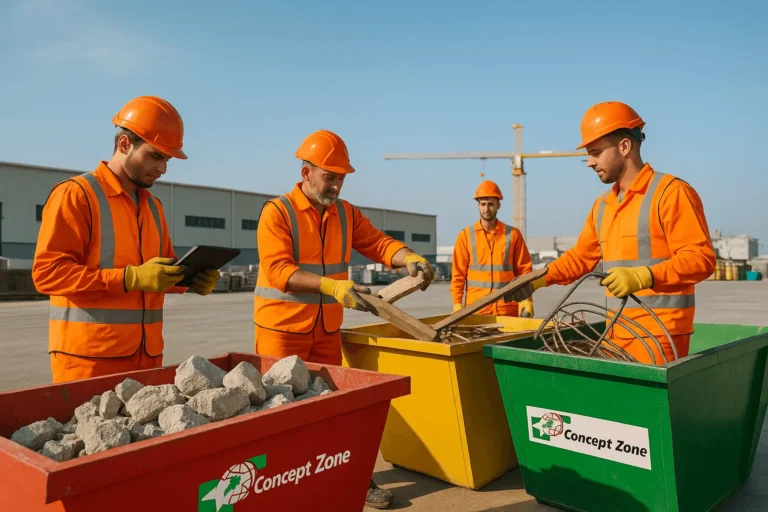
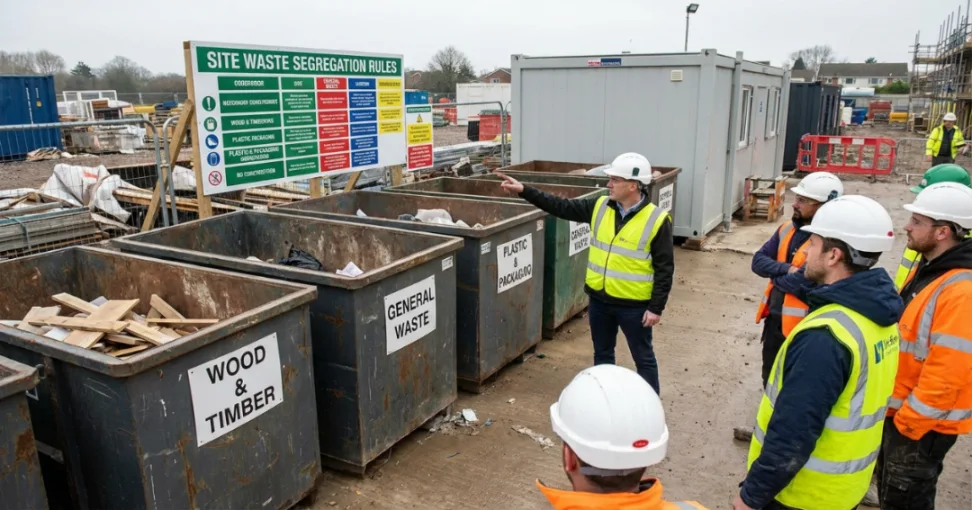
- Segregation at source: not “sorting later” but controlled separation where waste is generated.
- Documented movements: clear records for each load, including destination and approvals.
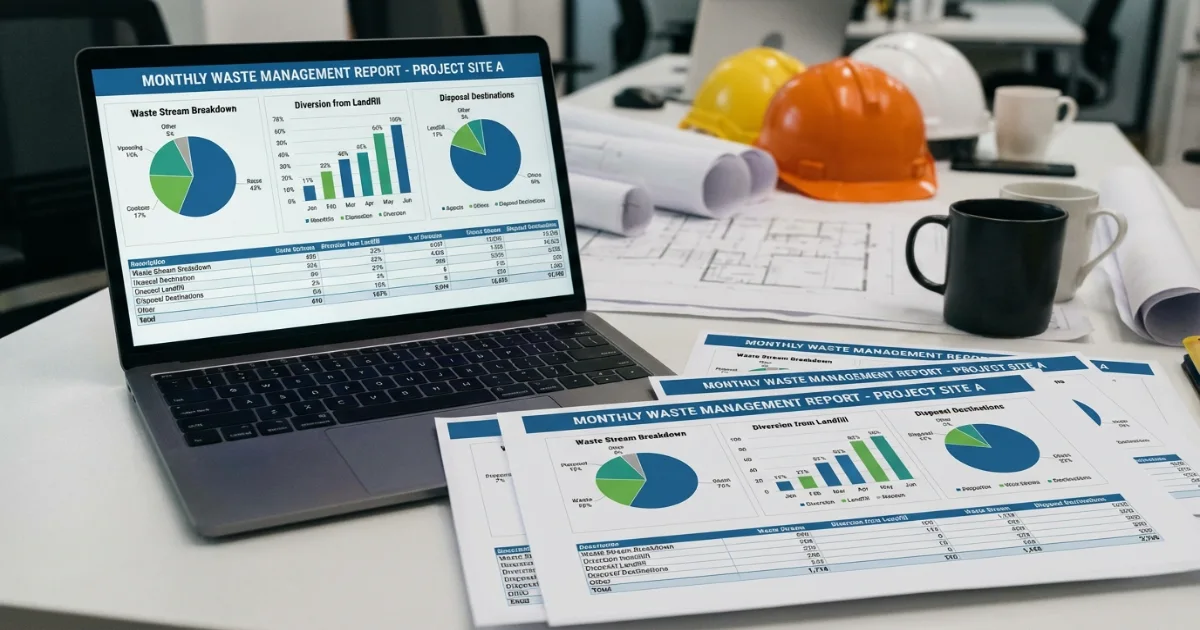
- Monthly performance reporting: KPIs, diversion rates, and trend notes (what improved and why).
- Governance: defined responsibility and a routine (daily checks + escalation when contamination occurs).
If your tender relates to Dubai waste compliance workflows, your internal reference library can be: construction waste management in Dubai. For inspection behavior and why “correct waste” still fails, this is also useful: AI waste inspections in Dubai.
4) Turning sustainability into something procurement can score
Sustainability sections often fail because they are written like brochures. Procurement teams can’t award points for values; they award points for deliverables. If you want sustainability marks, you need to convert the concept into operational outputs.
Waste management is the fastest way to do that because it produces natural metrics: tonnage by stream, diversion percentages, approved destinations, frequency of rejection or rework, and documented corrective actions.
Examples of sustainability deliverables that are easy to score
- A realistic diversion target tied to project scope (not a generic “we aim for 90%”).
- A stream-based plan (metal, concrete, wood, gypsum, mixed) with clear handling rules.
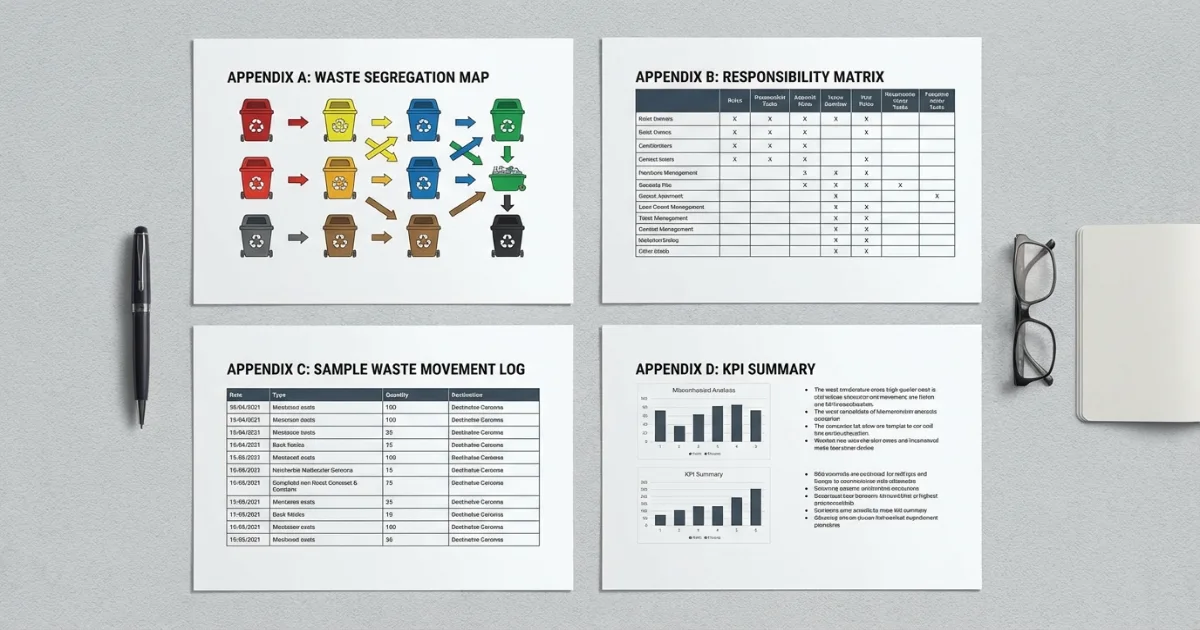
- A monthly waste report template attached in an appendix.
- A routine: daily segregation checks + weekly review + monthly KPI reporting.
- A corrective action workflow: what happens when a skip becomes contaminated.
These items don’t require expensive technology. They require discipline and consistency. That’s exactly what procurement teams want to see.
5) How to demonstrate sustainability leadership to Tier-1 developers
Tier-1 developers typically focus on two things: predictable delivery and reputational protection. Sustainability leadership is not judged by how many “green” words appear in the bid, but by whether the contractor can run a site that avoids compliance issues and provides clean reporting.
In practice, leadership shows up as standards that remain stable even when schedules get busy: segregation stays in place, records stay complete, and contamination is corrected quickly.
What Tier-1 developers interpret as leadership
- Consistency: the system works across phases, not only during audits.
- Transparency: reports show the good and the bad (and explain corrective actions).
- Control of special waste streams: gypsum, chemical containers, contaminated timber, composite waste.
- Site governance: a named owner and routine checks.
- Supplier discipline: subcontractors are held to the same segregation rules.
If your project involves higher-risk materials, it helps to align your bid narrative with practical handling guidance. An internal reference point can be: hazardous construction waste in Dubai.
6) The “Evidence Pack” that wins points
One of the simplest ways to improve tender scoring is to make evaluation easier. Evaluators are often reviewing multiple bids under time pressure. A short appendix that proves your claims can lift your technical score because it reduces uncertainty.
Think of it as an Evidence Pack: a set of sample documents and visuals that show how you run waste management in practice. It doesn’t need to be long. It needs to be clear and consistent with your method statement.
- Waste stream map by phase (what you expect and how you handle it)
- Segregation plan (skip layout and labeling approach)
- Photo standard (wide + close; what must be visible)
- Waste movement log template (simple, auditable)
- Monthly waste report template (KPIs + streams + destinations)
- Responsibility matrix (who checks, who approves, who reports)
- Corrective action workflow (contamination → fix → prevention)
This pack allows the evaluator to see that your claims are deliverable. It also protects the client because it shows the contractor has governance, not just statements.
7) How to write your waste method statement so it scores
A strong waste method statement does not need complicated language. It needs a clear workflow, responsibilities, and checks. Below is a structure that tends to perform well because it is practical and easy to review.
A practical structure (use as your tender outline)
- Scope: what waste streams you expect for this project.
- Segregation method: what you segregate, where it happens, and how you prevent mixing.
- Storage and signage: labeled skips, placement logic, and multilingual signage if needed.
- Daily checks: who checks, when, and what they look for.
- Documentation: what records are created per movement and how they’re stored.
- Reporting: monthly KPIs, diversion rates, and narrative of corrective actions.
- Training: toolbox talks, supervisor enforcement, and subcontractor onboarding.
- Corrective action: contamination control and recurrence prevention.
The key is to keep everything consistent: your bid claims, your appendix samples, and your governance roles should match. When they match, procurement teams feel safe awarding points.
8) Waste management as risk management (the section that quietly wins tenders)
Many bids treat risk management as a generic checklist. Waste gives you a chance to be specific because waste risks are concrete: mixing, misclassification, rejected movements, and incomplete records.
If your tender allows a risk register or risk narrative, waste-related risks can show maturity. It tells the evaluator you understand what causes delays and how you prevent them.
Risk controls that procurement teams understand quickly
- Contamination rule: if non-conforming material is found, the skip is corrected before movement.
- Two-check routine: daily checks plus a pre-movement check before documentation submission.
- Special stream handling: separate control for hazardous containers or chemical residues.
- Subcontractor controls: onboarding and enforcement, not “please comply.”
- Audit file discipline: one folder structure per month with all records.

9) Common tender lines to upgrade (without making your bid longer)
You do not need more pages to improve scoring. You need fewer weak lines. Here are common phrases that read as low-commitment, and stronger alternatives that procurement can score.
| Weak line | Why it scores low | Stronger version |
|---|---|---|
| “We will manage waste responsibly.” | No method, no roles, no reporting. | “We will segregate at source by defined streams, run daily checks, record each movement, and submit monthly KPI reporting with destination proof.” |
| “We will recycle wherever possible.” | Not measurable; sounds optional. | “We will apply stream-based segregation and track diversion by stream in monthly reporting; contamination is corrected before movement.” |
| “Site team will monitor waste.” | No accountability. | “Waste Coordinator conducts checks; HSE verifies compliance; PM reviews monthly KPIs and corrective actions.” |
10) Related Compliance Topics That Strengthen Tender Confidence
Waste management rarely stands alone in tender evaluation. Procurement teams and bid reviewers typically assess it alongside broader compliance history, inspection performance, and the handling of higher-risk waste streams. Together, these areas provide a clearer picture of how reliably a contractor operates on live projects.
A strong understanding of construction waste management in Dubai helps bidders demonstrate that their waste systems align with local regulatory expectations and site-level workflows. This foundation reassures evaluators that waste commitments made during tendering can be executed without disruption during construction.
Inspection outcomes are another area closely linked to tender risk. Familiarity with AI waste inspections in Dubai allows contractors to address common rejection triggers, documentation gaps, and verification issues before they affect project approvals or performance reviews.
For projects involving chemical residues, contaminated materials, or special disposal requirements, proper handling of hazardous construction waste in Dubai is often viewed as a maturity indicator. Contractors who manage these streams correctly are generally seen as lower-risk partners, particularly on complex or high-profile developments.
If your bid team is writing method statements and needs Dubai-specific compliance clarity (workflows, inspection triggers, and risk streams), use the DubaiWaste.com guides as your reference library.
Keep the focus on deliverable processes and evidence, not slogans.
FAQs
How does waste management help win more tenders?
It strengthens technical evaluation by reducing uncertainty. A clear workflow, defined roles, auditable reporting, and realistic targets give evaluators confidence that compliance and sustainability commitments will be delivered.
What should a bid team include to prove waste and sustainability claims?
A short Evidence Pack appendix: segregation plan, photo standards, a movement log template, a monthly KPI report template, a responsibility matrix, and a corrective action workflow. These items make claims scoreable.
What do Tier-1 developers look for in waste commitments?
Consistency and transparency. They want segregation at source, controls for contamination, clear reporting, and strong handling of higher-risk waste streams. They also want records that can be produced quickly during audits or reviews.
What is the biggest mistake contractors make in tender waste sections?
Writing broad promises without a method. Replace “we will recycle” with a defined segregation plan, checks, roles, reporting, and sample templates that match what the site will actually do.
Can waste management really affect technical scores if price is close?
Yes. When prices are close, evaluators often choose the bid that reduces project risk and increases confidence in delivery. Waste management is one of the easiest areas to verify that discipline.
Final Words on Waste Management as a Competitive Edge
Waste management becomes a competitive edge when it is treated as a controlled delivery system rather than a paragraph of promises. Procurement teams score what they can verify. Bid teams win when they make verification easy: clear methods, defined roles, measurable KPIs, and supporting evidence that matches the claims.
If you want to win more tenders, stop treating waste as a compliance afterthought. Use it as proof that your delivery is disciplined, your sustainability is measurable, and your project risk is controlled.