How moisture, contamination, AI inspections, and new UAE separation rules are quietly reshaping construction waste compliance
Introduction: The Risk Most Dubai Projects Still Miss
In 2026, gypsum waste disposal became the single most underestimated compliance risk on construction sites across Dubai and the wider UAE.
Not concrete.
Not hazardous waste.
Not asbestos.
Gypsum.
It’s not because gypsum is dangerous by design. It’s because Dubai’s waste management system, landfill controls, and AI-driven inspections now treat gypsum very differently than they did even two years ago.
Projects are being flagged, loads rejected, ESG scores impacted, and contractors penalized — often without understanding why.
This article explains what changed in Dubai, why gypsum is now under the microscope, and what developers, contractors, and regulators must do in 2026 to stay compliant.
Why Gypsum Matters in Dubai’s Construction Ecosystem
Gypsum board (drywall, plasterboard) is everywhere in UAE construction:
- Residential towers
- Hospitality fit-outs
- Commercial interiors
- Mall renovations
- Fast-track mixed-use developments
Dubai’s rapid construction pace produces thousands of tons of gypsum waste every month — mostly from offcuts, demolitions, and interior works.
Historically, this waste was treated as:
“Low risk, non-hazardous, general C&D waste.”
That classification is no longer valid.
The Dubai-Specific Reality: What Changed by 2026
Three local factors turned gypsum into a compliance hotspot:
1. Moisture + Climate + Landfill Chemistry
2. AI-based inspection replacing manual checks
3. Stricter separation and documentation rules
Each one alone is manageable.
Together, they create silent non-compliance.
1. Moisture + Gypsum: A Bigger Risk in the UAE Climate
Why Dubai Is Different
Dubai’s waste challenges are unique:
- Extreme heat
- High humidity
- Rapid waste decomposition
- Controlled landfill environments
When gypsum waste becomes wet — from rain, washdown water, or poor storage — and mixes with organic or general waste, it can produce:
- Hydrogen sulfide (H₂S) gas
- Odor complaints
- Corrosion in landfill infrastructure
- Worker health risks
This is why Dubai Municipality and landfill operators now treat wet or mixed gypsum as a controlled material, not general waste.

What Is Considered Non-Compliant Gypsum in Dubai (2026)
Even if gypsum is “technically non-hazardous,” it becomes non-acceptable when:
- It is wet or damp
- Mixed with food waste or organics
- Contaminated with cement, adhesive, paint, or insulation
- Stored uncovered
- Disposed of without clear source separation
Many rejected loads are not “illegal” — they are non-conforming under landfill acceptance criteria.
That distinction still results in rejection, cost, and delay.
2. AI Has Replaced Visual Inspection in Dubai Waste Operations
This Is the Biggest Change Most Sites Haven’t Adapted To
Dubai is aggressively digitizing waste management as part of:
- Smart City strategy
- Circular Economy Policy 2031
- ESG reporting frameworks
- Municipal landfill optimization
As a result, AI-enabled cameras and classification systems are now widely used at:
- Transfer stations
- Landfills
- Waste processing facilities
Why AI Flags Gypsum More Than Humans
AI systems do not “guess.”
They detect:
- Moisture discoloration
- Mixed material patterns
- Fine contamination
- Inconsistent waste profiles
A skip that looks acceptable to a site supervisor can be instantly rejected by AI.
Once flagged:
- The rejection is logged
- The generator is traceable
- Repeat issues are escalated
There is no argument at the gate anymore.
3. Separation Rules in Dubai Are No Longer Flexible
Old Practice
“We’ll separate it later.”
2026 Reality
Mandatory source separation of gypsum waste.
Dubai projects are now expected to:
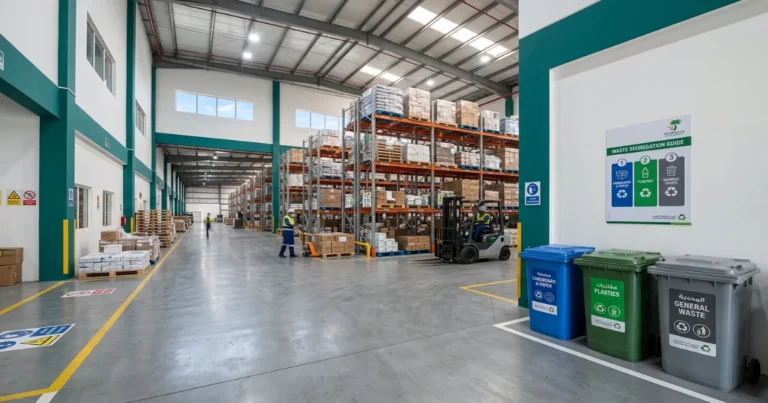
- Provide dedicated gypsum skips
- Keep gypsum dry and covered
- Label waste streams clearly
- Prevent cross-contamination
- Maintain disposal documentation
Gypsum mixed with general waste is increasingly refused at destination, not corrected on site.

Why Developers Should Care (Even If Contractors Handle Waste)
For developers, gypsum non-compliance creates:
- Project delays
- Cost overruns
- ESG reporting issues
- Audit findings
- Risk to green building targets
Waste violations increasingly roll up to the developer, not just the contractor.
In high-profile projects, repeated waste failures can affect:
- Contractor prequalification
- Authority approvals
- Sustainability certifications
Why Contractors Get Hit the Hardest
For main contractors and fit-out contractors, gypsum mistakes lead to:
- Rejected trucks
- Double transport costs
- Emergency re-sorting
- Site congestion
- Commercial disputes
- Liquidated damages risk
Most of these costs are not recoverable.
Gypsum is now one of the highest rejection-rate materials in Dubai C&D waste streams.
Why Regulators Focused on Gypsum First
From a regulatory standpoint, gypsum was the logical target:
- Extremely common
- Chemically problematic when wet
- Historically ignored
- Easy to detect with AI
- High landfill impact if mismanaged
Gypsum became the compliance pressure point.
Best-Practice Gypsum Compliance in Dubai (2026)
1. Separate at Source — Always
No shared skips. No temporary mixing. No exceptions.
2. Keep It Dry
- Covered containers
- No exposure to wash water
- Elevated placement if possible
3. Train the Workforce, Not Just Management
Most contamination happens at worker level.
4. Inspect Before Dispatch
Assume every load is scanned digitally.
5. Document the Stream
Clear waste tickets and consistent classification matter.
See our Construction Waste Collection Services for gypsum-specific skips

Recycling vs Disposal in Dubai: The New Reality
Gypsum Recycling
Preferred, but only when:
- Clean
- Dry
- Uncontaminated
- Properly separated
Many sites fail recycling acceptance criteria without realizing it.
Landfill Disposal
Still allowed — but conditional.
If gypsum is wet or mixed, it is often rejected outright.
The Cost of Ignoring Gypsum Compliance
Across Dubai projects, gypsum mismanagement causes:
- 5–15% increase in waste handling costs
- Schedule delays
- ESG non-conformance
- Increased scrutiny from authorities
- Contractor performance downgrades
All from a material most teams still consider “low risk.”
What Happens Next (Post-2026)
Dubai’s trajectory is clear:
- Digital waste tracking
- Real-time inspection
- Material-specific enforcement
- Circular economy quotas
- Contractor performance scoring
Gypsum will soon be treated with the same discipline as controlled waste, just without the warning labels.
Frequently Asked Questions
Is gypsum considered hazardous waste in Dubai?
In Dubai, gypsum is generally classified as non-hazardous construction waste. However, if it becomes wet or mixed with organic materials, Dubai Municipality guidelines may reclassify it as controlled waste due to Hydrogen Sulfide (H₂S) risks, leading to landfill rejection.
Can gypsum go to landfill in Dubai?
Yes — if it is dry, separated, and uncontaminated.
Why are loads rejected even when they look fine?
AI inspection systems detect moisture and contamination invisible to humans.
Who is responsible — contractor or developer?
Operationally contractors, but compliance risk increasingly affects developers as well.

Final Thought: Gypsum Is No Longer a Minor Detail
In Dubai’s 2026 construction landscape, gypsum waste is:
- Quiet
- Common
- Chemically sensitive
- Digitally monitored
- Strictly enforced
It doesn’t fail loudly — it fails invisibly until it costs you.
Don’t let a rejected load delay your handover. Contact Navyom Waste Collection today for a free site waste audit and ensure your gypsum strategy is compliant with 2026 regulations.
They are designing gypsum compliance into their waste strategy from day one.
Because in Dubai today, the smallest material can create the biggest compliance problem.