Who this is for:
Project managers, contractors, site engineers, QS teams, and compliance officers working on construction, fit-out, and renovation projects in Dubai.
Why this guide exists:
Many site audits in Dubai do not start with major violations. They start with small, repeated waste-handling mistakes that signal weak control. This article explains Construction Waste Mistakes that trigger site audits in Dubai clearly, without exaggeration, without sales language, and without unofficial claims—so your team can avoid delays, WTN rejections, and unnecessary inspections.
Introduction: Why Waste Compliance Gets Sites Audited
Construction waste in Dubai is regulated primarily by Dubai Municipality and related environmental authorities. By 2026, waste handling is tightly linked to:
- Digital Waste Transfer Notes (WTNs)
- Mandatory segregation rules
- Licensed transport and disposal routes
- On-site inspection readiness
Audits usually happen after patterns appear, not randomly.
Understanding those patterns is the difference between smooth clearances and repeated interruptions.
This guide focuses on practical realities on site, not theory.

How Construction Waste Audits Usually Begin (Reality Check)
In most cases, inspections follow this sequence:
- Minor issue appears (e.g., mixed waste, unclear photos, wrong category)
- WTN clarification or rejection
- Repeat occurrence
- Manual review or site visit
- More frequent checks on later loads
This is not a punishment system.
It is a risk-control system.
1. Mixed Waste in a Single Skip (Most Common Issue)
This is the most frequent reason WTNs are rejected or reviewed.
Typical examples:
- Plastic sheets mixed with concrete debris
- Wood, cardboard, or insulation hidden under rubble
- Gypsum fragments inside C&D waste skips
Why it matters:
- Segregation is mandatory
- Even small contamination affects disposal routing
- Recyclable or inert loads become non-compliant
Key point:
Auditors don’t expect zero mistakes. They expect clear effort and control.
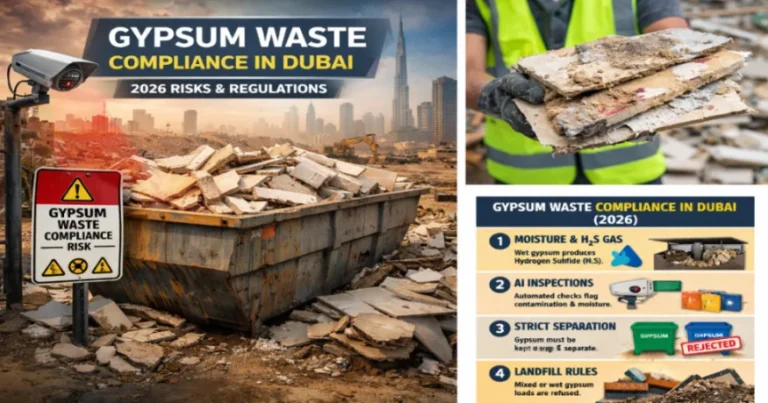
2. Gypsum Waste Not Handled Separately
Gypsum is non-hazardous, but it must be managed correctly.
Common issues:
- Gypsum mixed with concrete or tiles
- Broken drywall soaked with water
- Disposal under general construction waste
What happens:
- Recycling facilities reject contaminated gypsum
- Waste is redirected to higher-cost disposal
- WTNs require clarification
This issue is especially common during fit-out and finishing stages.

3. Incorrect Waste Category on the WTN
WTN categories define how waste is treated.
Frequent mistakes:
- Selecting “General Waste” instead of “Construction & Demolition”
- Marking recyclable waste without proper segregation
- Using vague or inconsistent descriptions
Why it leads to checks:
- Categories determine legal disposal routes
- Incorrect entries create compliance uncertainty
This is often a documentation issue—not intent—but still causes delays.
4. Poor or Inconsistent WTN Photos
Photos are required to visually confirm the waste load.
Common problems:
- Blurry or dark images
- Photos that don’t clearly show the waste type
- Images taken before the skip is fully loaded
What triggers review:
- Photos that don’t match the written description
- Incomplete visual evidence
These checks are typically human and system-based, not advanced AI analysis.
5. Overfilled Skips and Unsafe Loading
Overloading skips raises concerns about:
- Transport safety
- Material falling during movement
- Poor on-site supervision
From an inspection perspective:
Unsafe loading suggests weak waste control overall.
This often results in site-level observation, not just load rejection.
6. Repeated WTN Corrections or Clarifications
One clarification is normal.
Several over a short period raise questions.
Patterns that draw attention:
- Frequent category changes
- Repeated resubmission requests
- Inconsistent quantities or descriptions
These do not automatically mean fines—but they do increase review time.
7. Plastic, Packaging, or Cement Bags in Debris Loads
Plastic is one of the easiest contaminants to identify.
Typical examples:
- Shrink wrap
- Empty cement bags
- Protective coverings
Even small amounts:
- Invalidate recyclable or inert loads
- Lead to rejection or reclassification
This is a training issue more than a technical one.

8. No Clear Waste Segregation on Site
Inspectors often observe how waste is handled, not just where it ends up.
Red flags include:
- No labeled bins or skips
- Workers unsure where materials go
- No visible segregation zones
This can expand an inspection from waste compliance to general site practices.
9. Disposal Without Consistent Records
While disposal timing itself is not regulated, documentation consistency matters.
Issues include:
- Missing records for certain days
- Large volumes with no clear activity trail
- WTNs submitted late or in batches
This creates gaps that require explanation during audits.
10. Subcontractor Waste Not Monitored
Subcontractors often generate:
- Gypsum waste
- Packaging
- Mixed debris
Common gaps:
- No briefing on segregation rules
- No checks before skip collection
- No accountability structure
Regulatory responsibility remains with the main contractor.
11. Repeated Non-Compliance on the Same Site
There is no official “blacklist.”
However, repeat issues do reduce flexibility during inspections.
Practically:
- Inspectors expect improvements
- Explanations are scrutinized more closely
- Documentation is reviewed in more detail
This is based on observed history, not permanent classification.
What Actually Causes Cost Escalation
The waste itself is rarely expensive.
The delay and disruption are.
Common indirect costs:
- Clearance delays (24–72 hours)
- Idle manpower
- Equipment downtime
- Additional transport
- Administrative follow-ups
On many sites, indirect costs are several times higher than disposal fees.

How to Reduce Audit Risk (Without Overengineering)
1. Simple Segregation Rules
- Separate gypsum, debris, and recyclables
- Use clear labels and color coding
2. Short Worker Briefings
- Toolbox talks during fit-out phases
- Visual examples of correct vs incorrect waste
3. Treat WTNs as Compliance Records
- Clear descriptions
- Proper categories
- Adequate photos
4. Monitor Subcontractor Waste
- Assign responsibility
- Inspect skips before pickup
5. Focus on Consistency
Auditors value predictable processes, not perfection.
FAQs
Why do construction sites get waste audits in Dubai?
Construction waste audits usually happen after repeated issues such as mixed waste, incorrect Waste Transfer Note entries, or unclear documentation. Audits are often triggered by patterns, not one-time mistakes.
What is the most common construction waste mistakes in Dubai?
The most common mistake is mixing different waste types in one skip, such as plastic or gypsum inside construction and demolition debris. Even small contamination can lead to WTN rejection.
Does one WTN rejection mean my site will be audited?
No. A single rejection does not automatically lead to an audit. However, repeated rejections or clarifications may result in closer review or inspection.
Is gypsum waste considered hazardous in Dubai?
No. Gypsum is non-hazardous waste in Dubai. However, it must be kept separate and dry. Contaminated gypsum may be rejected by recycling facilities.
Can subcontractor waste cause audit issues for the main contractor?
Yes. The main contractor is responsible for all waste generated on site, including waste produced by subcontractors. Poor segregation by subcontractors can lead to compliance issues.
Are photos required for Waste Transfer Notes in Dubai?
Yes. WTNs require clear photos showing the waste load. Photos help verify the waste type and ensure it matches the selected category.
Do inspectors check the whole site or just the skip?
Inspectors may observe both. While skips are checked, inspectors also look at on-site segregation practices, labeling, and overall waste handling processes.
How can construction sites reduce waste audit risk?
Sites can reduce audit risk by segregating waste properly, training workers, using correct WTN categories, maintaining clear records, and monitoring subcontractor waste.
Are audits random or risk-based?
Most audits are risk-based. They often follow repeated documentation issues, segregation problems, or unclear waste handling practices.
What causes delays after a waste audit?
Delays usually come from WTN clarifications, reclassification of waste, additional inspections, or waiting for approval before disposal can proceed.

Want fewer WTN rejections and smoother site clearances?
If your project is facing repeated clarifications, mixed-waste problems, or on-site confusion, the fastest fix is not “more paperwork”—it’s a clear waste flow your teams can follow every day. Use this as a practical next step to reduce avoidable inspection friction.
- Skip segregation setup Clear zones + labeling so workers stop mixing waste.
- WTN-ready photo checklist Simple steps for clear load photos that match the category.
- Gypsum separation rules Prevent the most common fit-out disposal disruptions.
- Subcontractor control Quick accountability checks before pickups happen.
Final Thoughts: What This Means for 2026 Projects
Waste compliance in Dubai is process-driven, not punitive.
Most audits:
- Are predictable
- Follow repeated patterns
- Can be avoided with basic controls
Sites that treat waste handling as part of daily operations—not an afterthought—experience:
- Faster clearances
- Fewer disruptions
- Lower total project risk
This guide is not about fear.
It’s about clarity, control, and consistency—the same principles inspectors apply on site.
Related Guides You May Find Helpful
If you’re asking why gypsum waste keeps causing WTN rejections during fit-out work, our detailed guide on how to dispose of gypsum waste correctly in Dubai explains the most common contamination and segregation mistakes:
👉 https://www.dubaiwaste.com/gypsum-waste-disposal-dubai/
For site teams wondering what counts as hazardous construction waste in Dubai and why it attracts stricter checks, this breakdown covers regulated materials, documentation expectations, and handling rules in plain language:
👉 https://www.dubaiwaste.com/hazardous-construction-waste-dubai/
And if your project is already facing delays, you may want to review why Waste Transfer Notes get rejected in Dubai, which explains the most frequent photo, category, and segregation issues inspectors flag during reviews:
👉 https://www.dubaiwaste.com/wtn-rejection-dubai/
Together, these guides help contractors understand not just what goes wrong—but why certain waste mistakes repeatedly lead to clarifications, inspections, and avoidable project delays.