Aluminium foil recycling essentially consists of gathering used foil, scrubbing it, and remitting it to a plant that remelts and reconstitutes it into fresh material.
Recycling conserves as much as 95% of the energy compared to producing new aluminium from ore, reduces landfill waste, and decreases emissions.
Small pieces must be balled into a fist-size lump to sort well. Just rinse off any food.
Up next, check out sorting guidelines, drop-off opportunities, and local curbside advice.
Why Recycle Aluminium Foil?
Recycle aluminium foil products to reduce waste, conserve energy, and maintain valuable aluminium materials in circulation. This practice supports a circular economy, where metals circulate repeatedly without degradation. By using local recycling programs instead of the trash bin, you help prevent long-term landfill buildup and the need for new mining, promoting environmental sustainability.
- Decreases landfill volume by sending a lightweight, stubborn material that can linger for centuries.
- Reduces landfill decomposition and incineration pollution by preventing additional emissions.
- Conserves natural resources by substituting recovered metal for virgin inputs.
- Reduces climate impacts through reduced energy consumption and greenhouse gases.
1. Energy Conservation
By recycling aluminium foil, you can conserve up to 95% of the energy required for producing new metal from bauxite. That distinction makes a difference on the grid. Primary aluminium production is power intensive, and recycled metal remelts at a much lower energy cost.
A ton of recycled aluminium foil saves approximately 14,000 kilowatt hours, which is the energy consumption of an average household for a year. Less energy used means less emissions at power plants. That in turn helps curb climate change risks associated with energy production.
It reduces upstream impacts from mining and refining. Because even baby steps accumulate at scale. Rinse foil, ball it up to at least a small fist size and recycle with metals if your local program accepts it. That easy action reduces household energy footprints through the system-wide savings it liberates.
2. Resource Preservation
Recycling foil saves non-renewable bauxite ore and cuts down on mining, land clearing and tailings. The metal you send back fuels a materials pool that can flow for years without weakening or becoming less useful.
This helps facilitate responsible waste management by redirecting worth into supply chains instead of landfills. It keeps products like beverage cans or auto parts flowing with less fresh mining.
Recycle foil so future crafters have a supply of quality metal. Each scrap of clean foil contributes to the preservation of that raw material over the long haul.
3. Emission Reduction
Recycling foil generates less harmful emissions than landfill or incineration, where metals contribute to energy consumption and air impacts without creating new material. It reduces toxic air pollution and greenhouse gases by bypassing primary production and waste incineration.
This helps national and regional environmental agencies meet clean air and climate targets. Recycle clean foil—no food or oil—to get the most reductions, because clean feedstock increases recovery and decreases process losses.
4. Economic Value
Recycled aluminium is a valuable feedstock for mills and producers. It sells fast and has firm demand in packaging, transport, and construction. Collection, sorting, and remelting keeps jobs at local facilities.
Increased capture rates mean less landfill fees for cities and lower service costs for residents. Some programs even share scrap revenue back into community services. In the US alone, we still throw away almost 1.5 million tons a year, and only 35% is recovered, so we’re literally tossing worth, including approximately three pounds of foil per person.
Aluminium foil sits in a landfill for some 400 years, so reclamation counts today.
How to Prepare Foil
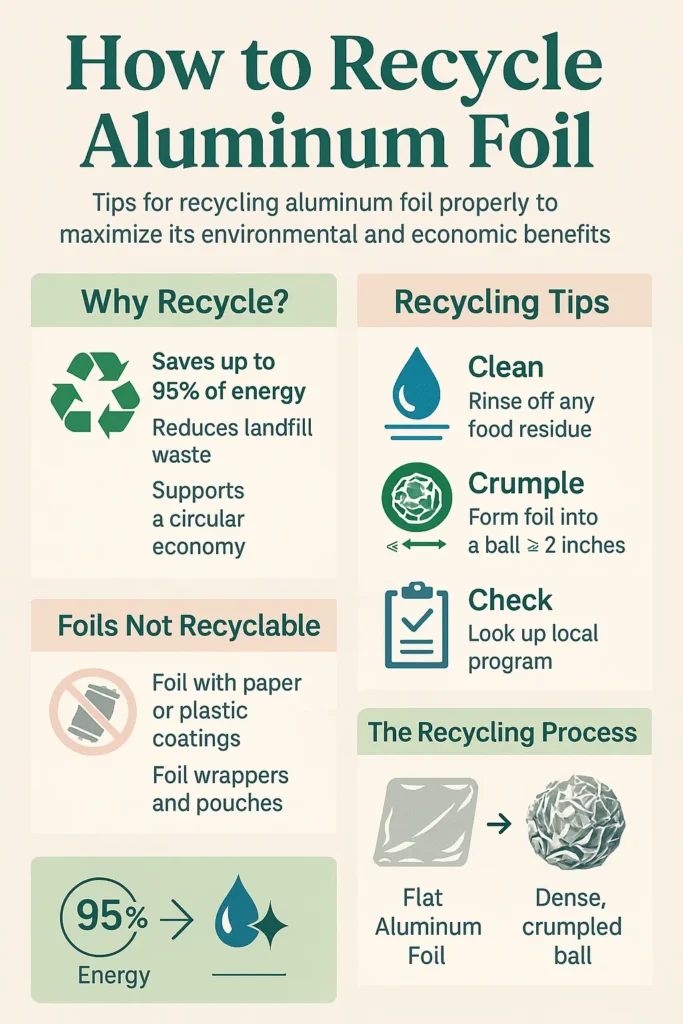
Maintaining clean, sorted foil is essential for successful recycling initiatives, as it preserves recycling streams and prevents rejected loads. Most recycling facilities accept used aluminium foil and foil trays, provided they are free from food and grease. This simple household habit can save up to 95% of the energy compared to producing new aluminium, significantly reducing the environmental impact and keeping materials that take nearly 400 years to oxidize out of landfills.
Clean It
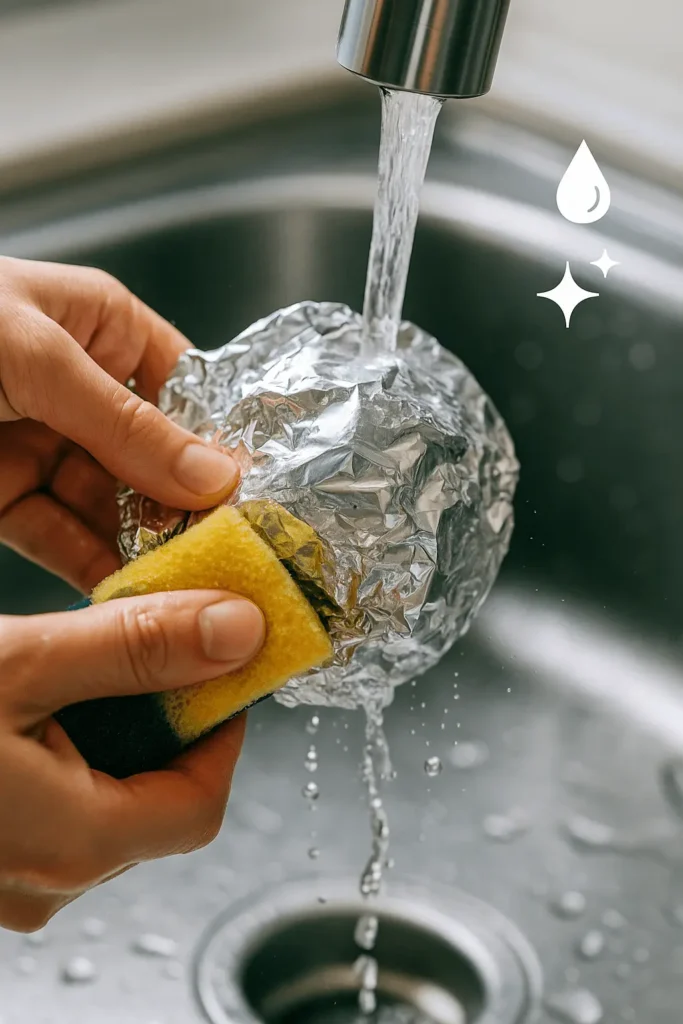
Rinse used foil under warm water with a drop of mild soap to loosen oil and sauce. Wipe off stuck bits with a soft sponge. If foil is blackened or cheese-caked, scrape first, then wash. Foil has to be clean and food residue-free before it hits the bin.
Clean tin foil recycling is important because dirty foil can contaminate paper, cardboard, and plastics in the same bin. At a MRF, contamination increases expenses and can cause operators to reject whole loads. One slick sheet can spoil otherwise great fiber.
For large sheets or foil roasting pans, insert these on the upper rack of the dishwasher. A normal cycle cleans off grease well. Air-dry to prevent moisture from being trapped. If a piece remains tacky after washing, chuck that piece to save the run.
Bunch It
Collect small scraps and compress them into a dense ball. Target at least 5 centimeters in diameter so sorting machinery can see it. A tennis-ball-size lump is even better if you have lots of scraps. Many people like to roll and bundle pieces as they cook, then layer in more until it reaches size.
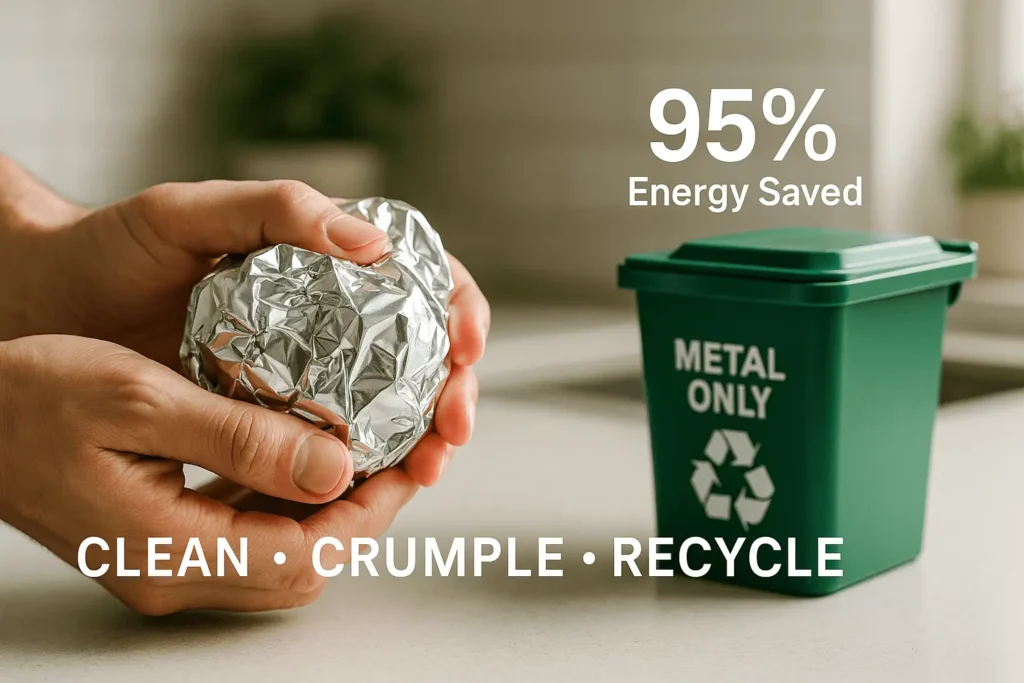
Wrinkle together all those sheets from baking, takeout lids, and chocolate wraps into one ball. Loose shreds drop through screens and become treated as residue. Crumbled foil is denser, less prone to flying off belts, and is better detected by optical and eddy-current sorters.
Clean that ball up. If a piece is too greasy to get clean, don’t include it. US consumers discard an estimated 1.4 kg (three pounds) of foil annually. Transforming those scraps into one large object aids in combating that tendency at home.
Check It
Just check that your local program takes aluminium foil and foil containers. Rules differ by city. Many curbside programs accept them if clean. Others require drop off.
Lookup your local regulations or do a ‘waste wizard’ search on your city website. Not sure about the listing? Just call the recycling center for a quick yes or no on things like laminated foil, colored foil, or foil with paper labels.
Certain locations need foil apart from plastic and cardboard or brought to a metal-only center. Observe any size, cleanliness, or bagging rules so that your foil is counted, not culled.
Need Fast & Reliable Waste Collection in Dubai?
Navyom Waste Collection Services offers same-day pickups, eco-friendly disposal, and certified recycling solutions for homes and businesses across Dubai.
Book Your Pickup NowThe Infinite Loop of Aluminium
Aluminium doesn’t get lost in the system; it goes in a complete loop. It can be recycled over and over, without any degradation in strength or shape, which keeps worth trapped within the system and garbage out of landfills.
The energy savings are stark: recycling uses about 5% of the energy needed to make aluminium from bauxite, which is about 95% less, cutting greenhouse gases while keeping supply steady.
A Closed-Loop Material
Aluminium is a closed-loop material because it can be melted and reshaped with very little melt loss and then returned to service without a downgrade. Unlike a lot of materials, it downcycles into lower-grade applications.
Holding foil in this loop minimizes the need for virgin ore and the mining impacts. It reduces the future expenses associated with landfilling materials that may take centuries to decompose.
Metal, including cans, can rest in a landfill for centuries, so each capture event counts. Closed-loop systems maximize real-world recycling rates and minimize footprints by combining high recovery with rapid reprocessing.
A used can can return as a new product in as few as 60 days, keeping inventories fluid and supply chains resilient. When you opt for recyclable aluminum packaging, such as clean foil trays, food-free foil wraps, and lidded containers, you help feed the loop.
The more times it loops, the less the system depends on fresh raw materials.
Quality Retention
When recycled, aluminium foil holds its core traits: strength, barrier performance against light and oxygen, formability, and conductivity. The metal’s crystal structure resets during remelting, so properties rebound consistently.
Top-tier recycled aluminium matches everything from beverage cans to rigid automotive alloys, thin-gauge household foil, and healthcare blister packs. This capacity to maintain grade without loss renders aluminium more efficient to recycle than many materials that downcycle with each pass, conserving not only energy but function across the ages.
Checklist for quality retention
- Property parity: Mechanical and barrier properties return after remelt and casting. There is no inherent downgrade.
- Energy edge: About 95% energy savings compared to primary production, with parallel cuts in emissions.
- Speed to market: Turnaround times of about 60 days keep quality fresh and supply stable.
- Proven durability: Around 75% of all aluminium ever produced in the U.S. remains in use.
- Performance across forms: Works for sheet, foil, extrusions, and cast parts without quality loss.
Future Applications
- Beverage cans and ends, caps and closures for food and drink.
- New kitchen foil, buffet trays and aseptic or blister packaging.
- Automotive body sheet, engine housings, heat exchangers and battery enclosures.
- Building facades, window frames, roofing sheets, and cable sheathing.
- Appliances, laptops, phones, and heat sinks for electronics.
- Transit uses like rail car panels and bicycle frames.
- Niche uses: cookware, reusable containers, and refillable pack formats.
Versatility stretches industrial and consumer markets. A single recycled can saves enough energy to run a TV for three hours. Energy savings accumulate quickly when multiplied across cities.
Ongoing recycling supports innovations in lightweight pack design, mono-material formats, and refill systems. These are everyday actions on the path to a circular materials economy.
Recycling Process Challenges
Aluminium foil recycling runs into three linked problems: contamination, thin material that escapes capture, and sorting limits. These complicate purity, increase costs, and drive potentially usable metal to landfill or incinerator.
Transparent preparation guidelines and improved technology reduce the burden, but neighborhood customs and even packaging design are equally important.
| Challenge | What happens | Why it matters | Practical fixes |
|---|---|---|---|
| Contamination (food, grease, plastic, non‑metal) | Loads downgraded or rejected | Smelters need low impurities; food and mixed materials ruin melt | Empty and wipe foil; keep plastics off; separate clean vs. soiled |
| Thinness (foil, trays) | Pieces slip past screens or sensors | Light, flat shapes behave like paper; get lost in airflow | Crumple into a fist‑sized ball; bundle small bits |
| Sorting (tech & design) | Small/light scraps misidentified | Sensor limits; non‑standard packs; aluminium‑plastic compounds rise | Support facilities with modern detectors; push standard pack specs |
Contamination Issues
Food, oils and composite materials are the primary culprits. Grease-coated foil can spoil an entire bale, resulting in either downgrade or landfill.
Plastic liners on takeaway trays and cling-spray stuck to foil or paper labels add non-metal mass that doesn’t melt cleanly. Sort it out at home first.
Separate clean foil from food-soiled pieces. Wipe or rinse out light residue and air dry. If it still smells or feels greasy, dispose of it in residual waste unless local guidance permits energy recovery.
Smelters require tight chemistry. Aluminium from Zorba streams needs to maintain magnesium at much less than 0.5% by weight. Dirty feedstocks make that target harder, necessitating additional refining or outright rejection.
Clear prep habits upstream preserve clean output.
Material Thinness
Thin-walled foil and trays confound machinery. Flat, light sheets sail air currents and descend with paper fines. Very thin scraps tend to disappear in the process if loose.
Form a tight ball roughly the size of a tennis ball. Stuff tiny pieces inside bigger sheets. This adds weight and enhances eddy-current collection.
If pieces are small and cannot be balled, their loss rate is high. Brands can assist. Slightly thicker gauges or multi-layered aluminium-only designs increase recovery without changing performance.
Sorting Technology
Centers employ eddy-current separators, near-infrared sensors, and high-speed cameras to identify and remove aluminium. They work well on cans and chunkier bits.
It still has its limits with micro-shreds, nestable trays and aluminium-plastic laminates. Increasing aluminium-plastic blends in Zorba and absence of standardized packaging reduce purity.
Certain areas encounter low-value markets because of import bans. Upgrades are coming: improved sensor fusion, robot pickers, and database-trained vision systems to lift foil capture.
Back programs that fund these lines and advocate for design guidelines that maintain formats that are easy and mono-material.
Understanding Different Foils
Which foil is which? Recycling rules differ by product type and local program, so being informed about your foil minimizes errors and keeps loads pristine. Aluminium foil is recyclable; however, it must be food-free and shaped into a loose ball so it doesn’t get lost at sorting plants.
Energy stakes are high: recycling aluminium takes about 95% less energy than making it from ore, and one ton recycled saves roughly 14,000 kWh. That energy saving is important in places where power is coal-based, such as parts of China, and it reinforces the higher household recycling rates observed throughout Europe. Approximately 75% of all aluminium ever produced remains in circulation.
- Aluminium foil is a pure metal that is soft, crinkles easily, and is widely recyclable if clean.
- Tin foil is a historic product. Genuine tin is uncommon nowadays and is recycled separately.
- Laminated foils are metal fused with plastic or paper and are not recyclable in most curbside collection systems.
- Foil containers: trays and pans are accepted if clean and uncoated.
Inspect your packaging for the Mobius loop, ALU/alu or “metal widely recycled” and read through material lists for terms such as ‘plastic layer’, ‘PE’ or ‘paper’.
Aluminium vs. Tin
Here’s something interesting — most “tin foil” at stores is aluminium. It’s lighter and more malleable than tin, so it crinkles and forms easily around food. It has robust market value and recycling streams in place, so places take it more.
Even though tin and aluminium melt and reprocess at different temperatures, virtually all household foil today is aluminium. Unless a product is explicitly tin, assume kitchen foil to be aluminium. Clean it and recycle with metals.
This easy move accelerates recuperation in states where only roughly 35% of aluminium is recycled and contributes to cutting the 1.5 million tons landfilled annually.
Laminated Foils
Laminated foils incorporate aluminium with plastic film or paper for strength, heat sealing, or grease resistance. I’m talking chip bags, juice pouches, and a few coffee packs. Those layers are impossible to separate at regular plants, so they bounce most programs.
Laminated packs don’t belong in the bin; they pollute loads and reduce metal yield. Look for clean aluminium packaging—plain wrap, uncoated lids, or mono-material pouches—so the metal can be recycled at high rates.
Brands can assist by transitioning to recyclable mono-aluminium formats, clear labels, and posting take-back solutions where curbside is not possible.
Foil Containers
Clean aluminium trays, pie tins, and pans are usually accepted in local recycling programs. Rinse them, de-label if easy to do so, and flatten slightly to ensure efficient recycling.
| Type | Recyclable? | Prep needed | Notes |
|---|---|---|---|
| Plain aluminium tray | Yes | Rinse; no food | Widely accepted |
| Pie tin with crust | Conditional | Scrape clean | Residue leads to rejection |
| Non-stick coated pan | Often no | N/A | Coating can be plastic |
| Foil takeout with plastic lid | Tray: yes; lid: no | Rinse tray; trash/recycle lid separately | Check local rules |
Navigating Local Guidelines
Aluminium foil regulations change quickly from one location to the next, so play it smart and align your behavior with your local program. What succeeds in one city will fall flat a few blocks over. Clean foil is a fantastic feedstock, but only if it matches your hauler or MRF’s rules.
Local programs have their own acceptance lists and contamination limits. Most request foil that is clean and food or oil free, as residue does reduce material value and can clog sorting machines. Wipe or rinse, dry, then crumple the foil into a ball to approximately the size of a tennis ball, around 6 to 7 centimeters in radius, so the eddy current systems can identify it.
Microcuts and loose sheets tend to fall through or become pulp. Certain cities will take aluminium trays, pie tins, and roasting pans curbside if they are clean and dry. Others scrap them only at drop-off locations. For instance, many of the Texas programs we tested, like Houston and El Paso, say aluminium trays and foil should go in recycling if clean.
Only a county or so away, a hauler might request you bring foil to a drop off. That narrow can be the gap.
Go to the source that governs your address. City or municipal sites often have a “Recycling” or “Waste and Recycling” page with a searchable A–Z guide. If your city contracts service to private haulers, the hauler’s page may be most accurate.
When guidance is elusive or absent, seek out a PDF of your local, up-to-date acceptable materials list, holiday updates and contamination alerts. If you live in a multi-family building, check with the property manager which hauler services your block, as building contracts can differ from citywide standards.
There are local variations even within a single state, so your buddy’s tip from the next town over can lead you astray.
Cut guesswork with digital tools! Several cities provide ‘waste wizard’ search boxes where you enter ‘aluminium foil’ and see a definitive yes or no along with preparatory instructions. National recycling apps and smart assistants draw from municipal feeds and can send alerts when regulations change.
A few haulers provide barcode scans for wrapped goods, so you may verify mixed goods such as foil-backed lids, laminated pouches, or foil blister packs. Generally speaking, clean, bare aluminium will be accepted, while composite or food-soaked materials won’t.
When in doubt, check online or call the hotline. Better a minute now than a whole batch downcycled later.
Final Words on Aluminium Foil Recycling
Aluminium foil recycles heavy. Fresh sheets return to the circuit with minimal waste and quick turnaround times. Soiled foil clogs machinery and incurs fees. One swift wash and crumple could ease the burden. Food-safe foil, trays, and pie tins typically do. Glitter wrap, plastic-lined pouches, and coffee packs tend to flunk. Local rules determine the cut-off, so a quick check saves time.
To reduce waste, separate intelligently at home. Store clean foil by the sink in a small bin. Crunch all scraps into at least golf ball size lumps. Pass the easy steps with a friend or a neighbor. For next steps, visit your city page, verify foil directives, and include foil in your next collection.
Frequently Asked Questions
Can all aluminium foil be recycled?
That said, most clean aluminium foil is recyclable and can be part of your local recycling program. Ensure to remove food, oil, and labels first to avoid contamination, as heavily soiled foil may be rejected.
How clean should aluminium foil be before recycling?
To ensure effective recycling of aluminium foil products, it should be free of food and grease. Wipe or rinse briefly and air dry; if contaminants remain after a quick clean, trash it to keep it out of the recycling stream.
Should I crumple aluminium foil into a ball?
Yes. Scrunching clean tin foil into a fist-sized ball that is 5 cm or more improves recycling efficiency. Tiny, flat bits can slip through the cracks at sorters, affecting the recycling program’s success.
What types of foil are not recyclable?
Foil products with plastic coatings, metallic gift wrap, blister packs, and foil-lined coffee or snack pouches are typically not recyclable materials. These composites can impact recycling initiatives, so check your local recycling program.
Why is recycling aluminium foil important?
Recycling aluminium foil not only saves up to 95% of energy but also significantly reduces emissions and supports sustainability initiatives, enabling a circular economy for valuable aluminium products.
How do I tell if a foil product is pure aluminium?
Give the scrunch test a shot with your aluminium foil products. Ball it up; if it remains crumpled, it is likely aluminium, which is accepted in most recycling programs for its sustainability.
What if my local bin won’t take aluminium foil?
See if there are any nearby drop-off centers or scrap yards that accept clean aluminium foil. Some retailers have recycling programs. As a final measure, cut back or opt for reusable baking sheets and containers for better sustainability.