Waste Management Contract for Businesses Dubai — What to Look For
Choosing a Waste Management Contract for Businesses Dubai is not just about getting bins collected. The right agreement protects your site from overflow, contamination, rejected loads, documentation gaps, avoidable costs, and sustainability reporting headaches.
The Short Answer
A good business waste contract in Dubai should clearly define your waste streams, collection frequency, bin or skip sizes, recycling obligations, documentation process, service response times, contamination rules, and pricing triggers. Avoid any contract that only lists “general waste collection” without explaining segregation, approved disposal routes, hazardous exclusions, and how records will be handled.
Why Waste Contracts Matter More in Dubai Than Many Businesses Realise
Dubai’s business environment moves quickly. Offices expand, restaurants change menus, warehouses take on new stock, clinics add services, and contractors shift from fit-out to demolition within weeks. Waste contracts often stay frozen in the background until something goes wrong: overflowing bins, a rejected load, a surprise surcharge, a missed pickup before inspection, or recyclable material being treated as mixed waste.
The city’s waste management direction is also becoming more structured. Dubai’s official waste framework includes approved transporters, permitted waste processing and recycling premises, technical guidance, and a regulatory push toward better segregation, recycling and landfill diversion. Dubai Municipality’s Waste Department publishes approved lists and circulars, including information related to hazardous and non-hazardous waste transport and treatment routes. Businesses should treat this as a signal: waste handling is an operational and compliance function, not a housekeeping afterthought.
A strong contract helps a business answer four practical questions: what waste do we generate, how is it separated, who collects it, and what proof do we receive after it leaves the site? If the contract cannot answer those questions clearly, the business is carrying risk even if the monthly invoice looks low.
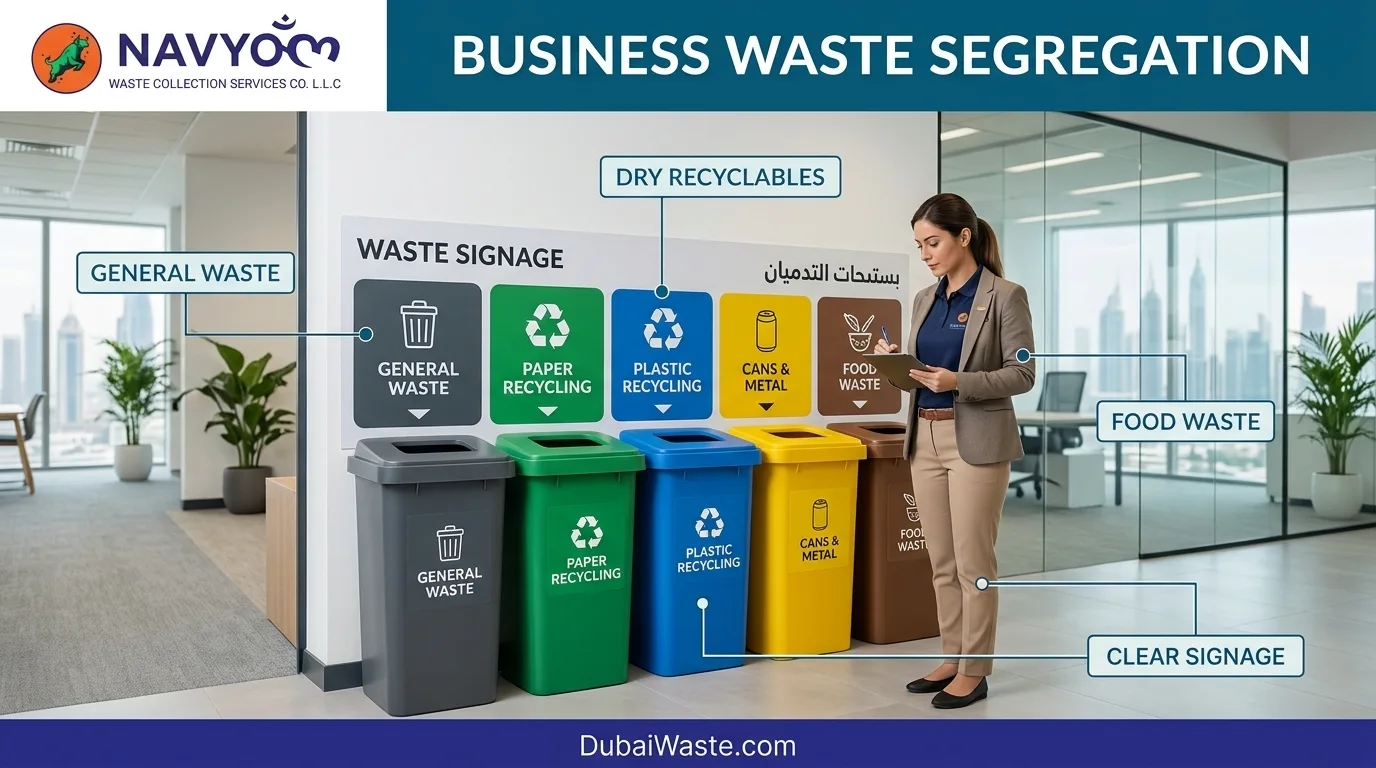
What a Waste Management Contract for Businesses Dubai Should Include
The best waste management contract for businesses Dubai starts with a site profile, not a price list. A small consultancy in Business Bay, a warehouse in Jebel Ali, a restaurant in Dubai Marina, and a clinic in Al Barsha do not have the same waste risk. They may all need “waste collection Dubai,” but the collection plan, documentation, hygiene requirements, recycling options, and exclusions can be completely different.
1. Clear Waste Stream Classification
Your contract should identify each major waste stream generated by the site. At minimum, this usually includes general waste and dry recyclables. Depending on the business, it may also include cardboard, plastics, metals, glass, food waste, wood, construction debris, e-waste, waste oil, chemicals, clinical waste, or other regulated materials.
This matters because mixing the wrong material into the wrong bin can affect disposal cost, recycling value, odour control, pest risk, and compliance records. A contract that treats all waste as “mixed waste” may be simple, but it can quietly destroy recycling potential and increase cost over time.
2. Collection Frequency and Service Windows
Frequency must be based on volume, smell risk, space limitations, business hours and access. Organic waste or restaurant waste may need more frequent removal than dry office waste. A warehouse with cardboard peaks after shipment arrivals may need flexible collection days. A mall tenant may need pickups aligned with loading bay rules rather than normal office hours.
Ask the provider to define missed pickup response times, weekend coverage, public holiday arrangements, and what happens during Ramadan, peak retail seasons, construction milestones or tenant handovers. “Three times per week” is not enough if the contract does not say when, how access is arranged, and how urgent overflow is handled.
3. Bin, Skip and Container Specifications
Bins and skips should be sized for actual site conditions. Too small, and the site suffers overflow. Too large, and the business pays for unused capacity or blocks access routes. The contract should specify container type, capacity, colour-coding or labelling, maintenance responsibility, washing requirements, replacement process, lid condition, odour control and whether the provider supplies signage.
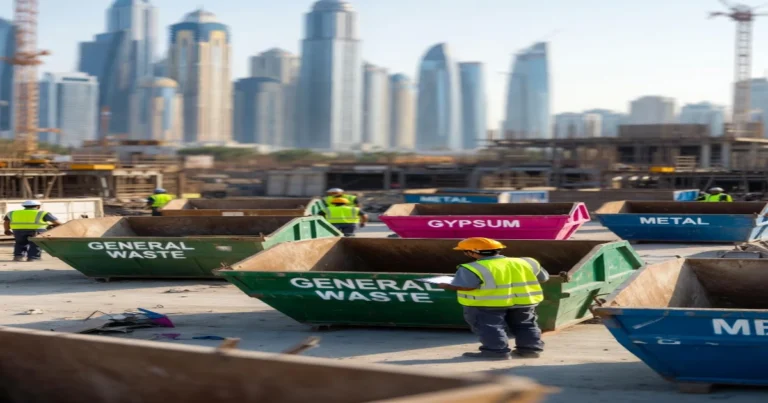
For construction waste Dubai projects, the contract should also clarify skip placement, accepted materials, prohibited items, loading limits, pickup notice period, and whether segregated skips are available for wood, metal, rubble or mixed C&D waste.
4. Documentation and Waste Records
Documentation is where many cheap contracts fall short. Your contract should explain what records the provider will issue, how often you receive them, and whether they are suitable for audit, landlord reporting, ESG reporting or internal compliance review. For some sites, this may include collection logs, disposal records, recycling weights, gate receipts, manifests, WTN-style records, or regulated waste documentation where applicable.
Do not assume every invoice is enough. A finance invoice proves payment; it does not always prove correct classification, collection, treatment or disposal.
5. Approved Contractor and Disposal Route Clarity
Businesses should verify that the provider is appropriately approved for the waste type being handled. Dubai Municipality’s Waste Department provides public information on approved or permitted waste transporters and waste processing premises, and Dubai’s legal framework aims to improve recycling, treatment and diversion from landfill. For high-risk waste streams, this point becomes especially important.
Ask where the waste goes after pickup. A credible recycling company Dubai or waste contractor should be able to explain whether the material is sent to a transfer station, recycling facility, treatment facility, composting route, authorised disposal site, or another permitted route. The answer does not need to be dramatic; it needs to be specific.
Comparison Table: Low-Cost Waste Contract vs Operationally Strong Contract
| Contract Area | Weak or Risky Contract | Strong Business Waste Contract |
|---|---|---|
| Waste classification | Uses broad wording such as “waste removal” or “garbage collection.” | Lists general, recyclable, food, construction, hazardous or special waste streams separately. |
| Pricing | Shows one monthly price but hides excess weight, contamination, urgent pickup or skip exchange charges. | Explains monthly fees, variable charges, surcharge triggers, exclusions and review terms. |
| Collection schedule | Mentions frequency but not access windows, missed pickup response or peak-volume handling. | Defines pickup days, timing, escalation process, access rules and holiday arrangements. |
| Recycling | Promises recycling but does not define materials, contamination rules or reporting. | Identifies recyclable streams, bin setup, quality requirements and weight or diversion reporting. |
| Compliance records | Provides invoices only. | Provides collection logs, disposal or recycling records, and regulated waste documentation where needed. |
| Service support | No clear contact for emergency, overflow, complaints or bin replacement. | Includes response time, account manager, escalation route and site review process. |
♻️ Dubai Waste Pro Insight
The cheapest waste contract is often expensive in disguise. If recyclable cardboard, plastic wrap, metal offcuts or clean rubble are repeatedly collected as mixed waste, the business may lose diversion value and pay more for disposal than necessary. The right contract creates separation at source first, then prices the service around actual volumes.
Pricing Terms You Should Read Before Signing
Waste pricing in Dubai can vary by waste stream, site access, volume, container type, pickup frequency, disposal route, contamination level and contract length. A fair contract should not leave the procurement team guessing. The monthly fee may look simple, but the real cost is usually shaped by operational details.
Look for these pricing lines before approving the agreement:
- Base monthly service fee: The standard cost for agreed bins, skips, frequency and service area.
- Extra pickup charges: What happens when your waste volume exceeds the agreed schedule.
- Contamination charges: Fees triggered when recyclables contain food, liquids, hazardous materials or general waste.
- Overweight or overfilled skip charges: Especially important for construction, fit-out and warehouse waste.
- Bin rental or replacement: Clarify who pays for damaged, stolen or additional containers.
- Disposal or treatment charges: Some waste types may involve variable facility charges.
- Contract review clause: Frequency for price adjustment and the method used to calculate it.
Before comparing quotes, use the Waste Management Cost Estimator to estimate your waste volume, waste type mix and collection frequency. It gives you a better baseline than asking three providers for a generic monthly rate.
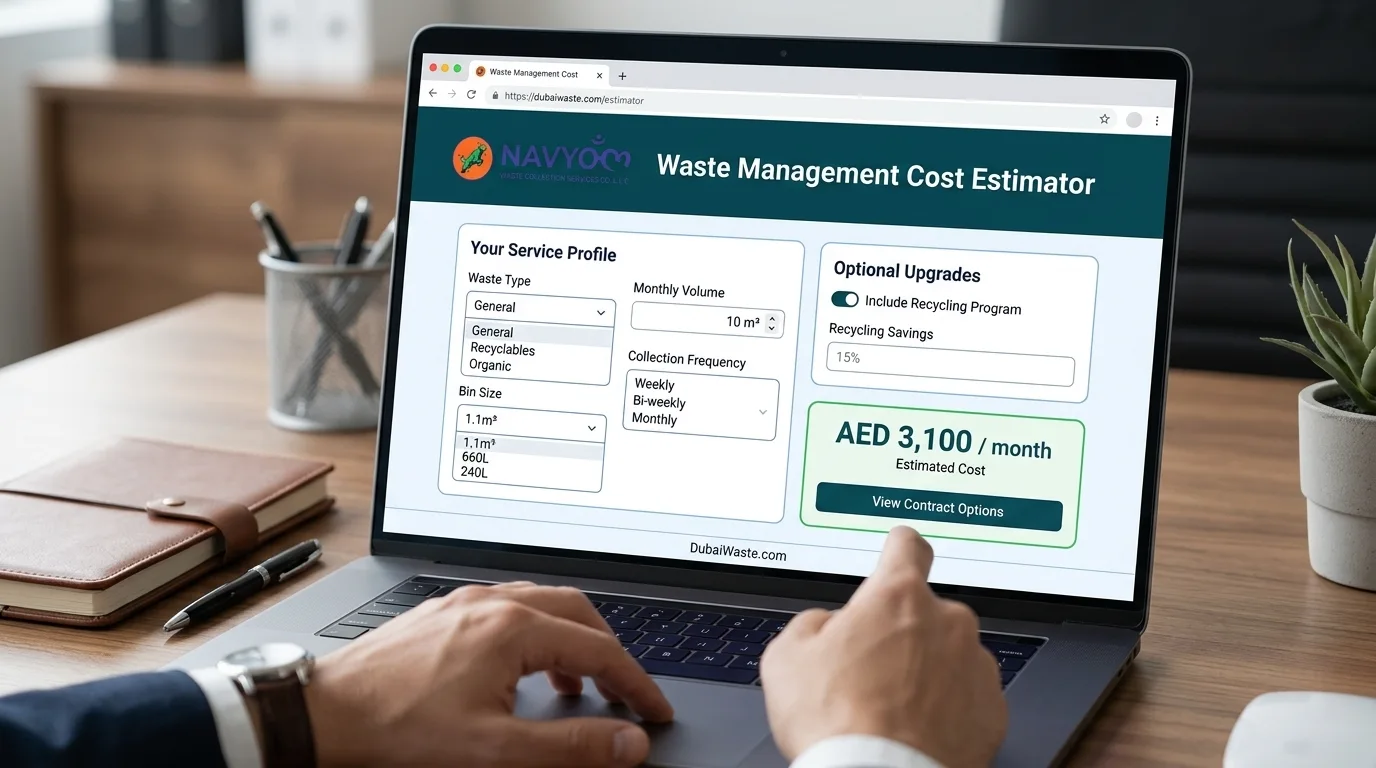
How the Advice Changes by Business Type
A contract that works well for one business can be wrong for another. Dubai businesses should adjust the agreement based on site use, waste risk, access constraints and reporting needs.
Offices and Commercial Towers
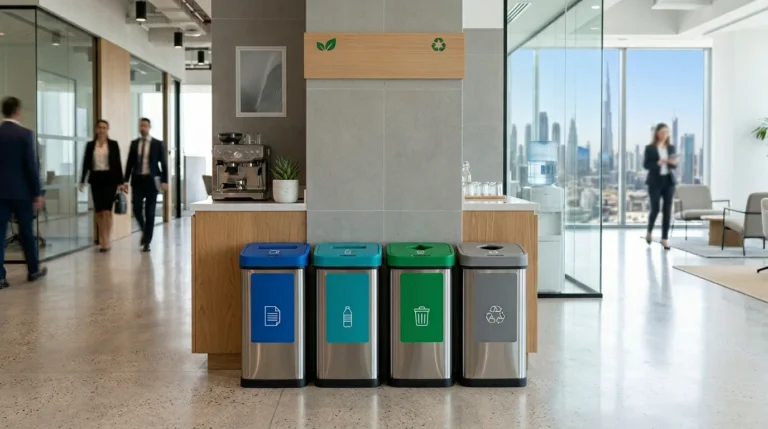
Offices usually need a clean split between general waste, paper, cardboard, plastics, cans and pantry waste. The biggest issue is contamination from food and liquids entering dry recycling bins. The contract should include staff-friendly bin labels, pantry segregation, floor-by-floor collection expectations and a recycling report if the landlord or tenant tracks ESG performance.
Restaurants, Cafés and Hotels
Hospitality sites should prioritise food waste frequency, odour control, grease and oil handling, glass segregation, packaging recycling and back-of-house hygiene. The contract should define container washing, collection timing, loading bay access and emergency response before peak weekends or events.
Warehouses and Industrial Units
Warehouses often generate high-volume cardboard, plastic wrap, pallets, strapping, damaged packaging and occasional e-waste. A strong agreement separates high-volume recyclables from general waste. It should also allow schedule flexibility when shipments spike. For industrial sites, any chemical, oil, sludge, metal or hazardous stream must be handled separately through a suitable provider.
Clinics and Regulated Facilities
Clinics, laboratories and similar facilities cannot rely on ordinary office waste processes for regulated waste. They need clear segregation, safe containers, trained handling, approved collection and appropriate documentation. A contract should state exactly what waste is covered and what remains outside the service scope. For more detail, see the medical waste management in Dubai guide.
Construction, Fit-Out and Demolition Sites
Construction and fit-out waste contracts should be more detailed than ordinary commercial collection. They must address skip size, exchange frequency, rubble, gypsum, wood, metal, packaging, paint containers, access, loading rules, site safety and disposal documentation. If the contract does not explain prohibited materials and paperwork, the site team may create avoidable delays. Review the construction waste guide before finalising a project contract.
📊 Compliance Snapshot
Dubai’s waste rules and approval requirements can vary by waste type, site category, free-zone authority and disposal route. Treat contract wording as an operational control: it should separate legal requirements, best-practice recommendations and cost-saving options. Do not accept vague assurances where regulated, hazardous, medical or construction waste is involved.
Step-by-Step: How to Review a Business Waste Contract
- Map your waste streams. Walk the site and list what is generated daily, weekly and seasonally. Include packaging, food, recyclables, general waste, bulky waste and any regulated material.
- Estimate volume honestly. Count bin fills, skip exchanges, peak days and overflow incidents. Low estimates lead to under-sized contracts.
- Separate recyclable and regulated streams. Clean cardboard, plastic film, metals and glass may need different handling from mixed waste. Hazardous, medical or oily waste should never be treated as ordinary rubbish.
- Check contractor capability. Confirm whether the provider can handle your actual waste type, not just general collection.
- Review documentation. Ask what records you receive, how often, and whether they show collection, treatment, recycling or disposal details.
- Test the pricing model. Ask what happens if volume increases by 20%, if bins are contaminated, or if urgent pickup is needed.
- Set review dates. Add a quarterly or semi-annual service review so the contract changes with the business.
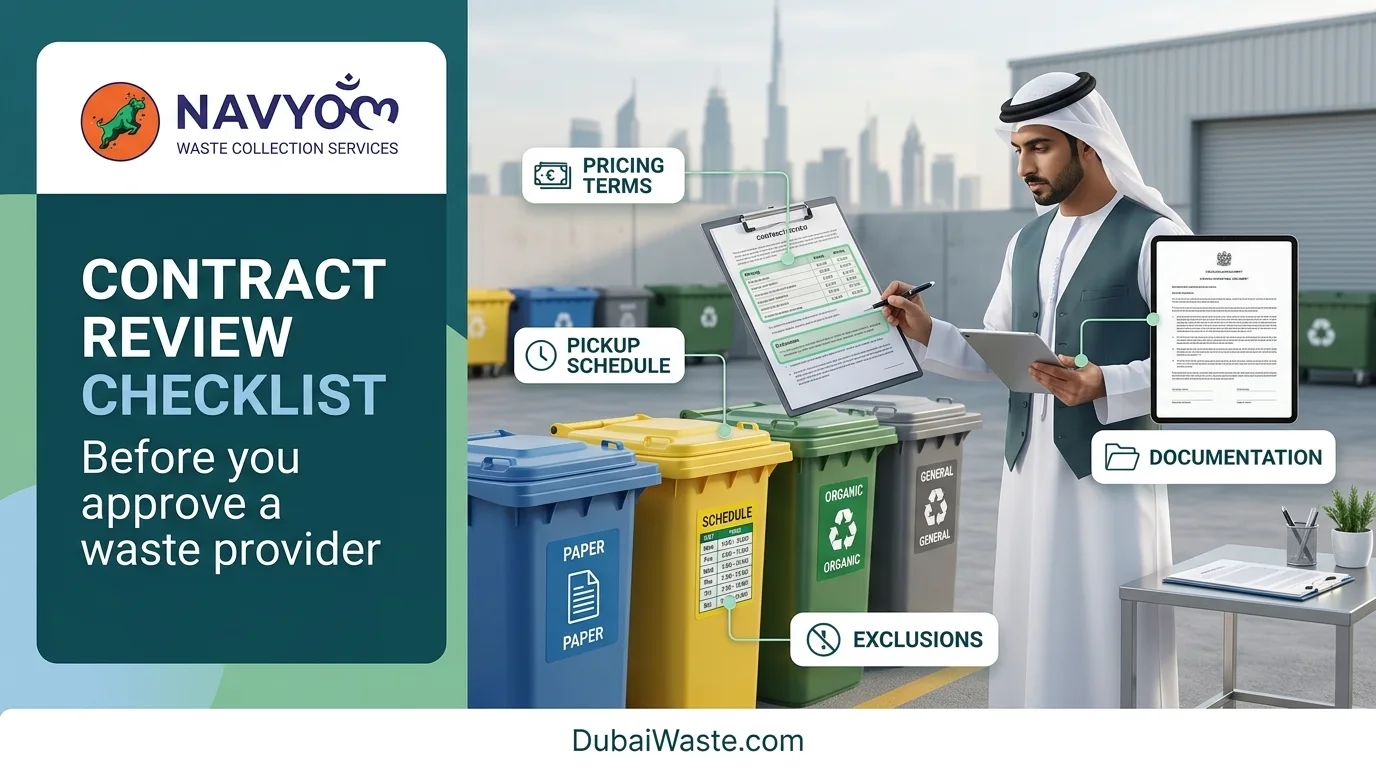
Real-World Example: Dubai Office and Warehouse Hybrid Site
Consider a company operating a small head office attached to a warehouse in Al Quoz. The office team generates paper, pantry waste, coffee cups and general waste. The warehouse produces cardboard, plastic wrap, wooden pallets, damaged packaging and occasional e-waste from scanners and computers.
A basic mixed-waste contract may collect everything twice per week. It looks easy, but the business loses clean cardboard value, fills general bins too quickly, and has no clear process for e-waste. During shipment weeks, the waste area overflows. The cleaning team starts mixing dry recyclables with food waste because the labels are unclear.
A stronger contract would separate office general waste, dry recyclables, baled or bulk cardboard, pallet removal and scheduled e-waste collection. It would include an extra pickup trigger for shipment weeks and a simple monthly recycling report. The monthly price may be slightly higher on paper, but the total operation becomes cleaner, easier to audit and less vulnerable to overflow.
Common Pitfalls & When to Ignore This Advice
Most waste contract problems are not caused by bad intentions. They happen because the agreement is written for a generic site while the real business has specific waste patterns.
Cheap quotes can exclude extra collections, bin washing, contamination handling, documentation or regulated waste support.
Recycling only works when materials are clean enough, separated correctly and routed to a suitable facility.
If staff mix food into dry recycling, the contractor may downgrade the load or charge more.
Loading bay timing, security gates, basement height, road restrictions and free-zone processes can affect service quality.
Invoices alone may not satisfy internal reporting, landlord requirements or compliance review expectations.
Medical, hazardous, oily, chemical and some construction waste streams need specific handling and should not be bundled casually.
When should you ignore some of this advice? If your business produces very small quantities of ordinary office waste and your building already manages central waste collection through a landlord-approved system, you may not need a complex standalone contract. In that case, focus on internal segregation, staff signage and confirming what documentation the building management can provide.
On the other hand, do not simplify the contract if your site handles food waste, construction debris, chemicals, clinical waste, heavy packaging, waste oil or multiple shifts. Those operations need more structure, not less.
How to Use DubaiWaste.com Tools Before Signing
DubaiWaste.com tools are useful because they push you to define the information a contractor needs before quoting. They also help you avoid accepting a contract based only on bin count.
- Waste Management Cost Estimator — estimate collection costs based on waste type, volume and service frequency.
- Recycling Savings Calculator — compare disposal-heavy contracts with recycling-focused setups.
- Mixed Waste vs Segregated Waste Dubai — understand whether your site should separate waste at source.
- How to Avoid Construction Waste Fines in Dubai — useful for contractors, developers and fit-out teams reviewing skip or debris contracts.
Put This Into Practice Before You Sign
If your current quote does not clearly explain waste streams, pickup frequency, recycling handling, contamination rules, documentation and exclusions, review it before committing. A 20-minute site check can prevent months of overflow, complaints, missed reporting and avoidable disposal cost.
Try the Waste Management Cost EstimatorYour Fast-Track Cheat Sheet: Top 3 Actions to Take
Before approving a waste management contract for businesses Dubai, focus on the parts that affect daily operations, cost and compliance evidence.
- Separate the waste streams first: identify general, recyclable, food, construction and regulated waste before requesting quotes.
- Check the service details: confirm bin sizes, collection frequency, access windows, missed pickup response and contamination rules.
- Demand useful records: make sure the contract explains what disposal, recycling or collection documentation you receive and how often.
FAQs About Waste Management Contracts for Businesses in Dubai
Do businesses in Dubai need a licensed waste contractor?
Typically, yes. Businesses should use an appropriately approved waste provider for the waste type being collected, especially for commercial, construction, hazardous, medical or industrial waste. The exact requirement can vary by waste stream, free-zone authority and site type, so always confirm contractor capability before signing.
What should be included in a Dubai business waste contract?
A strong contract should include waste stream classification, bin or skip sizes, collection frequency, pricing, service response times, contamination rules, exclusions, documentation, recycling reporting and disposal route clarity. If the contract only says “waste collection,” it is too vague for many business sites.
Is segregated waste collection cheaper than mixed waste in Dubai?
It depends. Segregated collection can reduce disposal pressure and improve recycling value when materials are clean and volumes are meaningful. For very small sites, the operational effort may outweigh savings. Use a cost estimator and compare mixed waste against recyclable streams before deciding.
Can restaurants and offices use the same waste contract?
Usually no. Offices mainly deal with dry recyclables, paper, packaging and pantry waste. Restaurants have food waste, odour risk, glass, packaging and sometimes used oil. Hospitality contracts need stronger hygiene, collection frequency and back-of-house handling terms.
What is the biggest hidden cost in a business waste contract?
The biggest hidden cost is often extra pickup or contamination. A low monthly fee can become expensive if bins overflow, recyclables are mixed with food, skips are overloaded, or excluded materials appear in the wrong container. Ask for surcharge triggers in writing.
Should construction waste be included in a normal commercial waste contract?
No, not casually. Construction, demolition and fit-out waste should be handled under a specific arrangement that defines skip size, permitted materials, prohibited items, exchange frequency, site access and documentation. Mixing it into ordinary business waste can create cost and compliance problems.
How often should a business review its waste contract?
Review the contract at least every six months, or sooner if your business changes volume, location, waste type, operating hours or sustainability reporting needs. Restaurants, warehouses, clinics and construction sites may need more frequent reviews because their waste patterns change faster.