Retail & Shopping Mall Waste Management Dubai: Compliance & Collection Guide
Malls and retail centres generate some of the densest, most mixed waste streams in the city — cardboard from stockrooms, food waste from courts, plastic film, e-waste from electronics tenants, and general refuse from thousands of daily visitors. Getting collection and compliance right is less about one big decision and more about a dozen small ones, made consistently, across every tenant and every bin.
Retail and shopping mall waste management in Dubai works best as a centrally coordinated system: mall operators segregate waste at source by tenant and material type, contract a licensed waste operator for scheduled collection, and keep Waste Transfer Note documentation current across every unit, since malls are typically treated as commercial sites with multiple sub-generators rather than a single simple bin.
If you manage a mall, a retail plaza, or a single storefront inside a larger centre, the way your waste is handled affects three things at once: your operating cost, your relationship with the mall’s facilities team or Dubai Municipality, and — increasingly — how your brand is perceived on sustainability. A poorly run back-of-house waste area is one of the fastest ways for a retail asset to rack up avoidable collection fees and contamination penalties from recyclers who reject loads outright.
This guide walks through how retail and shopping mall waste management in Dubai is typically structured, what changes between a standalone store and an enclosed mall, where operators most often lose money or fall out of compliance, and how to build a collection setup that holds up during Ramadan spikes, DSF weekends, and ordinary Tuesday afternoons alike.
Why Retail Waste Management Looks Different in Dubai’s Malls
A shopping mall isn’t really one waste generator — it’s dozens, sometimes hundreds, operating under one roof. Each tenant produces its own mix: an electronics store generates packaging and occasional e-waste, a food court unit produces organic waste and used cooking oil, a fashion retailer mostly generates cardboard and hangers, and common areas generate a steady stream of general litter from footfall. Dubai Municipality regulations apply to the site as a whole, but in practice, most of the day-to-day compliance burden sits with whoever runs the back-of-house waste room — usually the mall’s facilities management team, working with tenants and a licensed waste contractor.
Retail and shopping mall waste management in Dubai matters more now than it did five years ago for a simple reason: landfill diversion targets have pushed both government and private landlords to expect measurable recycling performance, not just reliable collection. Malls with strong sustainability credentials increasingly use their waste diversion figures in tenant marketing and ESG reporting, which means the back-of-house waste strategy has quietly become a front-of-house asset.
Cardboard and flexible packaging tend to dominate the volume in most retail centres — unsurprising given how much stock arrives boxed and shrink-wrapped. Food and beverage tenants add a second, heavier stream that behaves very differently in storage: organic waste needs faster turnaround and separate handling to avoid odour and pest issues, especially across the summer months.
The Core Guide: Building a Compliant Collection System
Most retail waste problems trace back to a system that was never really designed — bins were added tenant by tenant until the back-of-house area became a bottleneck. Building it properly means working through five practical stages.
1. Map every waste stream by tenant type
Before choosing bins or contracts, list what each category of tenant actually throws away. Fashion and lifestyle stores lean heavily toward cardboard and paper. Electronics and appliance stores need a separate e-waste route. F&B units need organic waste and grease trap servicing. Anchor department stores often produce enough volume to justify their own compactor.
2. Segregate at source, not at the loading dock
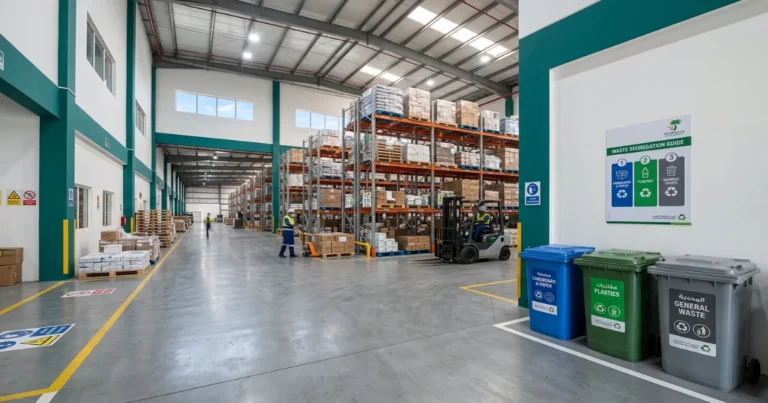
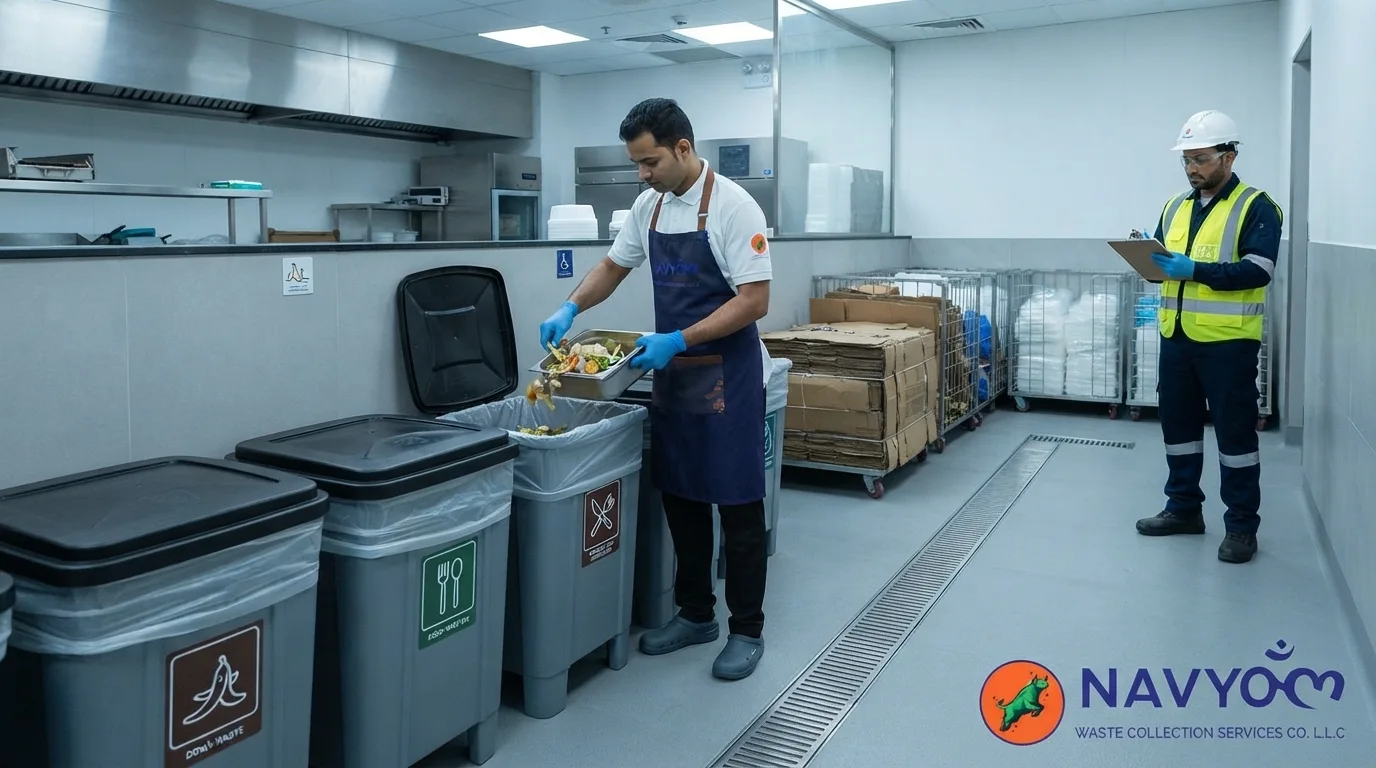
Segregating waste inside each tenant’s back-of-house area — rather than mixing everything and sorting it later — is what makes recycling economically viable. Mixed loads that arrive at a recycling facility contaminated with food residue or general waste are frequently downgraded or rejected outright, which erases any cost benefit segregation was supposed to deliver.
3. Match collection frequency to volume and material risk
General and organic waste in high-footfall malls usually needs daily or even twice-daily collection, particularly around food courts. Cardboard and dry recyclables can often run on a less frequent schedule if balers or cage storage are available. Getting this balance wrong in either direction — under-collecting organics or over-collecting dry recyclables — is one of the most common ways retail sites overspend.
4. Contract a licensed operator and confirm documentation flow
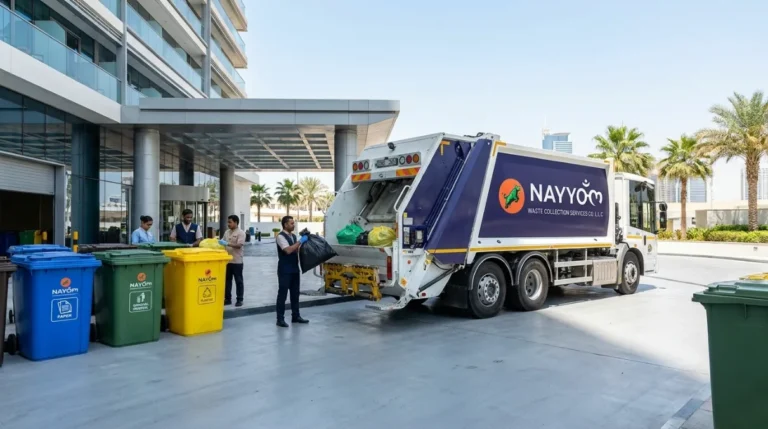
Work with a municipality-approved waste contractor and make sure Waste Transfer Notes are generated and retained for each collection, not just for audits. For a multi-tenant mall, this usually means the mall operator holds the master contract and coordinates documentation, while individual tenants follow the house rules set out in their lease.
5. Review and adjust seasonally
Retail waste volume in Dubai swings sharply around Ramadan, Eid, Dubai Shopping Festival, and back-to-school periods. A collection schedule built for an average week will fall behind during these peaks unless it’s reviewed and temporarily scaled up in advance.
In most Dubai retail centres, cardboard and packaging materials make up a large share of total waste by volume — often the single biggest opportunity for diversion. A mall that installs even one dedicated baler for common-area and back-of-house cardboard typically sees a noticeable drop in general waste collection frequency within the first few months, simply because bulky cardboard was previously filling bins meant for genuinely non-recyclable material.
Mixed Waste Collection vs Segregated Collection for Retail Sites
The right approach usually depends on tenant mix, available back-of-house space, and how much staff time can realistically go into sorting. Here’s how the two compare in a retail and mall context specifically.
| Factor | Mixed Waste Collection | Segregated Collection |
|---|---|---|
| Typical cost per collection | Lower per bin, but higher frequency needed | Higher setup effort, often lower cost over time |
| Recycling viability | Very limited once materials are combined | High, if contamination is controlled |
| Space requirements | Simpler, fewer bin types | More back-of-house space for multiple streams |
| Tenant compliance burden | Minimal — one bin to use | Requires tenant training and signage |
| Best suited to | Small standalone stores, limited storage | Malls, large retail plazas, anchor tenants |
| Sustainability reporting value | Little to no diversion data | Supports ESG and diversion targets |
Neither approach is universally “correct.” A small standalone kiosk with no storage room genuinely may not have the physical space to segregate five waste streams, and forcing it to do so can create more mess than it solves. A 200-store mall, on the other hand, has both the volume and the space to make segregation pay for itself many times over.
Situation-Based Adjustments
Retail waste advice changes considerably depending on what kind of retail asset you’re actually running.
Enclosed shopping malls
Centralised back-of-house waste rooms, shared compactors, and a single master waste contract usually make the most sense. The FM team typically owns compliance, with tenant lease clauses defining how each unit must pre-sort before bringing waste to the shared area.
Standalone retail stores
Without shared infrastructure, a standalone store usually contracts collection directly. Segregation is still worthwhile, but the practical starting point is often just separating cardboard from general waste — the two streams that offer the fastest, easiest win.
Food court and F&B-heavy retail zones
Organic waste dominates here, and it behaves differently from dry retail waste — it needs faster turnaround, dedicated storage away from public areas, and often grease trap servicing on a separate schedule entirely.
Anchor department stores
High-volume anchors often justify their own on-site compactor or baler rather than relying on shared mall infrastructure, particularly for cardboard, which can otherwise overwhelm shared bins during delivery-heavy periods.
Community strip malls and retail plazas
These sit somewhere between standalone stores and enclosed malls — shared bin areas exist, but there’s rarely a single FM team enforcing tenant behaviour, which makes clear signage and simple, low-effort segregation rules more important than an elaborate multi-stream system.
Common Mistakes & When Not to Follow This Advice
- Treating all tenants the same. A jewellery kiosk and a restaurant do not produce comparable waste, and forcing identical bin setups on both usually wastes space or under-serves one of them.
- Under-sizing cardboard capacity. Delivery days can generate more cardboard in a few hours than a small bin area can hold until next collection, leading to overflow into aisles or fire exit corridors.
- Assuming segregation is free. It isn’t — it costs staff time, training, and space. For a very small store with minimal volume, the administrative overhead of full segregation may genuinely outweigh the savings, at least until volume grows.
- Letting documentation lapse. Waste Transfer Notes are easy to forget when collections are running smoothly, but gaps in records are exactly what surface during an audit or inspection.
- Ignoring seasonal spikes until they happen. Waiting until DSF or Ramadan volumes hit before adjusting collection frequency almost always means a rough few weeks of overflow.
- Over-investing in infrastructure for uncertain volume. A new retail plaza with unconfirmed tenant occupancy may not need a full compactor system on day one — it’s reasonable to start lean and scale as occupancy and volume become clearer.
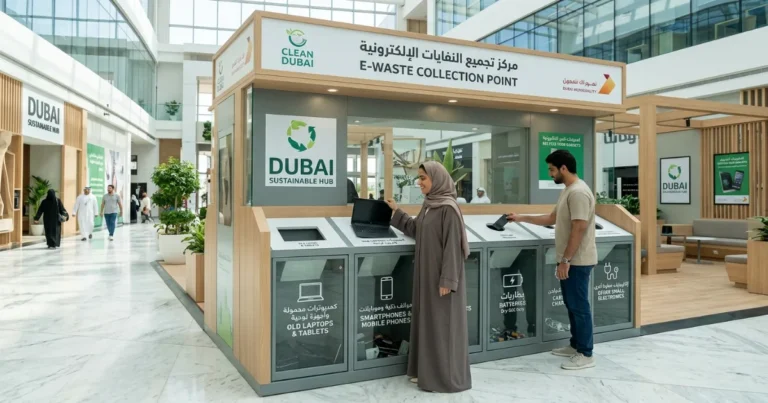
Commercial sites in Dubai, including retail and mall assets, are generally expected to work with an approved waste contractor and maintain transfer documentation for what leaves the site. Exact requirements can vary by waste stream, site size, and whether hazardous or regulated materials such as e-waste are involved — if your mall handles multiple tenant types, it’s worth confirming current requirements directly with your appointed waste operator rather than assuming one setup covers every stream.
How to Use DubaiWaste.com Tools for This
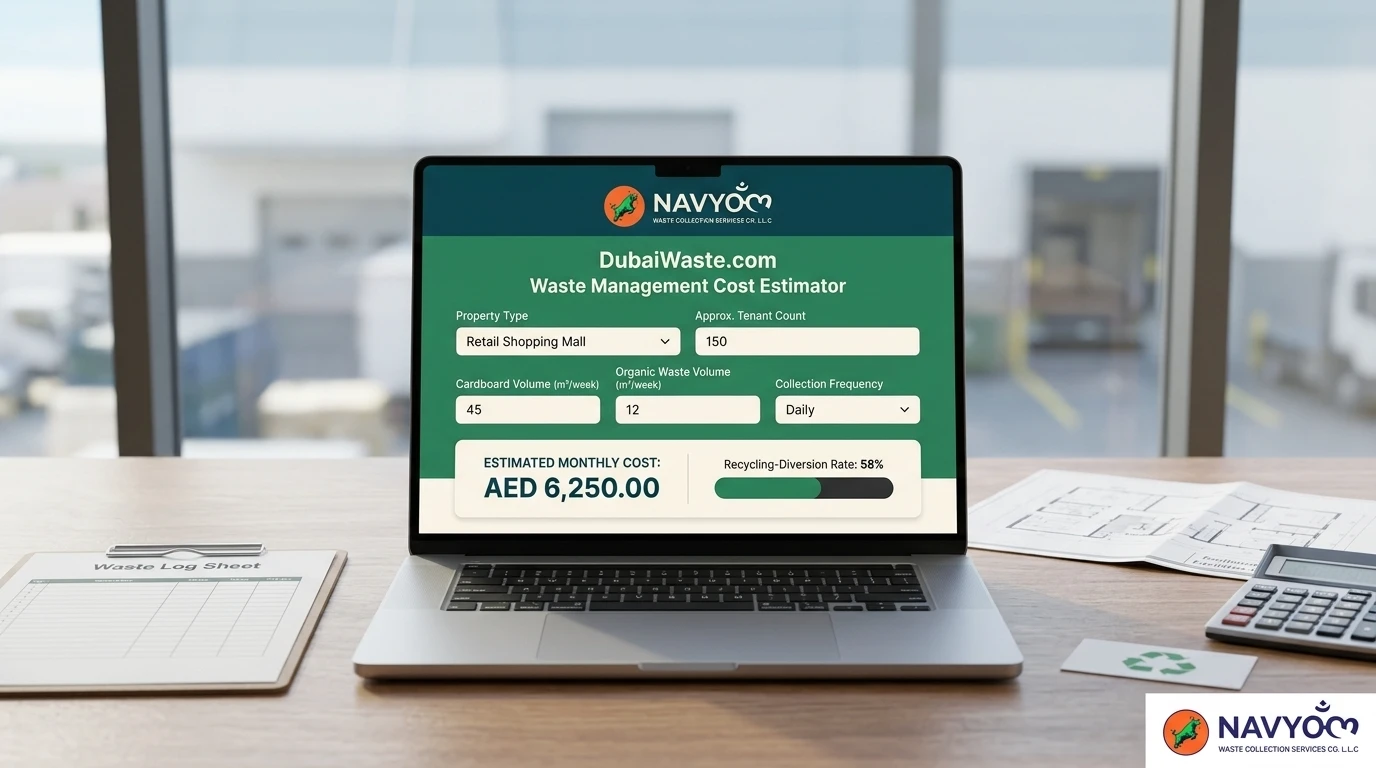
If you’re planning or re-evaluating a retail waste setup, don’t start with guesswork. The Waste Management Cost Estimator lets you enter tenant count, approximate volume by stream, and collection frequency to get a realistic monthly cost range before signing a contract. It’s particularly useful for comparing a mixed-collection baseline against a segregated setup, so you can see where the breakeven point actually sits for your specific tenant mix.
For documentation, the WTN Compliance Checklist Generator helps mall FM teams confirm that transfer note records are complete across every tenant and collection type — a common gap in larger centres where dozens of small pickups happen weekly. And if cardboard volume looks significant, the Recycling Savings Calculator gives a directional view of what a baler or dedicated cardboard stream could save over a year.
Try the estimator yourself before your next contract renewal — it’s a fast way to check whether your current collection frequency actually matches your waste volume, or whether you’re paying for capacity you don’t need.
A Real-World Retail Scenario
Consider a mid-sized community mall in a growing Dubai suburb, with roughly 60 tenants including a supermarket anchor, a modest food court, and a mix of fashion and service retailers. In its first year of operation, the mall ran a single mixed-waste stream across the whole property — one bin type, one collection schedule, applied uniformly regardless of tenant.
Within a few months, two problems showed up. Cardboard from the fashion tenants and the supermarket was filling general waste bins faster than expected, pushing up collection frequency and cost. Meanwhile, the food court’s organic waste sat in the same shared bins as dry retail waste, creating odour complaints during the hotter months.
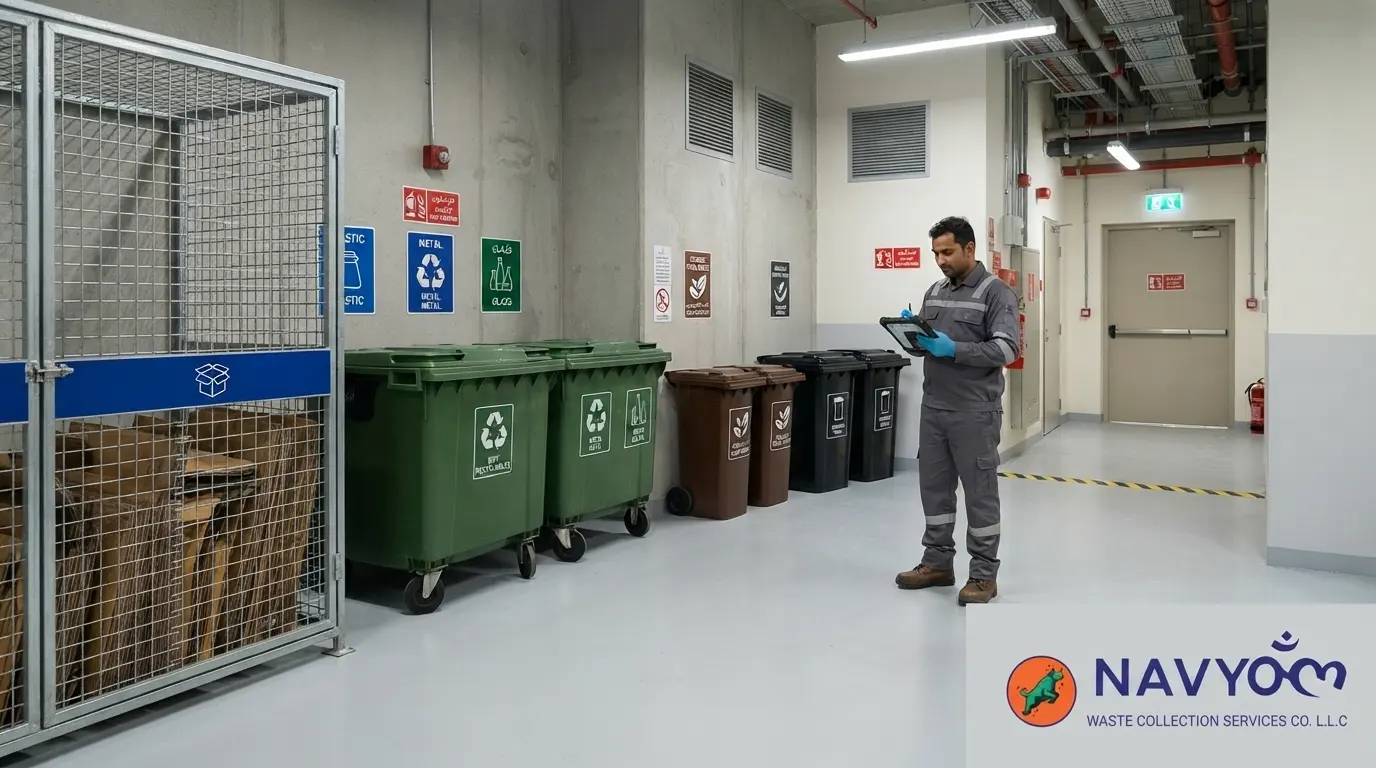
The fix wasn’t dramatic — it was structural. The mall’s FM team introduced a dedicated cardboard cage near the loading dock, added a separate organic waste line for the food court with more frequent collection, and left general waste collection at its original frequency for everything else. Tenants received brief signage and a short verbal walkthrough rather than a formal training programme. Within two collection cycles, general waste volume dropped noticeably simply because cardboard and organics were no longer padding it out — and the food court odour complaints stopped almost entirely.
The lesson generalises well beyond this one property: retail waste problems are rarely solved by adding more collections. They’re usually solved by giving the two or three highest-volume streams somewhere sensible to go.
Frequently Asked Questions about Shopping Mall Waste Management Dubai
Do shopping malls in Dubai need a licensed waste contractor?
Yes. Commercial sites, including malls and retail plazas, are generally expected to work with a municipality-approved waste operator rather than arranging informal disposal. Mall operators typically hold the master contract on behalf of all tenants.
Can individual retail tenants use their own waste collector?
It depends on the lease. Many malls require tenants to use the centre’s contracted waste system for consistency and documentation, though some larger anchor tenants negotiate separate arrangements, particularly for high-volume streams like cardboard.
Is segregated waste collection cheaper than mixed waste for a mall?
Often, yes, over time — segregating high-volume streams like cardboard and organics reduces how often general waste needs collecting. The upfront cost is setup and staff training, so smaller retail sites may not see the benefit immediately.
What waste can a food court put in general waste bins?
Typically only non-recyclable, non-organic packaging. Food scraps and liquid waste usually need a separate organic stream, and cooking oil almost always requires dedicated grease trap servicing rather than general disposal.
How often should a Dubai mall collect food court waste?
Daily collection is common for organic waste in busy food courts, and some high-footfall centres need twice-daily pickup, especially in warmer months when odour and pest risk rise faster.
Do retail stores need a Waste Transfer Note in Dubai?
Commercial waste movements are generally expected to be documented. In a mall setting, this is usually managed centrally by the FM team on behalf of tenants rather than by each individual store.
What happens if recyclable waste is contaminated with general waste?
Contaminated loads are frequently downgraded or rejected by recycling facilities, which removes the cost and diversion benefit segregation was meant to deliver. This is one of the most common and avoidable losses in retail waste programmes.
Your Fast-Track Cheat Sheet
If you only take three things from this guide, make them these:
- Segregate by your two biggest streams first. Cardboard and organic waste usually drive the most cost and the most complaints — solve those before building an elaborate multi-stream system.
- Match collection frequency to actual volume, not habit. Use the cost estimator before renewing any contract to confirm you’re not over- or under-collecting.
- Keep documentation centralised. One FM team managing Waste Transfer Notes for the whole property is far more reliable than dozens of tenants each handling their own paperwork.