Glass waste recycling – Navyom Waste Collection
Navyom Waste Collection | Sustainable Recycling Solutions in Dubai, UAE
Dubai glass waste recycling involves gathering, separating and converting home, restaurant and industrial glass into new items. City programs now accept clear green and brown glass at drop-off points and some private operators offer pick-up for bulk loads.
Recycled glass fuels local construction, bottle and fiberglass. To set the background, the emirate aims for greater diversion rates to reduce landfilling.
The following sections outline options, expenses, and processes for individuals and companies.
Key Takeaways
- Glass recycling cuts emissions, saves energy, and diverts waste from landfills, enabling Dubai to achieve its sustainability goals and meet international benchmarks. Glass should be separated at source to reduce contamination and improve recovery.
- By utilizing recycled glass cullet, it reduces the need for sand, soda ash, and limestone, which in turn decreases the impact of mining and safeguards natural habitats. Maintain glass cleanliness and segregation to provide manufacturers with a consistent, top quality cullet feedstock.
- Because efficient glass recycling reduces disposal expenses, it helps sustain employment and economic activity, as well as innovation throughout the entire recycling value chain. Champion investment in advanced sorting, processing, and data-driven collection systems to scale capacity.
- A circular model keeps glass in continuous use through closed-loop collection bins, furnaces and back into new containers. Support the cause by joining community initiatives and utilizing specialized glass bins to increase recycling efforts.
- Dubai can cement its international reputation by scaling up winning programs, establishing even more public-private partnerships, and maintaining international standards. Exchange best practices and mobilize communities.
- Tackle major bottlenecks by enhancing source separation, logistics and plant capacity via awareness and infrastructure enhancement. Be clear on your targets, monitor performance and optimize operations to create a robust recycling ecosystem.
Why Glass Waste Recycling Matters
Glass waste is one of the most common forms of waste generated across Dubai, UAE. Items such as bottles, jars, and glassware are often discarded after use. However, glass is unique because it is 100% recyclable and can be recycled infinitely without losing purity or quality. By recycling glass, we prevent valuable resources from being wasted and reduce the harmful environmental impacts of landfill dumping.
When glass is dumped in landfills, it does not decompose easily. Instead, it accumulates and contributes to land pollution. Recycling glass not only diverts waste away from landfills but also conserves raw materials, reduces greenhouse gas emissions, and supports a circular economy.
Environmental Benefits of Recycling Glass
- Conservation of resources: Recycling saves raw materials like sand, soda ash, and limestone.
- Energy savings: Producing new glass items from recycled glass uses up to 30% less energy.
- Lower emissions: Reduced need for raw material processing lowers greenhouse gas emissions.
- Pollution prevention: Less air and water pollution compared to manufacturing from raw materials.
- Landfill reduction: Saves valuable landfill space in Dubai and across the UAE.
Our Glass Waste Recycling Process
At Concept Zone Recycling LLC, we follow a professional and systematic process to recycle glass waste efficiently:
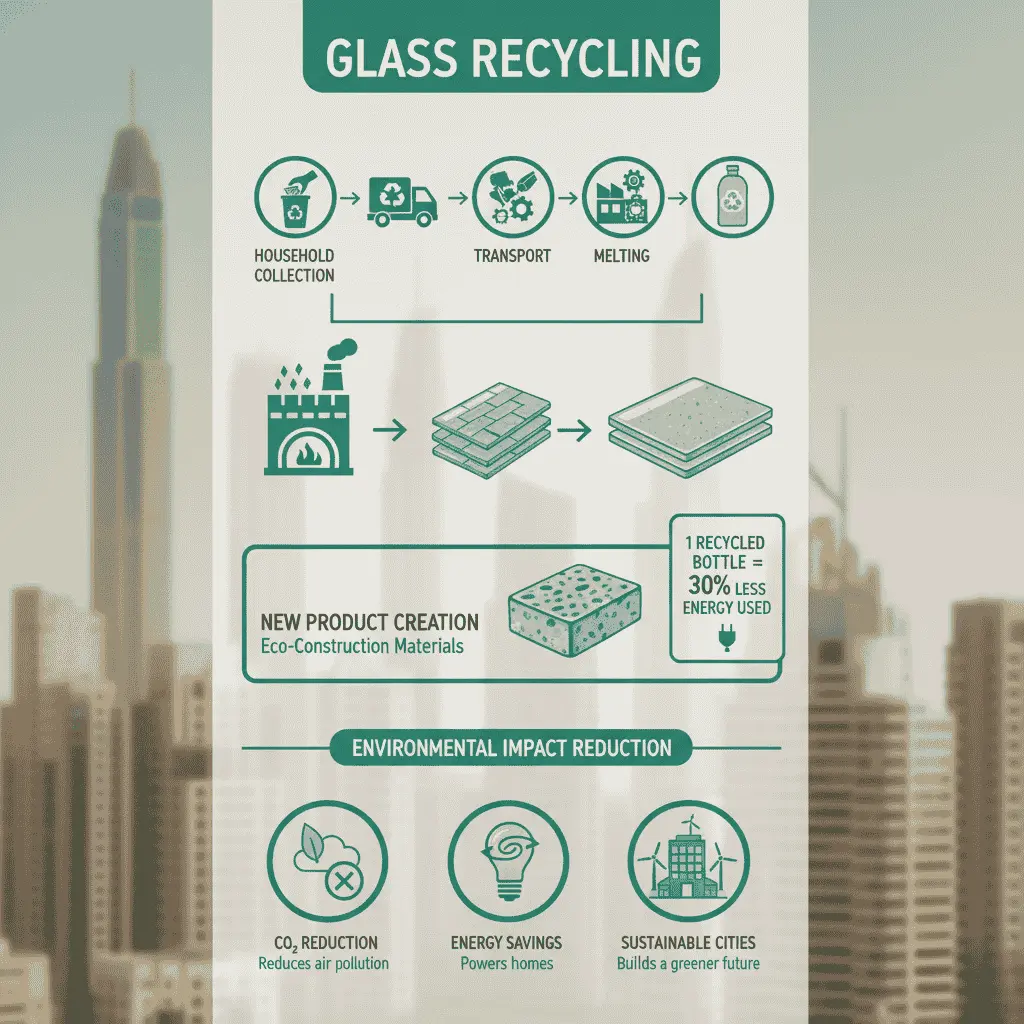
- Collection: We collect various types of glass waste including bottles and jars (excluding light bulbs, mirrors, Pyrex, or window glass).
- Transportation: Waste is safely transported to our recycling facility in Dubai.
- Segregation: Glass is sorted by color — clear, green, and amber.
- Processing: Segregated glass is cleaned, crushed, and melted down.
- Manufacturing: Recycled glass is supplied to manufacturers to create new bottles, jars, and other glassware.
The Imperative
Glass is 100% recyclable and can be recycled endlessly without any loss in quality, making it a powerful alignment with Dubai’s net-zero agenda. This aligns with sustainable recycling solutions that drive lower waste and CO2 emissions. The focus is clear: raise capture rates, keep cullet clean, and grow markets for both remelt and non-remelt uses in the glass recycling process.
| Urgency | Sustainability Goals | Benefits |
|---|---|---|
| Rising waste volumes and limited landfill space | Dubai Clean Energy and Net Zero 2050 alignment | Lower CO2, less energy use, reduced mining |
| Need to cut contamination and raise cullet quality | Compliance with international best practices | Stable supply for glass plants, closed-loop use |
| Thin margins and market gaps for waste glass | Build local, inclusive recycling strategy | Jobs, innovation, and resilient materials flows |

1. Environmental Relief
Recycling glass reduces energy consumption by as much as 30% over producing virgin glass from raw materials, which reduces furnace GHG emissions. Each tonne of cullet replacing virgin mix usually offsets hundreds of kg of CO2.
Cleaner material flows also diminish dust, runoff, and kiln emissions associated with quarrying and batch preparation. That guards dunes, coasts and inland habitats from erosion.
Bottles and jars diverted from landfill eschew breakage leachate and the eternal life of glass in dumps. Less landfill trips reduce transport emissions.
It is with the high-cullet recipes in manufacturing that yields the most significant gains. Plants that maximize melt chemistry and furnace heat recovery demonstrate the minimum carbon footprint per kilogram of glass.
2. Resource Conservation
Virgin glass is dependent on silica sand, soda ash and limestone. High recycling rates reduce demand for these finite sources and the mining that sustains it.
Cullet melts at lower temperatures and mixes well with batch, so it conserves fuel and prolongs furnace life. Quality counts.
Source separation at hotels, venues and homes keeps ceramics and metals out. Where color matching is critical, cullet might be decolorized, then re-colored to satisfy finished-product requirements, increasing yield without sacrificing appearance.
An effective approach will capture all waste glass, not only high grade streams. That means diverting lower-grade cullet to safe, local non-remelt uses that still displace carbon-intensive materials.
3. Economic Potential
Lower landfill fees and fewer haul miles and higher material recovery all add up. For municipalities and large sites, that can offset sorting and education expenses.
The industry sustains jobs in collection, sorting, processing and equipment service. Local companies, such as Navyom Waste Collection, can generate income from cullet sales, abrasives and construction fillers. Margins are slim.
Investment in optical sorters, color correction and wash lines are key. New tech that penetrates non-remelt markets is required but difficult to fund when recyclers function on thin margins.
4. Circular Economy
Glass goes from bin to MRF to beneficiation plant, then furnace and back on shelves as new container. In a virtuous circle, losses fall, value remains elevated.
Closed loop packaging requires clean feed, consistent color and consistent volumes. Deposit schemes, back-of-house separation and smart drop-off networks push return rates higher.
Public awareness is the 3rd IMPACT. Obvious signage and straightforward guidelines and feedback cause habits to tip at scale and keep contamination low. Businesses and consumers both influence the loop through everyday decisions.
5. Global Image
Robust glass recycling indicates leadership and positions Dubai on a par with ISO-driven and UN-aligned environmental standards. Brand deals, hotels and global NGOs demonstrate how objectives become actual tonnage.
A wider market for waste glass—such as local application in sand replacement, foam glass and pozzolanic blends—reduces transport CO2 and provides outlets when remelt demand is constrained.
Reaching a higher recycling rate with lower CO2 across all uses needs strategic changes: better collection design, color management, and data tracking. Involving citizens is essential to achieve national objectives and to demonstrate a template others can follow.
The Journey
Dubai’s glass waste management has a transparent journey from bin to new product, defined by city ambitions and industry-leading international examples. The aim is simple: recover clean cullet through effective glass recycling processes that can go back into furnaces with minimal loss, while cutting energy use and emissions.
Collection and sorting
The journey begins at the source. Homes, offices, hotels and malls separate glass from mixed waste thereby keeping it clean and easier to recycle. Many municipalities situate glass-only collection bins in high-traffic areas and housing clusters to increase capture rates.
Haulers transport this flow to certified materials recovery facilities, where employees and optical sorters extract caps, labels, plastics and other non-glass materials. Color sorting — clear, green, amber — is important because color impacts final product specifications.
Public awareness is key here. Bad segregation continues to be one of the biggest obstacles and increases costs downstream.
Decontamination and preparation
At specialty plants, pre-cleaning takes out organics and fine debris. Powerful magnets pick up metals, eddy current separators extract aluminum and air knives blow off lighter debris.
The glass then passes through washer drums to remove labels and residue. Clean feed shields crushers and enhances cullet quality that reduces rejects at furnace.
Crushing and quality control
Clean glass goes into crushers which size it into cullet, typically 10–50mm for container glass and finer for fiberglass. Screens and density separators separate out ceramics, stones and heat‑resistant glass that can cause defects.
Inline sensors monitor particle size and contamination. They hold cullet in color storage to correspond with factory demand, i.e. Clear cullet for food jars or green cullet for beverage bottles.
Melting and manufacturing
Furnaces mix cullet with virgin raw materials—sand, soda ash, and limestone. Elevated cullet rates reduced furnace temperatures by multiple tens of degrees Celsius, reducing fuel consumption and greenhouse gas emissions.
Each ton of cullet substitutes for a portion of those raw inputs, relieving pressure on limited resources. Container plants convert melt into bottles and jars; float glass lines produce sheets for windows and automobiles; some cullet is used for tiles, abrasives, or foam glass insulation.
All routes recapturing raw materials, all routes retaining value in the loop.
The journey at a glance
- Source segregation
- Collection in glass‑only bins
- Facility sorting and color separation
- Decontamination and washing
- Crushing to cullet
- Quality checks and storage by color
- Melting with cullet blend
- Forming, annealing, and finishing
- Distribution and reuse in market
Smarter glass handling enhances urban sanitation and public health while promoting sustainable waste management efforts.
Dubai’s Ecosystem
Dubai’s rapid expansion, tourism, and vibrant urban lifestyle generate glass waste as a constant flow from residences, hotels, malls and catering. Handling this at scale requires defined roles, intelligent tools, and ongoing public engagement throughout the city.
Major waste management firms: Beeah, Dulsco, and Imdaad run collection fleets, sorting hubs, and links to glass reprocessors in the UAE. Municipal players: Dubai Municipality sets policy, deploys public bins, audits performance, and funds pilots that raise capture rates. Reprocessors: Regional plants accept color‑sorted cullet to make new bottles, jars, and insulation materials. Hospitality and retail programs: Hotels, resorts, and large venues contract dedicated glass pickups for bottles and jars from bars and kitchens. Community groups: Local schools, resident committees, and NGOs run drop-off days and awareness drives in neighborhoods. Tech vendors: Route planning, bin sensors, and tracking software providers serve both city and private fleets.
There is some form of curbside recycling in a few districts and gated communities, typically coupled with weekly mixed recyclables pickup (including glass). High-rise apartment towers and office parks put identified glass-only containers in loading bays and parking lots, with designated collection days. Public bring-banks located near supermarkets and transit nodes provide residents with an easy alternative when curbside is unavailable. A lot of hotels and malls employ special collection services with sealed tubs or bottle crates to ensure glass stays clean and unbroken.
The goal is the same across setups: keep glass separate and send it straight to a recycling facility, since segregation at the source lifts quality and lowers sorting costs. Routing and tracking software now anchor field operations. Fleet tools chart stop-to-stop high-yield routes, slash fuel consumption and minimize missed pickups. Bins equipped with fill-level sensors that flag when a site requires service, reducing overflow and broken-glass hazards.
Digital records log weights by site, color, and date, to help audit diversion rates and direct bin placement. City dashboards tap into this data to monitor progress toward sustainability objectives and carbon emissions targets. These systems have driven Dubai’s waste management industry toward more rapid, less contaminated and safer handling.
Government policy, private execution and community behavior all count. Population growth, industrial use and urban density make glass recycling a core part of urban sanitation, public health and conservation. Tourism adds weight, particularly from drinks, so consistent hospitality catch is crucial.
Glass recycling additionally reduces carbon emissions by substituting for virgin raw materials in furnaces. Public awareness is still a challenge; smart labels and easy guides and feedback loops help residents sort right the first time.
The Hurdles
Glass waste recycling in Dubai faces various challenges, including technical and logistical obstacles that hinder effective waste management and raise costs. The glass recycling process involves several steps—collection, sorting, decontamination, and recycling—and each can fail if the feedstocks are poor or the infrastructure is under strain.
Contamination and poor separation
Pollution poses a significant challenge in the glass recycling process. Food residue, stickers with powerful glue, and composite materials like caps and plastic wrap damage the quality of cullet and clog processing lines. Metallic contaminants, such as bottle neck rings or tiny screws from fixtures, are a huge nuisance—they must be stripped out to preserve furnaces and maintain color uniformity. Effective waste management strategies are essential to tackle these issues.
Decontamination can be tricky and expensive, often requiring washing, optical sorting, and metal extraction to prepare glass for recycling. As glass is mixed with commingled waste, shards accumulate organic waste and grit that’s tough to wash off, leading to downcycling or disposal. Implementing sustainable recycling solutions requires segregation at the source, with different bins at home, hotels, and malls.
This approach is crucial, as a bin of separated clear, green, and brown glass is much easier to recycle than a black-bag conglomeration from a tower block. By improving glass waste management practices, we can enhance the efficiency of recycling services and contribute to a more sustainable future.
Logistics, cost, and limited capacity
Gathering and shipping strain budgets. Glass is heavy, bulky and frequently low value per kilo, so fuel and routing count. In a city of spread out neighborhoods and towers, lift access, loading times and noise rules create friction.
Insufficient processing capacity causes delays, particularly after holiday spikes or big events. Plants require consistent, uncontaminated feedstock to operate at full capacity. Fluctuating amounts drive up the per-unit cost.
Waste collection software and route optimization can assist with smart bins, real-time fill data, and dynamic dispatch, but it can be difficult to roll out for smaller operators without funds or trained staff. Without a dense network of bottle banks or business pick-ups, material falls through the cracks.
Awareness, behavior, and infrastructure gaps
Public awareness is still a toss-up. Most residents and visitors are not sure which glass types are accepted, or where to drop them. They take time to change habits, so convenience is everything.
Buildings that don’t have convenient chute options or bin options at the ground-floor level experience less. In rapid-growth regions or lower-resource communities, infrastructure and staffing trail behind. Developing countries confront this the most, but even affluent cities run into ceilings when budgets constrict.
Targeted campaigns help—obvious labels on bins, easy instructions in several languages, and salient feedback, such as “Your building recycled 2 tonnes this month.” Hotels, cafés and event venues can lead with staff training and back-of-house sorting.
Mini-grants for in-field crushers, color-sorting bins, or secure storage can reduce damage and pollution.
The Sand Paradox
The sand paradox sums up a simple but stark truth: sand looks endless, yet usable sand is scarce. It’s in high demand in glass making and in construction, particularly due to urban expansion. Because most desert sand is too smooth and rounded to be used in strong concrete or good glass, cities depend on riverbeds, beaches, and quarries. This highlights the importance of sustainable waste management practices, such as glass waste recycling, to mitigate the strain on natural resources.
That’s the reason sand, even though it’s mined at gargantuan volumes, is still considered a low-value and “minor” mineral in many nations. Label conceals actual costs. Sand mining can induce bank erosion, groundwater shifts and habitat loss that don’t show up until years later. Its effects are insidious, often decades in the making before they emerge, so harm accumulates out of view.
Glass recycling nicks at this need. For every bottle recycled back into cullet, that’s one less strain on the rivers and coasts. It translates in less blasting, dredging and hauling. In locations with aggressive development schedules and expanding visitor levels, this counts.
Mining isn’t only pits and barges. It’s the unrelenting sound of mechanized dredging that robs us of sleep and school. They’re decades-long changes in land utilization, healthcare expenses and strained fishing or agriculture revenues. Communities that once embraced dredging for the jobs are now requesting that it cease, sifting through the toll it takes on day-to-day living.
Certain sands were deposited approximately 115 million years in the past, but local supplies can be depleted in just a few decades. Stakeholders—municipal managers, hotels, bottlers, haulers, and builders—should prioritize recycling services, bumping glass recycling higher up the list. Clear collection, color-sorting, contamination control, and steady offtake contracts all contribute to keeping cullet clean and usable at scale.
- Cuts raw extraction: Recycled glass replaces a share of silica sand in glass furnaces and can sub out sand in abrasives and certain construction fills. That cuts down on immediate digging and dredging at the origin.
- Lowers energy and emissions: Melting cullet needs less heat than melting virgin raw mix. Plants experience reduced fuel consumption, less furnace wear and lower emissions per tonne of production.
- Improves material quality: Clean cullet helps stabilize batch chemistry and can reduce defects. In certain blends, stable cullet optimizes yield and flow.
- Eases community impact: Less mining means fewer truck trips, lower dredge noise, and fewer disruptions to schools and homes near waterways.
- Supports circular jobs: Sorting, crushing, and logistics create steady urban roles, often closer to where waste is made. This shift can cushion the blow of extractive labor with less risky, steadier roles.
- Protects coasts and rivers: Reduced dredging helps keep natural banks intact, supports fisheries, and lowers the risk of saltwater intrusion into farms and wells. Heavy minerals like rutile, monazite and sillimanite are linked to sand — recycling helps decelerate the pursuit for mixed deposits that can impact wider ecosystems.
By focusing on effective waste management solutions and promoting glass reuse initiatives, we can create a more sustainable future. The advantages of recycling glass extend beyond just reducing landfill space; they also contribute to natural resource conservation and a healthier environment for generations to come.
Future Vision
Dubai’s subsequent evolution for glass waste recycling revolves around swells in scale, savvy systems, and trackable advances linked to the UAE’s zero waste to landfill by 2030 target. The focus is clear: expand capacity at glass recycling facilities, raise recovery rates, and cut emissions while keeping recycling programs simple for residents and businesses.
Envision advancements in glass recycling technologies and expansion of recycling facilities across Dubai.
Near-term upgrades include optical sorters that scan for color and contamination in real time, hot-wash lines for label and glue removal, and closed-loop furnaces that feed cullet directly back into bottle production. Co-locating glass lines inside existing materials recovery facilities can significantly trim haul distances and costs.
Modular micro plants at industrial parks could process bar, hotel, and hospital streams, minimizing breakage and enhancing purity. The UAE is investing in waste collection software that maps fill levels and routes trucks by need and flags mixed loads. Paired with additional glass-only bins in neighborhoods and transit centers, these tools enhance capture while keeping streets clean, aiding city sanitation and community health.
Set ambitious targets for increasing glass recycling rates and reducing landfill waste volumes.
A practical path is to set yearly steps that mirror the 2030 goal: for example, 60% glass capture by 2027, 75% by 2029, and 90% by 2030 for container glass. Tie targets to sector plans: food and beverage, hospitality, health care, and construction.
Monitor kg per capita, cullet purity and landfill tonnage averted. Publish dashboards so progress is both visible and timely. Every ton of cullet fed to furnaces reduces energy consumption — as well as raw materials like sand and soda ash — and greenhouse gas emissions. That ties local activities to the U.A.E.’s larger drive to reduce emissions and preserve resources.
Promote the development of sustainable recycling solutions and innovative programs to engage all sectors.
Producer take-back for bottles, deposit-return pilots at supermarkets and reverse vending at malls can raise return rates quick. Hotels are able to have on-site glass crushers that reduce volume, then can send clean cullet off to approved buyers.
Construction sites can separate flat glass for remelt or foam glass blocks utilized in light fill and insulation. Schools and community centers can host bin challenges and monitor victories through easy apps. The government’s push on circular economy rules, combined with grants and procurement standards, can nudge suppliers to design bottles that are refillable or mono-color that recycle better.
Encourage continuous improvement of glass waste management practices to secure a sustainable tomorrow for Dubai.
Rite quality specs for cullet, audit routes to reduce breakage, and bonus high-purity loads. Train crews in safe handling, update public guides in several languages, and maintain bins well positioned and clean.
Check in on data monthly, address weak areas, and disseminate lessons between cities to maintain a powerful forward charge.
Conclusion
Glass can close the loop with minimum loss and genuine recovery. Dubai has the locations, trucks and purchasers to get it done on a mass scale. Clear labeling is a great help. Clean drop offs DO help. Consistent demand from hotels and malls aids. Rates go down with short hauls and full loads. Positions pop up at sorting and crush plants. Energy consumption decreases with cullet in the mixture.
To accelerate, establish specific goals, measure weight of loads, and distribute weekly statistics. Conduct bin experiments in bustling towers. Include purchase rates for washed glass. Pilot them at ports and free zones. Exchange case notes, both positive and negative.
Ready to close the loop on your glass waste? Partner with Navyom Waste Collection — households, hotels and businesses can arrange drop-offs or schedule bulk pickups, request a free site assessment, and receive a simple cullet-quality checklist to improve recovery and lower disposal costs. Get started today by scheduling a pickup or requesting a free consultation via your website or by contacting your sustainability team.
Frequently Asked Questions
What makes glass recycling important in Dubai?
Glass recycling reduces landfill waste, conserves energy, and raw materials while supporting Dubai’s sustainability agenda and circular economy objectives. The glass recycling process uses recycled glass (cullet) that melts at lower temperatures, reducing emissions and production costs.
How is glass collected and processed in Dubai?
Glass is gathered through municipal, private haulers, and drop-off points. It’s segregated by color, washed, and pulverized into cullet, which is crucial in the glass recycling process. Local facilities or regional partners then remelt cullet to create new bottles, jars, or construction materials, promoting sustainable recycling solutions.
Where can residents recycle glass in Dubai?
Utilize community recycling bins, mall collection points, and municipal centers for effective waste management. Indeed, some scavenger services provide pick-up for apartment buildings and commercial concerns, aiding in glass waste recycling. See Dubai Municipality and authorized recyclers for the closest points and accepted glass types.
What are the main challenges to glass recycling in Dubai?
Issues such as combined waste streams, contamination, and limited color-sorted supply impact glass waste recycling. Transport costs and market demand significantly influence the viability of recycling glass, while improved source separation and regular collection enhance the value chain.
Why is glass called part of the “sand paradox”?
Glass comes from sand, but desert sand, which is too smooth and rounded, does not melt properly. The glass recycling process converts waste materials into cullet, promoting effective waste management and reducing raw material consumption for producers while supporting sustainable recycling solutions.
Can recycled glass be used beyond new bottles?
Yes. Cullet, a key component in the glass recycling process, turns into tiles, fiberglass, abrasives, filtration media, and pozzolan in concrete, promoting sustainable recycling solutions by substituting for some virgin aggregates.
What’s next for Dubai’s glass recycling ecosystem?
Think more intelligent sorting, an increase in drop-off locations, and heightened public-private collaborations for glass waste recycling. Source separation incentives coupled with local remelting capacity rewards can boost recycling glass recovery rates, create local jobs, and reduce emissions across Dubai’s materials economy.
Why Recycling Matters in Dubai
- The UAE generates about 640 kg of municipal waste per person annually (World Bank, 2023).
- Dubai’s Waste to Zero strategy aims to divert 90% of waste away from landfills by 2040.
How can I contact Navyom Waste Collection for glass recycling?
You can call us at +971 50 342 4742 or email us at sales@navyom.me. Visit our website at dubaiwaste.com.
Ready to recycle your glass waste responsibly?
Contact Novyom Waste Collection today at +971 50 342 4742 or email sales@navyom.me.