 Written by Abhishek Sundar Hirani · Waste & Recycling Writer, DubaiWaste.com
Battery Recycling in Dubai: Where to Dispose of Used Batteries the Right Way (2026 Guide)
Quick Navigation — Jump to a Section
- Why You Can’t Just Bin Household Batteries
- Battery Types and How Each Should Be Handled
- Where to Recycle Batteries in Dubai
- Car & Lead-Acid Batteries
- Lithium-Ion, Power Banks & E-Scooter Batteries
- How to Dispose of Batteries Safely: Step by Step
- Do Batteries Have Scrap Value in the UAE?
- Battery Disposal for Businesses & Bulk Quantities
- FAQs
Most people don’t think twice about batteries until they’re holding a dead AA in one hand and standing over the kitchen bin, unsure if it’s actually fine to just toss it in. It isn’t — and this is one of those small habits that genuinely matters here, because Dubai’s general waste stream isn’t built to handle what’s inside a battery. Let me walk you through what’s actually going on, what changes depending on battery type, and exactly where to take each kind.
Why You Can’t Just Bin Household Batteries
Batteries — even the small alkaline ones from a TV remote — contain heavy metals and corrosive chemicals like cadmium, lead, mercury, and lithium compounds depending on the type. When they end up in general landfill waste, those materials can leach into soil and groundwater over time. Lithium-ion batteries specifically carry a fire risk: if they’re crushed or punctured inside a waste truck or compactor, they can short-circuit and ignite, which is exactly the kind of incident municipal waste operators actively try to prevent. This is also why battery waste is treated separately from the general household categories covered in our broader Dubai waste management guide.
Battery Types and How Each Should Be Handled
Not all batteries are equal, and lumping them together is where most disposal mistakes happen. Here’s the breakdown by type, since the right disposal channel actually depends on this.
| Battery Type | Common Sources | Handling Notes |
|---|---|---|
| Alkaline (AA, AAA, 9V, C, D) | Remotes, toys, torches | Low risk — tape terminals on 9V, drop at supermarket collection points |
| Button cell / coin cell | Watches, hearing aids, calculators | Small but contain mercury — never mix loose with household trash |
| Nickel-metal hydride (NiMH) | Rechargeable AA/AAA, older cordless tools | Recyclable via the same household collection points |
| Lithium-ion (Li-ion) | Phones, laptops, power banks, e-scooters, EVs | Fire risk if damaged — see the dedicated section below |
| Lead-acid | Car, motorcycle, UPS backup batteries | Recoverable scrap value — see the car battery section below |
Where to Recycle Batteries in Dubai
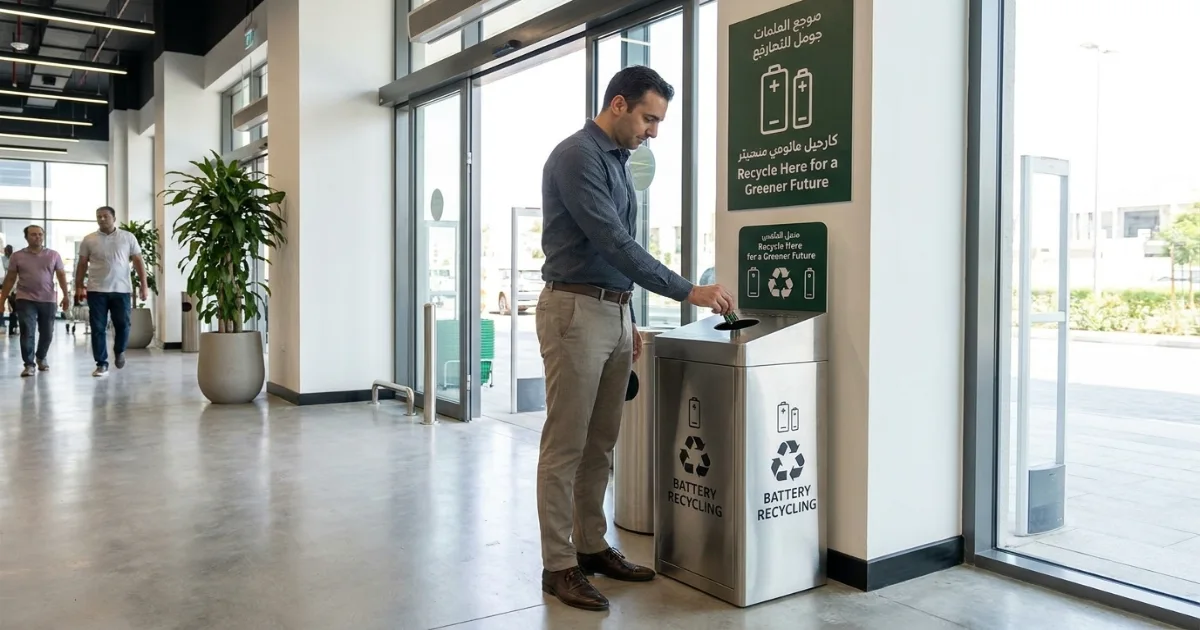
Small collection boxes near the entrance of major supermarkets are the easiest drop-off option for household batteries.
| Location Type | What They Accept | Best For |
|---|---|---|
| Supermarket collection points (Carrefour, Spinneys, Lulu) | AA/AAA, button cell, small rechargeable | Everyday household batteries |
| Bee’ah / Tadweer community bins (where available) | Household batteries, e-waste | Bulk household clear-outs — see our full recycling centers directory |
| Licensed scrap dealers | Car batteries, industrial batteries, large lithium packs | High-value or bulk battery scrap |
| Electronics retailers (trade-in counters) | Phone, laptop, power tool batteries | When replacing a device — also see our mobile phone recycling guide |
Car & Lead-Acid Batteries
Car batteries are a different category entirely — they’re lead-acid, heavy, and actually have solid resale value as scrap. Don’t put a car battery out with household waste under any circumstance. Most garages and tyre shops will take your old battery back when you buy a replacement, often knocking a small amount off the price. If you’re dealing with one separately, a scrap metal buyer will usually pay per kilogram for it, in line with the broader scrap rates we track on our Scrap Metal Estimator — the same tool covers copper, aluminium, and steel if you’re clearing out a garage in one go.
UPS backup batteries from home offices or small businesses fall into the same lead-acid category. These are common in Dubai given the value placed on power backup, and they should be treated exactly like a car battery for disposal — never in general waste, always through a scrap dealer or the retailer you bought the replacement from.
Lithium-Ion, Power Banks & E-Scooter Batteries
This is the category that deserves the most caution. Phone batteries, laptop batteries, power banks, and e-scooter or e-bike batteries are all lithium-ion, and Dubai has seen a real rise in these devices given how common e-scooters have become for last-mile commuting. A damaged or aging lithium-ion cell can swell, and a swollen battery is under internal pressure — puncturing or crushing it risks a fire that’s genuinely difficult to extinguish with water alone.
If you’re replacing a phone or laptop, most electronics retailers in Dubai will take the old battery or device as part of a trade-in, which is the safest and easiest route — our mobile phone recycling guide covers this in more detail, including how to wipe your data first. For e-scooter and e-bike batteries specifically, check with the retailer or manufacturer first, since these larger packs often need specialised handling that a standard supermarket collection box isn’t equipped for.
How to Dispose of Batteries Safely: Step by Step
- Tape the terminals. For 9V batteries and rechargeables, a small strip of tape over the positive and negative ends prevents accidental short-circuits while they’re sitting in a bag or box.
- Sort by type. Keep alkaline batteries separate from lithium-ion and lead-acid — some collection points process these differently, and mixing them increases fire risk during transport.
- Store in a rigid container, not a plastic bag alone. A small box or tin reduces the risk of punctures during transport, especially for anything already showing wear.
- Drop at your nearest collection point. Use the supermarket bins for small household quantities, or a scrap dealer for larger or higher-value batteries like car or UPS units.
- For damaged or swollen batteries, avoid handling them more than necessary and take them directly for disposal rather than storing them for later — don’t leave a swollen power bank sitting in a drawer.
Do Batteries Have Scrap Value in the UAE?
Yes — this surprises a lot of people. Lead-acid car batteries and large lithium battery packs both carry recoverable scrap value because of the metals inside them. If you’re clearing out a garage, an old car battery, or bulk batteries from a business, it’s worth checking current scrap rates before you hand them over for free.
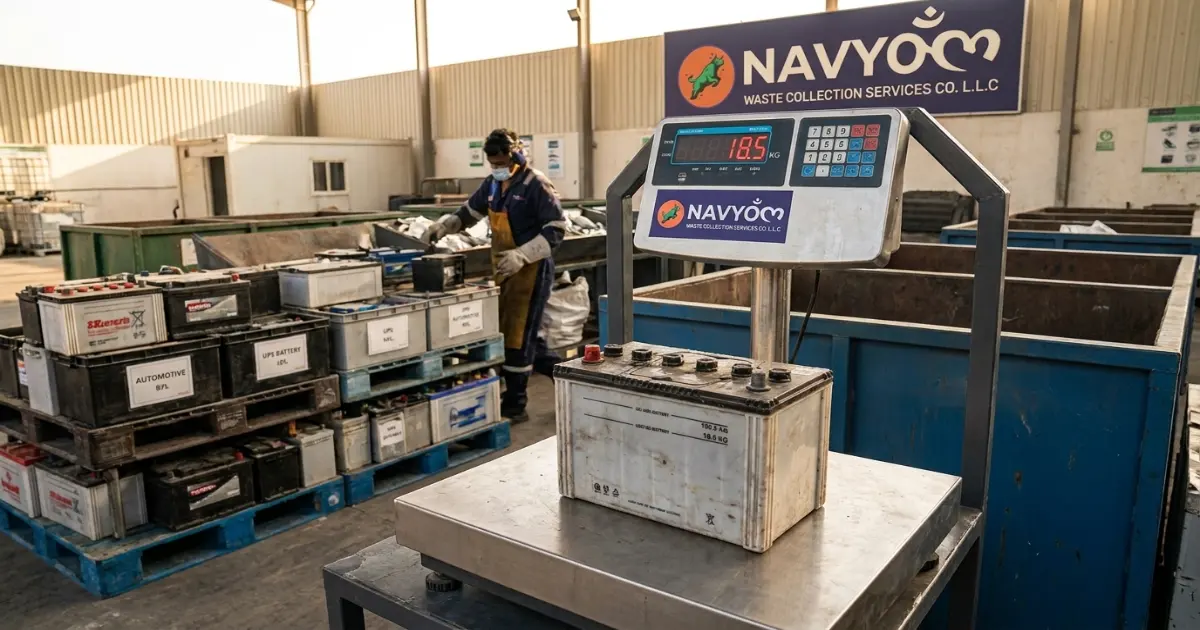
Car and industrial batteries carry real scrap value — always check current rates before disposing of them for free.
Want to know what your batteries or other scrap materials are actually worth today? Our Scrap Metal Estimator pulls current UAE rates so you’re not guessing — the same page our readers use for copper, aluminium and steel pricing before scrapping anything, covered in more depth in our metal scrap processing guide.
Battery Disposal for Businesses & Bulk Quantities
Offices, warehouses, and workshops accumulate batteries faster than most people expect — old UPS units, power tool batteries, forklift batteries, and bulk AA/AAA from equipment. For anything beyond a small household quantity, a licensed scrap dealer is the better route than a supermarket collection box, both because those boxes are sized for household volume and because bulk batteries carry meaningful scrap value that’s worth capturing rather than giving away for free. If your business is also managing general waste streams, our Dubai waste management guide covers the wider picture of what’s classified as hazardous vs general commercial waste.
Frequently Asked Questions Battery Recycling Dubai
Can I throw batteries in the regular trash in Dubai?
No. Batteries are hazardous waste and shouldn’t go in general household bins because of the heavy metals and fire risk they carry. Use a supermarket collection point, a Bee’ah/Tadweer bin, or a scrap dealer instead.
Where can I recycle AA and AAA batteries in Dubai?
The easiest option is the small battery collection boxes near the entrance of most Carrefour, Spinneys, and Lulu stores. These are free to use and accept standard household battery types.
Is it dangerous to store used batteries at home?
Small quantities of used alkaline batteries are generally low-risk if terminals are taped and they’re kept away from heat. Lithium-ion batteries, especially damaged or swollen ones, carry a higher fire risk and should be disposed of promptly rather than stored long-term.
Do car batteries have recycling value in the UAE?
Yes, lead-acid car batteries have real scrap value due to the lead and other recoverable materials inside. Many garages deduct this value when you buy a replacement, or you can sell it separately to a licensed scrap buyer.
What should I do with a swollen or leaking battery?
Handle it as little as possible, keep it away from flammable materials and heat, and take it directly to a disposal point rather than storing it. Don’t attempt to puncture or open it under any circumstance.
Where can I recycle an e-scooter or power bank battery in Dubai?
These are larger lithium-ion packs that often need specialised handling, so check with the retailer or manufacturer first rather than using a standard household collection box. Many electronics retailers also accept them as part of a trade-in.
Do businesses need a different battery disposal process than households?
Yes — for bulk quantities like UPS units or power tool batteries, a licensed scrap dealer is more suitable than a supermarket collection box, both for volume and because bulk batteries carry meaningful scrap value.
Check today’s UAE scrap rates before you dispose of anything for free.
Check Scrap Value Now →
If your clear-out includes more than batteries — old phones, cables, or small electronics — our mobile phone and e-waste recycling guide covers those in full. And if you’re tackling a wider household or garage clean-up, the Dubai recycling centers directory maps out exactly where every material type should go.