I’ve worked with dozens of construction sites across Dubai and Abu Dhabi over the years, and one thing always surprises me: how many smart, experienced contractors still treat waste as an afterthought. They focus on materials, labor, and timelines—but waste? It quietly chips away at margins until someone finally crunches the numbers at year-end.
In 2025, that’s no longer sustainable. With stricter regulations from Dubai Municipality and Tadweer in Abu Dhabi, rising disposal fees, and national goals to divert more waste from landfills, mixed construction waste has become one of the biggest avoidable expenses on UAE projects.
This guide breaks it down honestly on the cost of mixed construction waste and what mixed waste really costs, why segregation pays off, and practical steps to fix it. (Full disclosure: I’m with Navyom Waste Collection Services, a Dubai Municipality-approved hauler. We see these issues daily, but the advice here works no matter who handles your waste.)
What Exactly Is Mixed Construction Waste?
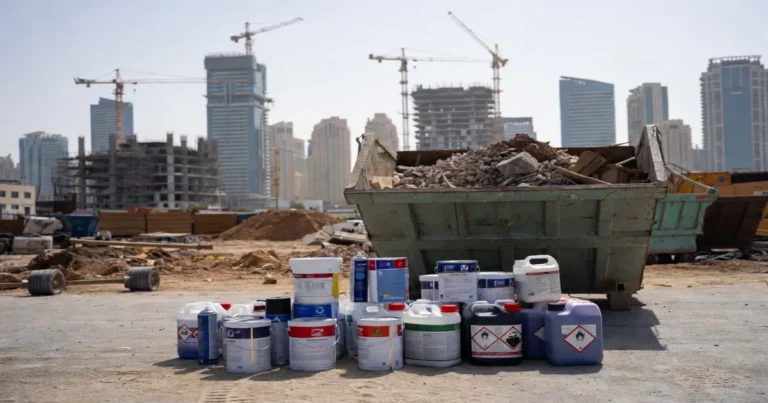
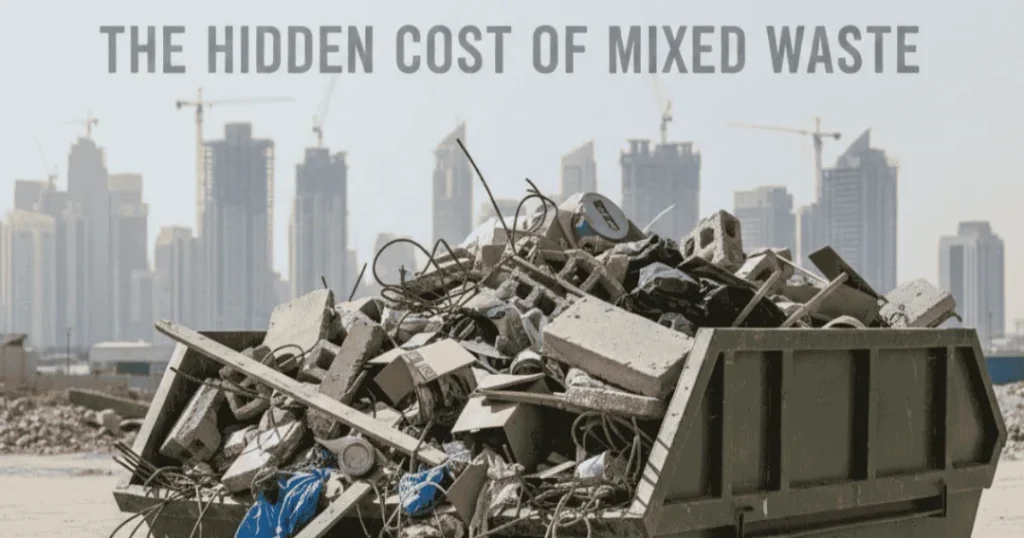
Mixed C&D (construction and demolition) waste is any skip or container with multiple material types thrown together. Common examples I’ve seen on sites:
- Concrete rubble mixed with wood scraps or plastic packaging
- Tiles and ceramics blended with cardboard
- Gypsum board alongside insulation materials
- Clean sand contaminated with metal offcuts
- Paint cans or aerosols dumped into general debris
On site, mixing feels quick and easy—especially under deadline pressure. But at the disposal facility, it’s a headache: harder to sort, lower recycling value, and higher fees.
Why Mixed Waste Hits Harder in 2025
Regulations have tightened across the UAE to support landfill diversion targets (like Dubai’s push toward zero landfill by 2041 and national sustainability goals).
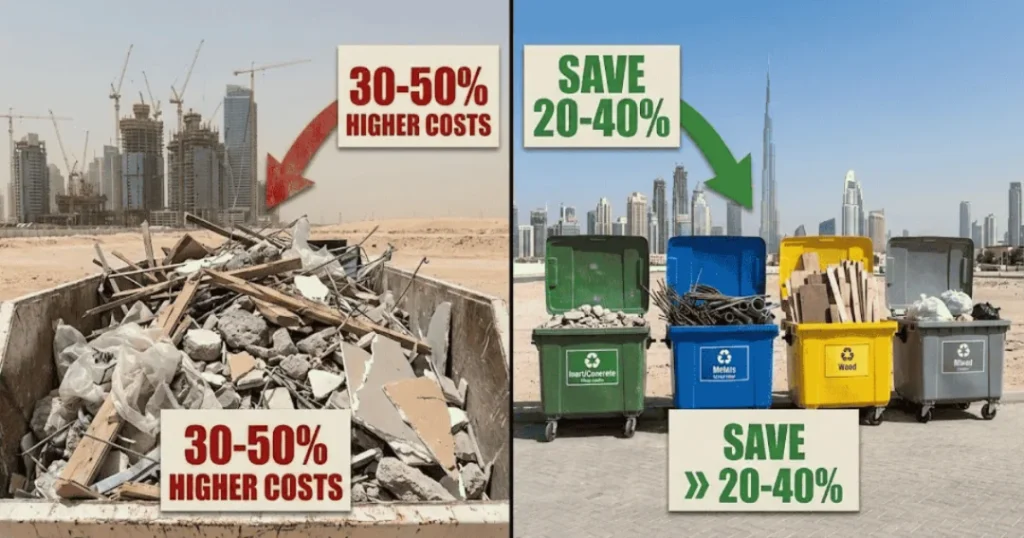
- Higher Disposal Fees for Mixed Loads Facilities charge more for mixed waste because it needs extra sorting and often ends up in landfills. From real contractor invoices we’ve reviewed, mixed loads typically cost 30–50% more per tonne than clean streams like pure concrete or metals. (Exact rates vary by facility and emirate—always check current pricing.)
- Tougher Waste Transfer Note (WTN) Checks in Dubai Dubai’s digital WTN system now uses photo uploads and AI-assisted validation. If your declared category (e.g., “inert concrete”) doesn’t match the photo, it’s flagged, delayed, or rejected. Mixed loads trigger this most often.
- Similar Trends in Abu Dhabi via Tadweer While the system differs slightly, Tadweer emphasizes segregation with color-coded bins and guidelines. Contaminated loads face reclassification or higher costs.
- Lost Recycling Opportunities Mixing contaminates clean materials, slashing recovery rates. Pure metals or concrete can earn rebates or lower fees—mixed waste rarely does.
The Real Costs: What You See (and What You Don’t)
Direct Costs (On Invoices)
- Skip hire, transport, and disposal fees. Segregated streams are always cheaper.
Hidden Costs (The Margin Killers) These add up fast but rarely get tracked as “waste”:
- Truck returns and reloading labor after WTN rejections
- Crew idle time waiting for skip clearance
- Site congestion blocking progress
- Delays rippling through subcontractors and schedules
- Potential fines or increased inspections for repeated issues
On mid-sized projects, these indirect costs often exceed direct fees.
Mixed vs. Segregated: Side-by-Side Comparison
| Cost Factor | Mixed Waste | Segregated Waste |
|---|---|---|
| Disposal Fees | 30–50% higher | Lower (clean streams cheapest) |
| Recycling Recovery | Low (contamination kills value) | High (rebates possible) |
| WTN Approval Speed | Slower (more reviews/rejections) | Faster |
| Rejection Risk | High | Low |
| Overall Predictability | Low (surprises add up) | High (stable budgeting) |
A Real-World Example
One mid-sized contractor we worked with in Dubai was defaulting to mixed loads across sites. Frequent WTN clarifications, occasional truck returns, and no rejection tracking. After reviewing a year’s data, switching to basic segregation (prioritizing concrete and metals) cut their total waste spend by around 25–35%—tens of thousands in savings, no fines, just better habits.
Savings like this are common when teams shift from “mixed by default” to structured sorting. Your mileage varies by project size and materials, but the pattern holds.
Why Does Mixed Waste Still Happen on Good Sites?
It’s rarely laziness. More often:
- Rushed schedules and multiple subs
- Limited site space for extra skips
- Unclear labeling or no cost feedback to supervisors
- The “sort it later” mindset
Simple systems fix most of this.
When Is Mixed Waste Okay?
Not all mixing is avoidable—early demolition, tight renovation sites, or complex strip-outs often produce truly mixed debris. That’s fine if declared honestly. The problem is over-relying on it for everything.
How Source Segregation Pays Off
Separating at the point of generation:
- Keeps materials clean for cheaper disposal/recycling
- Speeds WTN approvals
- Cuts rejections and delays
Contractors implementing basic sorting often see 20–40% reductions in total waste costs, based on site audits and industry feedback.
A No-Nonsense Framework to Get Started
You don’t need a full overhaul:
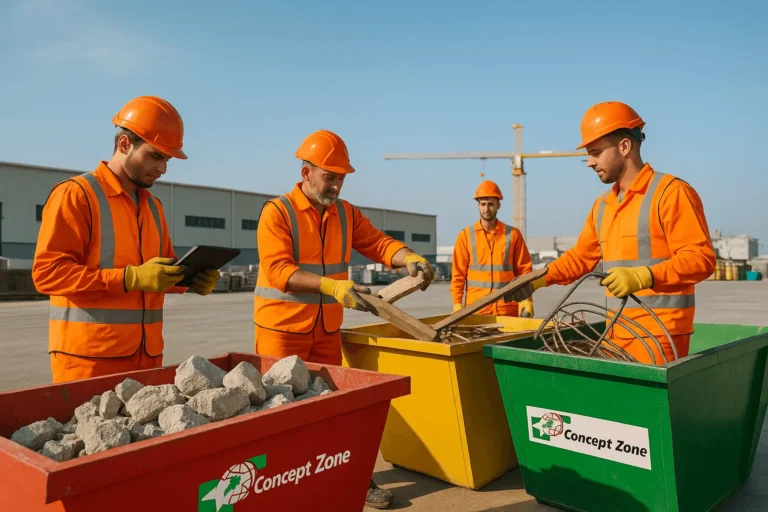
- Prioritize separating concrete/inert (biggest volume, lowest fees)
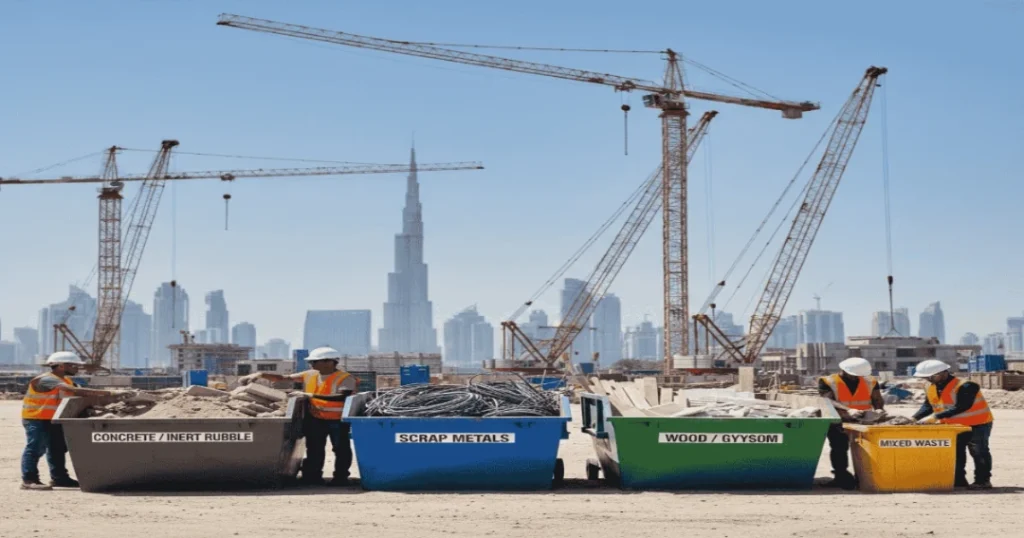
- Use clearly labeled skips for key streams (e.g., metal, wood)
- Declare unavoidable mixed loads accurately
- Train crews briefly and track monthly spend
- Review and tweak based on actual data
Consistency beats perfection.
Free Resource: 2025 Mixed Waste Cost Checklist
Download our one-page checklist to audit your site: spot common leaks, prioritize fixes, and estimate potential savings. (No obligation—just useful for PMs and QS teams.)
How We Can Help at Navyom
We partner with contractors to optimize categorization, minimize mixed loads, and ensure smooth WTN submissions. Goal: lower costs, zero headaches, full compliance.
Final Thought on The Hidden Cost of Mixed Construction Waste in the UAE
Mixed waste isn’t just messy—it’s expensive friction in a high-stakes industry. In 2025, treating it strategically isn’t “extra”—it’s essential for competitive margins.
Ready to Stop Mixed Waste From Eating Your Project Margins?
Get a free, no-obligation waste cost review for your site. Send us a few recent skip photos or invoices, and we’ll show you exactly where the leaks are — and how much you could save with simple segregation.
Or visit Navyom Waste Collection Services for more details.
Navyom Waste Collection Services – Dubai Municipality Approved
Frequently Asked Questions (FAQs)
1. How much more does mixed waste really cost compared to segregated?
Typically 30–50% higher disposal fees per tonne, plus hidden delays and labor. On active sites, proper segregation can save 20–40% overall.
2. What are the current UAE regulations for construction waste in 2025?
Dubai Municipality requires accurate WTNs with photo validation; mixed/contaminated loads risk rejection. Abu Dhabi’s Tadweer promotes segregation with guidelines and targets. National goals push landfill diversion (e.g., 50–75% for many projects via green building rules like Al Sa’fat or Estidama).
3. Do I need extra skips for segregation?
Often yes—start with 3–4: concrete/inert, metals, wood/gypsum, and one for true mixed. Space-constrained sites can phase it or use shared subs.
4. What happens if my WTN gets rejected in Dubai?
Truck returns to site, reload/sort, retake photos, resubmit. Delays clearance and adds labor/transport costs. Repeated issues can flag your site for extra scrutiny.
5. Is segregation worth it on small projects?
Absolutely—rejections and delays hurt more on tight budgets/timelines. Even basic concrete separation pays off quickly.
6. Can mixed waste ever be recycled?
Limited—contamination reduces recovery. Clean streams recycle at much higher rates (often 70%+ for metals/concrete).
7. How do I find approved waste haulers?
Check Dubai Municipality or Tadweer lists. Look for experience with construction, WTN support, and transparent pricing.
8. Are there fines for poor waste management?
Yes—non-compliance (e.g., unapproved disposal, hazardous mixing) can trigger AED 10,000–100,000 fines, plus site delays.
If you have more questions, drop them in the comments or contact us directly!