In the fast-paced world of construction, every dollar counts. Contractors meticulously budget for materials, labor, equipment, permits, and even those inevitable delays. But there’s one sneaky expense that often flies under the radar: waste inefficiency. In 2025, with rising disposal fees and stricter regulations, ignoring this can turn a minor oversight into a major profit drain.
We’ve seen it time and again across industrial sites, infrastructure builds, and large-scale developments—projects without dedicated On-Site Waste Sorting ROI stations end up paying more for disposal, dealing with frustrating waste transfer note (WTN) rejections, and missing out on valuable recycling rebates. The good news? Switching to sorting at the source can slash total waste handling costs by 18–27%. This isn’t some pie-in-the-sky estimate; it’s grounded in real-world data from disposal rates, transport savings, and boosted recycling yields.
In this post, we’ll discuss about:
- The true costs of setting up an on-site sorting station
- Exactly where those savings add up
- How recycling rates skyrocket
- Why 2025 regulations make this a smart competitive edge
- A straightforward way to calculate your ROI (no fluff or greenwashing)
If you’re overseeing projects where tight margins make or break success, this could be the operational tweak that delivers real financial wins, beyond just checking a sustainability box.
What Exactly Is an On-Site Waste Sorting Station?
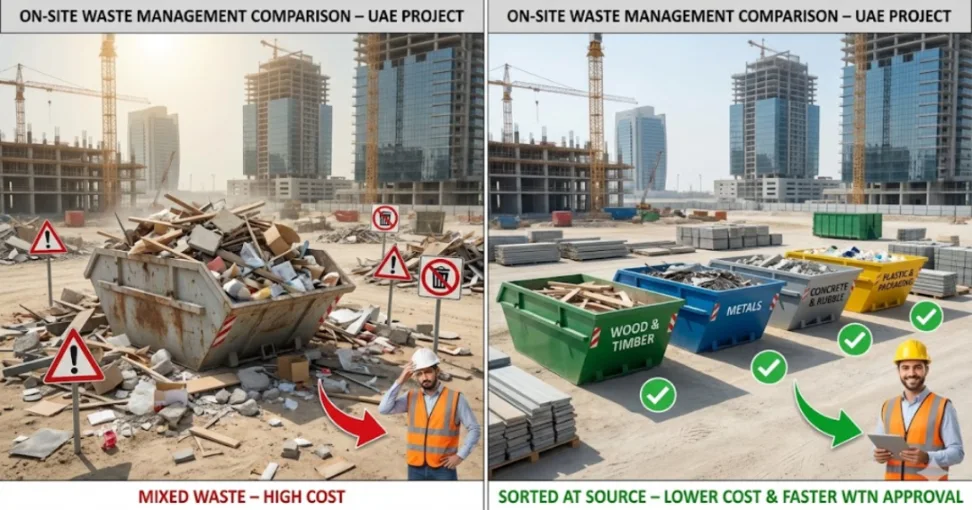
Picture this: Instead of tossing everything into one big mixed skip, you create a dedicated zone right on your site where waste gets separated as it’s generated. It’s straightforward and doesn’t require fancy tech.
A typical setup includes:
- Labeled skips or containers for categories like concrete/inert waste, metal scrap, wood, gypsum, packaging (think cardboard and plastic), and a catch-all for mixed residuals.
- Eye-catching signage and color-coding to make it foolproof.
- Quick training for your crew and supervisors.
- A simple system for classifying WTNs and snapping photos for compliance.
The core idea? Sort it once, right away, so you avoid the hassle (and expense) of dealing with it later. It’s all about efficiency from the get-go.
Why Sorting at the Source Is a Game-Changer in 2025
Back in the day, dumping most construction and demolition (C&D) waste as mixed loads was the norm. It was sloppy, but regulations weren’t as tight. Fast-forward to 2025, and the landscape has shifted dramatically. Here’s why:
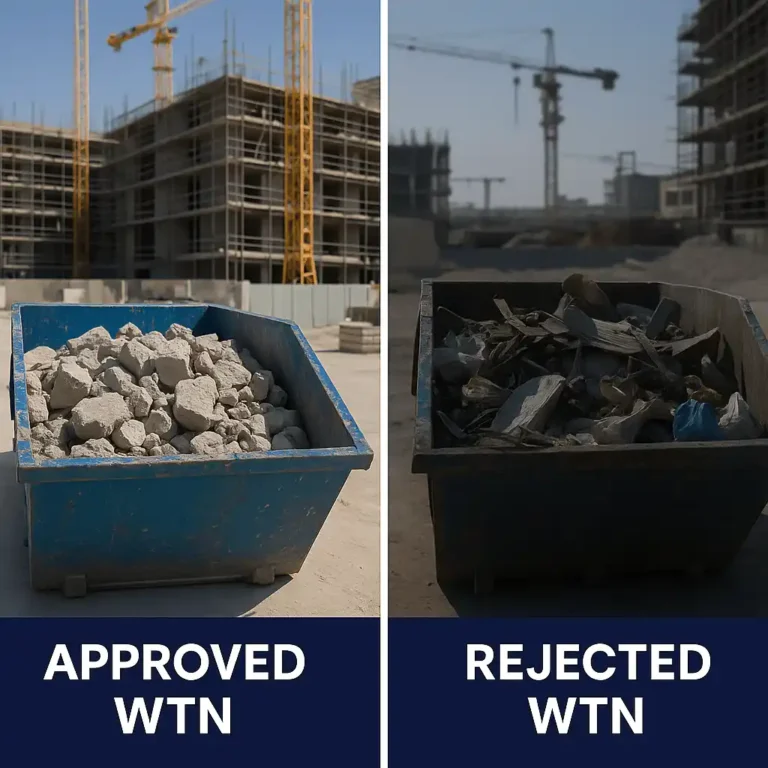
- Tougher WTN Validation: Waste categories now need to align with visual proof. Get it wrong, and rejections pile up.
- Skyrocketing Fees for Mixed Waste: Landfills and processors are slapping premiums on unsorted loads to encourage better practices.
- Sweeter Recycling Incentives: Clean, separated materials like metals and concrete qualify for rebates and hit recovery targets more easily.
Sorting at the source isn’t just eco-smart—it’s a straight-up strategy for controlling costs and staying ahead of the curve.

The Hidden Costs of Skipping On-Site Sorting
Let’s paint a clear picture of the status quo without sorting:
- Loads default to “mixed waste,” which racks up higher fees.
- Recycling drops off a cliff because materials get contaminated.
- Trucks get turned away or reclassified, leading to extra trips and downtime.
- WTNs face delays or outright denials, throwing schedules into chaos.
Breaking it down per skip:
- A concrete-only load? Dirt cheap.
- Metal-only? Often breaks even or turns a profit.
- Mixed C&D? 40–70% pricier.
- Rejected loads? Hello, added transport, labor, and lost productivity.
These aren’t one-off hits—they snowball over the life of a project.
Breaking Down the Setup Costs: It’s Cheaper Than You Think
There’s a common misconception that on-site sorting stations are a budget-buster. Spoiler: They’re not. For most mid-to-large projects, the upfront investment pays for itself in weeks.
Key expenses:
- Extra skips or containers.
- Signage and labels.
- Minor tweaks to your site layout.
- Brief training sessions.
- A bit more oversight at the start.
What you don’t need:
- High-tech equipment.
- Permanent builds.
- Specialized hires.
- Days of downtime to set up.
It’s a low-barrier upgrade that quickly shifts from cost to savings.
Where Do the 18–27% Savings Really Come From?
The magic isn’t in one big win—it’s in the layers of efficiencies that stack up. Here’s the breakdown:
- Cheaper Disposal Fees: Pure streams cost less to process than mixed messes, often shaving 10–15% off the bill.
- Fewer Rejections and Reworks: Accurate sorting means WTNs sail through, cutting rejected trucks, return hauls, and reloads by 3–6%.
- Smarter Transport: Better planning and optimized loads mean fewer trips, adding 2–4% in savings.
- Recycling Boosts: Clean metals, cardboard, and inerts can generate revenue or rebates, contributing 3–5%.
Add it all up, and you’re looking at 18–27% overall reductions, tailored to your project’s scale and waste mix.
How Sorting Supercharges Recycling Rates
One underrated perk? Your recycling numbers go through the roof.
- Mixed waste: Maybe 0–15% gets recovered.
- Sorted at source: 60–90% by weight, easy.
The reason? Mixing contaminates everything, making separation tougher and pricier downstream. Sorting early keeps materials pure, which recyclers love—and pay for.
Calculating Your ROI: Keep It Simple and Real
Forget the hype; ROI boils down to basic math. Here’s the formula:
ROI (%) = (Annual Savings – Sorting Station Cost) / Sorting Station Cost × 100
Quick example:
- Baseline annual waste costs: $1,000,000
- Savings at 22%: $220,000
- Setup and ops for sorting: $40,000
ROI = ($220,000 – $40,000) / $40,000 × 100 = 450%
Even dialing back the assumptions, the payback is impressive. Want to run your own numbers? Plug them into our interactive tool below.
Waste Sorting Station ROI Calculator
Estimate how much your project can save by sorting waste at source.
Estimated Results
Why Some Contractors Drag Their Feet (And Why It’s a Bad Idea)
Sure, the numbers look great, but resistance is real. Excuses like “It’ll slow us down,” “The team won’t buy in,” or “We’ve always dumped it mixed” still pop up. In 2025, though? Sticking to old habits means eating higher fees, penalties, and inefficiencies. Regulations and pricing are forcing the issue—adapt or overpay.
On-Site vs. Off-Site Sorting: Why Timing Matters
Thinking you can sort later at a central facility? Think again. Off-site means dealing with contamination, higher costs, lower recovery, and extra logistics. Sorting at the source preserves quality, cuts handling, boosts compliance, and trims the bottom line.
Boosting WTN Accuracy and Speed
Sorted waste makes WTNs a breeze: Clear categories, easy photos, and matching loads mean fewer rejections, audits, and delays. That’s real time savings translating to money in your pocket.
The Surprising Labor Win
Worried about extra work? Actually, sorting streamlines things. Workers spend less time on “later” decisions, supervisors handle fewer fixes, and clear rules cut confusion. It becomes second nature—and often faster than the old chaotic approach.
Sustainability in Practical Terms
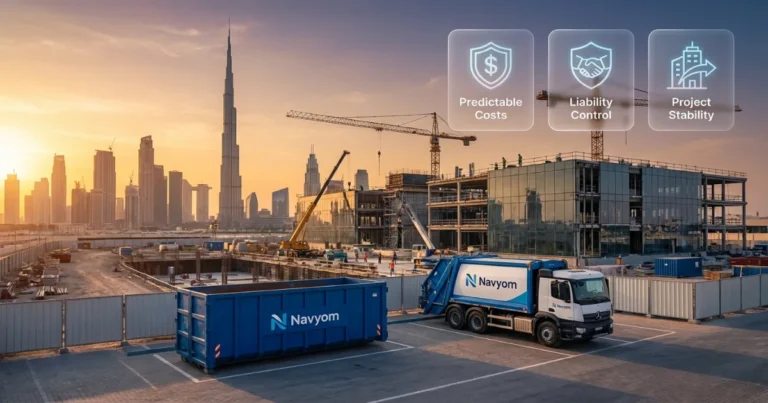
We’re not here to preach. Sorting reduces landfill use, amps up recycling, lowers risks, and eases reporting. But for contractors, the real draw is stability: Predictable waste means predictable budgets, shielding you from cost swings.
Getting Started Without the Headache
No need for a full overhaul. Ease in:
- Pinpoint your top three waste types by volume.
- Add dedicated containers for them.
- Train key supervisors first.
- Monitor cost shifts over 30 days.
Most sites notice gains right away.
Pitfalls to Dodge for Max ROI
Even solid plans flop if bungled. Steer clear of:
- Overloading with too many categories upfront.
- Vague labeling.
- Zero follow-through.
- Lax enforcement.
- Skipping disposal data reviews.
Keep it straightforward and consistent.
Wrapping It Up: This Is About Profits, Not Just the Planet
On-site waste sorting isn’t a feel-good green initiative—it’s a savvy business move for cost control, compliance, efficiency, and protecting your margins. In 2025, adopters are saving 18–27% on waste, recycling more, and dodging headaches. Laggards? They’re stuck with inflated fees, rejections, and waste.
If waste feels like an endless overhead, it’s time to flip the script. Sorting at the source is low-cost, quick to pay off, and a gift that keeps giving throughout your project.
Ready to make the switch and start saving? Navyom offers expert waste collection services tailored for construction sites. From efficient pickups to compliant sorting solutions, we’ve got you covered. Contact us today at [email/phone] or visit navyom.com to schedule a free consultation and optimize your waste management. Don’t leave money on the table—let’s sort it out together!

Frequently Asked Questions: On-Site Waste Sorting Stations for Construction Projects
Here are the top FAQs based on common concerns from contractors implementing on-site waste sorting. These draw from real-world practices and 2025 regulations to help you get started.
1. What is an on-site waste sorting station?
An on-site waste sorting station is a dedicated area on your construction site where waste is separated at the source (as it’s generated) into labeled containers or skips. Common categories include concrete/inert, metals, wood, gypsum, packaging, and mixed residuals. This prevents contamination and makes recycling easier.
2. How much can I really save by sorting waste at the source?
Contractors typically see 18–27% reductions in total waste handling costs. Savings come from lower disposal fees for clean streams (10–15%), fewer WTN rejections and return trips (3–6%), optimized transport (2–4%), and recycling rebates/revenue (3–5%). Payback on setup costs often happens in weeks.
3. What does it cost to set up an on-site sorting station?
Setup is surprisingly affordable—usually just extra skips, signage, minor layout changes, and brief worker training. No need for fancy equipment or permanent structures. For medium-to-large projects, costs are recovered quickly through savings, often within the first month or two.
4. Does On-Site Waste Sorting ROI slow down the site or increase labor costs?
Not in the long run. Initial adjustment might take time, but clear rules reduce confusion, “deciding later” delays, and emergency fixes. Over time, it becomes habitual and can even speed up operations by keeping the site tidier.
5. What’s the difference between on-site and off-site (centralized) sorting?
On-site sorting preserves material purity, reduces contamination, lowers transport needs, and improves compliance. Off-site sorting happens after mixing, recovers less material, costs more overall, and adds logistics overhead. Sorting early keeps more value in your hands.
6. How does sorting at source affect recycling rates?
Dramatically—unsorted mixed waste often achieves only 0–15% recovery, while source-sorted waste can hit 60–90% by weight. Clean streams are what recyclers want, leading to higher rebates and better compliance with recovery targets.
7. Are there new regulations in 2025 making on-site sorting mandatory?
In England, from March 31, 2025, businesses (including construction sites) must separately collect dry recyclables (plastic, metal, glass, paper/card) and food waste. Stricter WTN validation, higher mixed-waste fees, and better incentives make sorting at source a practical necessity for compliance and cost control.
8. How do I improve WTN accuracy with sorting?
Sorted loads match declarations easily, with clear photos and categories. This cuts rejections, delays, and audits—saving time and avoiding penalties.
9. How do I get started without disrupting my project?
Start small: Identify your top 3 waste streams, add dedicated containers, train supervisors first, and track costs for 30 days. Most sites see quick wins.
10. Is this just for big projects, or can smaller sites benefit too?
Any size project can benefit, but medium-to-large ones see the biggest ROI due to volume. Even smaller sites save on disposal and compliance with minimal setup.
Ready to implement on-site sorting and start saving? Navyom provides tailored waste collection services, including compliant skips and expert advice for construction sites. Contact us for a free consultation and let’s optimize your waste management today!