Eco-Packaging Cost Calculator for UAE Businesses: Calculate Sustainable Packaging Costs and CO₂ Metrics in 2026
Hey there, fellow entrepreneurs and sustainability enthusiasts in the UAE! If you’re running a business in Dubai, Abu Dhabi, or anywhere across the Emirates, you’ve probably noticed the shift towards greener practices. With the UAE’s ambitious Net Zero by 2050 goal and increasing consumer demand for eco-friendly products, sustainable packaging isn’t just a buzzword—it’s a necessity. But here’s the catch: how do you balance the environmental benefits with the bottom line?
That’s where tools like the Navyom Eco-Packaging Cost Calculator come in. In this comprehensive guide, we’ll dive deep into what this calculator is, how it works, why it’s perfect for UAE businesses, and how it can help you make smarter, greener decisions in 2026.
As someone who’s followed the packaging industry closely, I remember when “eco-friendly” meant slapping a recyclable label on plastic and calling it a day. Fast forward to today, and things are changing rapidly. According to recent market insights, the UAE’s packaging industry is valued at USD 10.08 billion in 2026, growing at a CAGR of 5.41% towards USD 13.11 billion by 2030.
This growth is fueled by innovations in reusable and biodegradable materials, especially as consumers are willing to pay a 15-20% premium for sustainable options. But calculating the true cost—including materials, labor, shipping, and even CO₂ emissions—can be overwhelming. That’s why I’m excited to break down this calculator for you. Let’s get started!
What Is Eco-Packaging and Why Does It Matter in the UAE?
Before we jump into the calculator, let’s set the stage. Eco-packaging, also known as sustainable or green packaging, refers to materials and designs that minimize environmental impact throughout their lifecycle. This includes everything from biodegradable plastics derived from plants to recycled paper and reusable containers. In the UAE, where plastic waste has been a hot topic, eco-packaging helps reduce landfill contributions and aligns with national initiatives like the UAE Circular Economy Policy 2021-2031.

Why does it matter? For starters, the UAE is pushing hard for sustainability. By 2026, trends show a dominance of reusable solutions like modular crates, aligning with global circular economy goals. In the PET industry, transformations include bio-based alternatives that cut down on fossil fuel dependency. Plus, with the global waste paper recycling market hitting $55.5 billion, UAE businesses can tap into cost-effective recycled materials.
From a business perspective, going green isn’t just about saving the planet—it’s about saving money and building brand loyalty. Research shows that eco-friendly packaging can lower long-term costs through reduced waste management fees and enhanced recycling rates.
Consumers in the GCC are increasingly eco-conscious, and businesses that adopt sustainable practices see improved reputation and sales. Imagine your e-commerce store in Dubai shipping products in compostable bags—customers love it, and it differentiates you from competitors still using single-use plastics.
But calculating these benefits? That’s tricky. Traditional packaging costs are straightforward: material + labor + shipping. Sustainable options add layers like CO₂ footprints, disposal methods, and carbon offsets. Without a tool, you’re guessing, which can lead to over- or under-budgeting.
The Challenges of Calculating Sustainable Packaging Costs
Let’s be real—figuring out packaging costs for eco-materials isn’t as simple as punching numbers into a spreadsheet. Here’s why:
- Variable Material Costs: Sustainable materials like bioplastics or recycled paper can cost 20-50% more upfront than conventional plastics. But they often save money long-term through durability and recyclability.
- Lifecycle Analysis: You need to factor in production, transport, use, and disposal. For instance, air freight might spike your CO₂ emissions, while local UAE trucking keeps it low.
- Regulatory Factors: In the UAE, with 5% VAT and potential green incentives, taxes and offsets play a role. Plus, compliance with standards like those from the Emirates Authority for Standardization and Metrology (ESMA) adds complexity.
- Hidden Expenses: Printing, design, labor, and overheads can sneak up. A custom compostable box might require specialized printing, bumping costs.
- Environmental Metrics: CO₂ calculations involve production emissions (e.g., 730g/kg for recycled paper), transport factors (0.1g/km for trucks), and disposal (e.g., -365g/kg for recycling recycled materials).
Without a dedicated calculator, businesses rely on manual estimates, which are error-prone. Tools like general packaging cost calculators exist, but they often ignore UAE-specific elements like AED currency defaults or local transport norms.
Introducing the Navyom Eco-Packaging Cost Calculator
Enter the Navyom Eco-Packaging Cost Calculator—a free, web-based tool tailored for UAE businesses. Whether you’re a small startup in Sharjah or a large retailer in Dubai, this calculator helps you input variables and get instant results on per-unit costs, total project expenses, markup prices, taxes, and lifecycle CO₂ emissions.
What sets it apart? It’s UAE-optimized with AED as the default currency, 5% VAT pre-set, and local transport options like truck (UAE Local). It even includes presets for common materials: glass bottles, compostable boxes, recycled paper, bioplastics, and UAE standards. Plus, it calculates an “Environmental Score” out of 100, blending CO₂ impact and cost efficiency.

I first came across similar tools like Packsize’s Sustainability Calculator or EcoEnclose’s Savings Calculator, but Navyom stands out for its focus on full lifecycle metrics, including disposal methods (landfill, recycle, compost, incinerate).
Step-by-Step Guide: How to Use the Navyom Calculator
Using the calculator is straightforward—think of it as your personal sustainability consultant. Here’s a humanized walkthrough:
- Select a Preset: Start with buttons like “Glass Bottle” or “UAE Standard.” This auto-fills typical values, saving time. For custom needs, choose “Custom.”
- Enter Packaging Details: Pick your type (e.g., recycled paper), quantity (say, 1000 units), weight per unit (50g), and currency (AED for UAE).
- Input Costs and Pricing: Fill in material cost per kg (e.g., 3.5 AED), printing (0.05 AED/unit), labor (0.03 AED/unit), design total (120 AED), shipping (0.02 AED/unit), overhead (8%), markup (35%), offset (0.01 AED/unit), and tax (5%).
- Add Transport Metrics: Choose mode (truck, sea, air), distance (500km), affecting CO₂.
- Select Disposal: Options impact end-of-life emissions.
- Calculate and Review: Hit “Calculate Now” for summaries, breakdowns, charts, and export options.
For example, for 1000 recycled paper units at 50g each, you might get a total cost per unit of AED 0.25, final price with tax AED 0.35, and CO₂ of 50g/unit. The doughnut chart visualizes cost distribution, making it easy to spot savings.
Pro tip: The tool auto-updates on input changes and supports saving/loading configs for repeat use.
Key Features of the Navyom Calculator
This isn’t your average spreadsheet. Here’s what makes it shine:
- Presets for Quick Starts: Glass, compostable, recycled, bioplastic, UAE standard, custom.
- Comprehensive Cost Breakdown: Material, printing, labor, design, shipping, overhead, markup, tax—all per unit.
- CO₂ Metrics: Production, transport, disposal calculated with factors like 730g/kg for recycled paper.
- Visualizations: Summary cards, breakdowns, doughnut charts for costs.
- Export and Share: CSV export, printable estimates, shareable links.
- UAE-Specific Optimizations: AED default, 5% tax, local transport modes.
- Environmental Score: A holistic 0-100 rating to guide decisions.
Compared to others like the Zero Waste Score Calculator, this one integrates financials with eco-metrics seamlessly.
Benefits for UAE Businesses: Beyond the Numbers
Adopting eco-packaging via this calculator isn’t just about compliance—it’s a smart business move. Here’s how:
- Cost Savings: While initial costs might be higher, long-term benefits include lower waste fees and efficiencies. One study notes scalable innovations making green options cost-competitive.
- Brand Enhancement: UAE consumers prefer sustainable brands, boosting loyalty and sales.
- Regulatory Compliance: Align with UAE’s plastic bans and circular economy policies.
- Environmental Impact: Reduce CO₂—e.g., recycling can offset emissions by -365g/kg for paper.
- Competitive Edge: In a market growing to USD 13.11 billion, green packaging differentiates you.
Take a Dubai food delivery service: Using the calculator, they switch to compostable boxes, cutting CO₂ by 30% and costs by 15% via bulk recycled materials.
Real-World Case Studies in UAE Eco-Packaging
Let’s look at examples. A UAE startup turns palm fibers into compostable packaging, reducing waste and supporting SDG 12. Using the calculator, they estimate costs at AED 0.20/unit with low CO₂.
Another: A Dubai retailer adopts reusable containers, aligning with 2026 trends. The tool shows 20% savings over time.
In the F&B sector, eco-packaging cuts toxins and allergies, enhancing customer safety.
Future Trends in UAE Eco-Packaging for 2026 and Beyond
Looking ahead, 2026 brings exciting shifts:
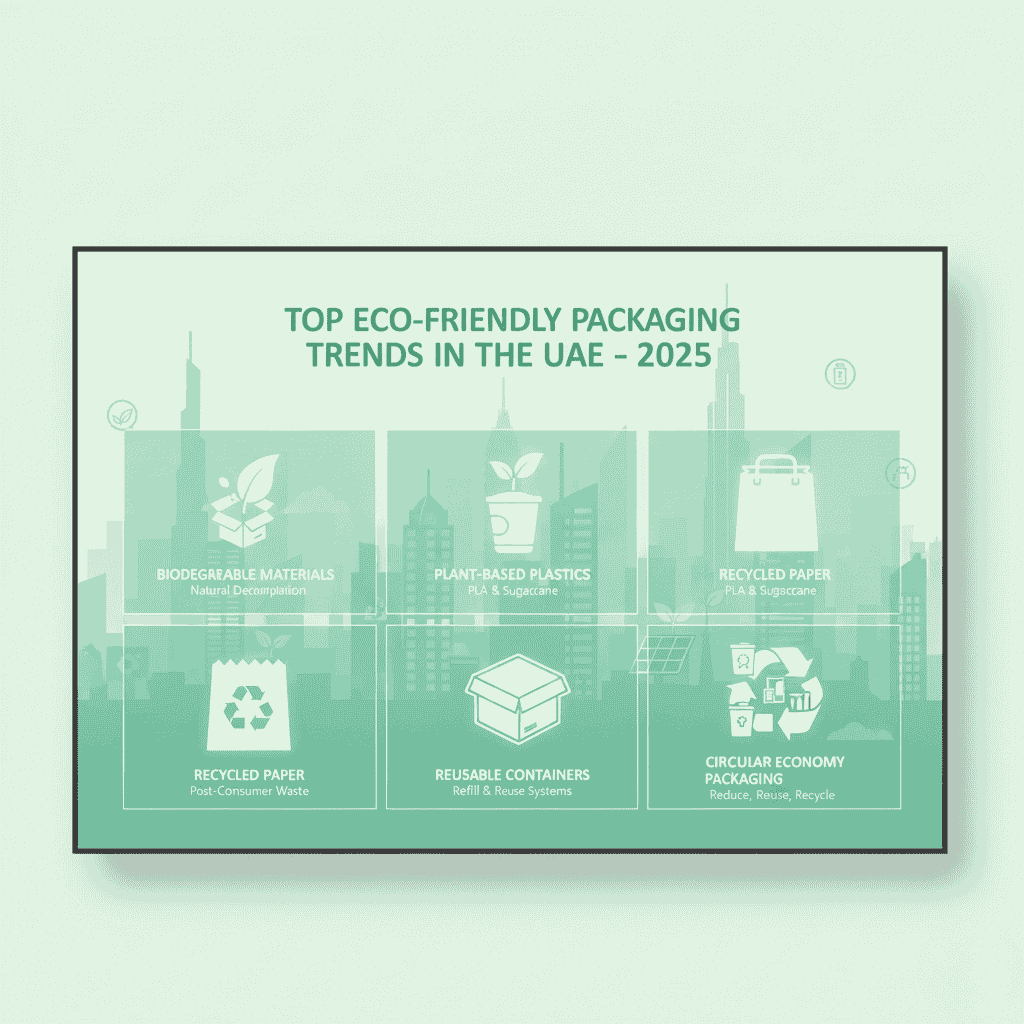
- Biodegradable Boom: Alternate fibers growing at 6.94%.
- Circular Economy Focus: Reduce, reuse, recycle— with partnerships for cost-effective solutions.
- Tech Integration: Smart packaging with QR codes for traceability.
- Consumer-Driven: More demand for zero-waste options.
The calculator helps you stay ahead by modeling these trends.
Tips for Optimizing Your Eco-Packaging Costs in UAE
- Source Locally: Reduce transport CO₂—Dubai suppliers cut distances.
- Bulk Buying: Lower per-kg costs for materials.
- Mix Materials: Combine recycled paper with bioplastics for balance.
- Use the Calculator Iteratively: Test scenarios to find optimal setups.
- Seek Incentives: UAE green grants can offset costs.
- Monitor Trends: Keep an eye on PET transformations and waste recycling markets.
Conclusion: Embrace Sustainability with Navyom Today
In 2026, UAE businesses can’t afford to ignore eco-packaging. The Navyom Eco-Packaging Cost Calculator empowers you to calculate costs, margins, and CO₂ with ease, turning sustainability into a profitable strategy. Whether you’re optimizing for Dubai’s fast-paced market or Abu Dhabi’s regulatory landscape, this tool is your go-to.
Ready to crunch the numbers? You can just head over to the calculator and start today. Your business—and the planet—will thank you. If you have any questions, please feel free to leave a comment below. Let’s build a greener UAE together!
Frequently Asked Questions (FAQs) About the Navyom Eco-Packaging Cost Calculator
Below are some common questions about the Navyom Eco-Packaging Cost Calculator, designed to help UAE businesses understand how to use this tool effectively for sustainable packaging decisions in 2026.
Whether you’re a startup in Dubai or a retailer in Abu Dhabi, these FAQs cover everything from functionality to benefits.
1. What is the Navyom Eco-Packaging Cost Calculator?
The Navyom Eco-Packaging Cost Calculator is a free, web-based tool tailored for UAE businesses to calculate the costs, margins, and CO₂ emissions of sustainable packaging. It accounts for material costs, labor, shipping, taxes (default 5% VAT), and environmental metrics across the packaging lifecycle, including production, transport, and disposal.
2. Who can benefit from using this calculator?
Any UAE business involved in packaging—e-commerce, food and beverage, retail, manufacturing, or logistics—can use it. It’s especially useful for those aiming to align with the UAE’s Net Zero by 2050 goal or meet consumer demand for eco-friendly products. Small startups in Sharjah to large enterprises in Dubai can make data-driven decisions with ease.
3. How does the calculator support sustainable packaging decisions?
The calculator provides:
- Cost Breakdown: Per-unit and total project costs, including material, printing, labor, design, shipping, overhead, markup, and tax.
- CO₂ Metrics: Lifecycle emissions from production (e.g., 730g/kg for recycled paper), transport, and disposal (e.g., landfill, recycling).
- Environmental Score: A 0-100 rating combining cost efficiency and CO₂ impact.
- Presets: Options like glass bottles, compostable boxes, and UAE standards for quick calculations.
- Visualizations: Doughnut charts and summary cards for easy analysis.
4. Is the calculator optimized for the UAE market?
Yes, it’s built specifically for the UAE:
- Default currency is AED with 5% VAT pre-set.
- Includes UAE-specific transport modes like local trucking.
- Offers a “UAE Standard” preset for commonly used materials.
- Aligns with local regulations like the UAE Circular Economy Policy 2021-2031.
5. What types of packaging materials does it cover?
The calculator includes presets for:
- Glass Bottles
- Compostable Boxes (e.g., PLA)
- Recycled Paper
- Bioplastic Bags
- Conventional Plastic
- Custom Materials (with user-defined CO₂ inputs)
6. How do I use the calculator?
- Choose a Preset: Select from options like “Recycled Paper” or “Custom” to auto-fill values.
- Enter Details: Input packaging type, quantity, weight, and currency.
- Add Costs: Specify material cost per kg, printing, labor, design, shipping, overhead, markup, tax, and carbon offset.
- Set Transport and Disposal: Choose transport mode (truck, sea, air), distance, and disposal method (landfill, recycle, compost, incinerate).
- Calculate: Click “Calculate Now” for instant results, including cost breakdowns, CO₂ metrics, and charts.
- Export/Share: Save as CSV, print estimates, or generate shareable links.
7. Can I save and reuse my calculations?
Yes! Use the “Save Config” button to store your inputs locally. Later, click “Load Config” to retrieve them. You can also generate a shareable link with all parameters for team collaboration.
8. How accurate are the CO₂ calculations?
The calculator uses industry-standard CO₂ factors:
- Production: E.g., 730g/kg for recycled paper, 1500g/kg for bioplastics.
- Transport: Factors like 0.1g/km for trucks or 1.0g/km for air freight.
- Disposal: Varies by method (e.g., -365g/kg for recycling paper, 500g/kg for landfilling).
For custom materials, you can input your own production CO₂ values. While highly reliable, results depend on accurate user inputs and may vary slightly based on real-world conditions.
9. Does it account for UAE taxes and regulations?
Absolutely. The default tax rate is set to 5% VAT, standard in the UAE. It also considers local transport norms and aligns with sustainability policies like the UAE’s plastic bans and circular economy initiatives.
10. How does the Environmental Score work?
The Environmental Score (0-100) combines two factors:
- CO₂ Score: Based on lifecycle emissions compared to a maximum (e.g., 5g/kg for heavy-impact materials).
- Cost Score: Reflects material cost efficiency relative to a benchmark (e.g., 10 AED/kg).
The score helps you balance cost and environmental impact, with higher scores indicating greener, more cost-effective choices.
11. Can I export or share my results?
Yes, the calculator offers:
- CSV Export: Download detailed results for analysis.
- Printable Estimates: Generate a formatted invoice for records.
- Shareable Links: Copy a URL with your inputs for sharing with colleagues or suppliers.
- Clipboard Summary: Copy a concise text summary of key metrics.
12. Is the calculator mobile-friendly?
Yes, it’s fully responsive, designed for seamless use on desktops, tablets, and smartphones. The single-column layout ensures consistency across devices, making it easy for on-the-go calculations at a Dubai warehouse or an Abu Dhabi office.
13. How does it compare to other packaging calculators?
Unlike generic tools like Packsize’s Sustainability Calculator or EcoEnclose’s Savings Calculator, Navyom is UAE-specific, integrating AED, local transport, and regional policies. It also provides full lifecycle CO₂ analysis and an Environmental Score, which many others lack.
14. Can it help reduce my packaging costs?
Definitely! By testing different materials, quantities, and transport modes, you can identify cost-saving options. For example, switching to local suppliers in Dubai can lower transport CO₂ and costs. The calculator