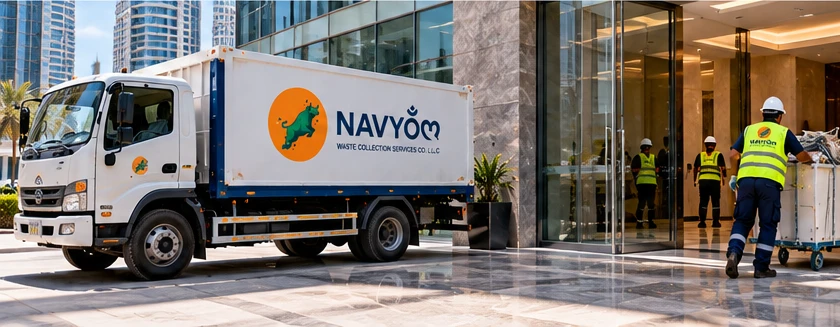
Office Fit-Out Waste Removal Dubai
Keep strip-out, renovation and handover work moving with a waste plan built around your fit-out sequence, building access and actual material mix — not a generic “one skip fits all” approach.
Office fit-out waste removal in Dubai should be planned by project phase, waste type and building access. Strip-out commonly produces gypsum board, ceiling systems, flooring, joinery, metal and mixed debris; later fit-out stages add off-cuts, pallets and packaging. Dubai Municipality’s construction-waste circular requires construction waste to be separated and sorted before transport, with examples including concrete, rebar, wood, tiles and plastics.
Fit-out waste is a site-logistics problem before it becomes a disposal problem
A commercial office can lose usable work area quickly when debris sits in corridors, loading zones or unfinished rooms. That slows trades, blocks deliveries and creates a second coordination problem for the site team.
For a small office renovation, the right plan may be several timed collections. For a large floor plate or multi-floor strip-out, a container-led plan can be more practical. The decision should follow volume, material type, access and removal frequency — not just floor area.
What office fit-out waste can the project generate?
The waste profile changes from strip-out to first fix, finishes and handover. Identifying those streams early makes container planning and segregation easier.
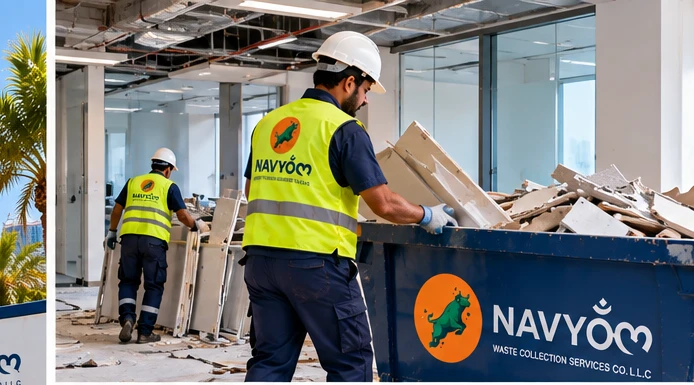
Removed drywall, studs, tracks, damaged boards and installation off-cuts.
Suspended ceiling tiles, metal grid, gypsum ceiling sections and related trims.
Removed floor finishes, skirting and preparation waste from refurbishment works.
Cabinetry, timber off-cuts, doors, counters and non-structural joinery in the agreed scope.
Metal components and fit-out scrap that can often be kept separate from mixed debris.
New furniture, lighting, equipment and finish materials can create a large packaging stream late in the project.
Build your office fit-out waste collection brief
This planner does not invent a price. It creates the information a waste contractor actually needs to scope the job properly.
Plan collections around the fit-out sequence
The best collection schedule follows the trades. One pickup at the end may be too late if strip-out fills the floor in the first few days.
Usually the most concentrated waste period. Remove bulky partition, ceiling, flooring and joinery debris before new trades take over the space.
Expect gypsum, metal framing, cable-management off-cuts and protective packaging as MEP and partition works progress.
Flooring, joinery, tiles, fixtures and furniture introduce off-cuts, pallets, cardboard and plastic packaging.
Clear remaining protection, packaging and non-hazardous debris before final presentation and landlord/client handover.
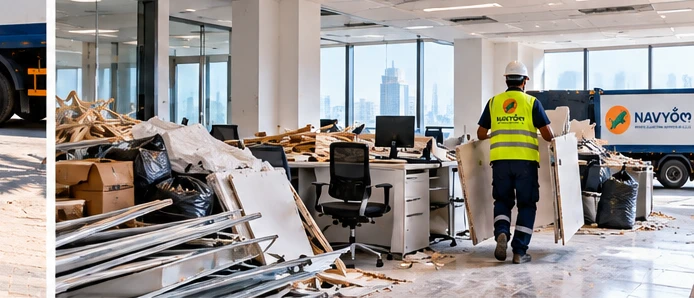
In office towers, access can matter more than container size
Before confirming a collection, check how the waste will physically move from the office to the vehicle. That is where many commercial jobs become slower or more expensive than expected.
Confirm with building management
- Approved loading-bay or collection hours
- Service-lift availability and dimensions
- Basement height and vehicle restrictions
- Floor and lift protection requirements
- Whether a skip/container can remain on site
- Security access, permits-to-work or gate passes
Send Navyom before quoting
- Building / community and office floor
- Approximate floor area and fit-out scope
- Photos or short video of the waste
- Main waste types and bulky items
- Loading route from unit to collection point
- Preferred collection date / project programme
For a Business Bay tower, DIFC office, JLT floor or another managed commercial building, the collection plan should be agreed around the property’s actual access rules. The location name alone is not enough to price the job accurately.
Sort what can be sorted before the waste leaves the fit-out
Dubai Municipality’s 2023 circular directs construction contractors and engineering consultants to separate and sort construction waste at construction sites before transport. It gives examples including concrete, rebar, wood, tiles and plastics, or separate containers for different types.
Frames, metal off-cuts and other scrap are easier to route when they have not been buried in mixed gypsum and packaging.
Joinery off-cuts and clean timber can quickly occupy volume. A defined timber area keeps it from spreading across the work zone.
Cardboard, plastic and pallets often surge near furniture, lighting and equipment delivery. Treat them as a planned stream, not end-of-job clutter.
Fit-out permits and waste removal are connected — but they are not the same service
Building approvals control whether work can proceed. Waste logistics controls whether the site can keep moving once strip-out and installation begin.
| Issue | Current DDA example | What the fit-out team should do |
|---|---|---|
| Fit-out permit | DDA currently lists the contractor as requester and publishes an estimated delivery time of 2 working days. | Confirm the authority governing the unit rather than assuming one Dubai-wide process. |
| Fee | DDA currently publishes AED 0.90/ft², minimum AED 200 and maximum AED 10,000, plus AED 20 Knowledge/Innovation fees. | Treat the authority permit fee separately from waste-removal and building-management costs. |
| Documents | DDA lists items including tenant contractor appointment, Ejari, building-owner NOC and approved/proposed drawings. | Keep waste access and collection planning in the site logistics package even when it is not the permit itself. |
| Validity | DDA states the approved fit-out permit is valid for 6 months. | Align the waste schedule with the actual construction programme and any permit/landlord constraints. |
Office clear-out vs fit-out waste removal: know which service you need
These jobs can look similar in photos but they are operationally different.
Office clear-out
Usually dominated by furniture, filing, loose equipment and general unwanted contents. It may happen before relocation or lease handback.
Fit-out waste removal
Generated by construction, strip-out and refurbishment: gypsum, ceilings, flooring, timber, metal, tiles, packaging and mixed C&D debris.
If the job contains both, tell us. Separating bulky reusable furniture from construction debris can make the collection plan clearer.
Need office fit-out waste removal in Dubai?
Send the building, floor area, project phase, waste photos, access route and preferred collection window. Navyom can scope the collection plan around your fit-out programme and site constraints.
Office fit-out waste removal Dubai FAQs
Quick answers for contractors, project managers, office tenants and facilities teams planning a fit-out or refurbishment.
What waste is usually produced during an office fit-out?
Can you collect fit-out waste from an office tower?
Should all fit-out waste go into one mixed container?
How often should fit-out waste be collected?
Do you need the office size to quote the job?
Is office furniture the same as fit-out waste?
Does every office fit-out in Dubai follow the same permit process?
What should I send for a fast quote?
- Dubai Municipality Circular No. 12-10-1 of 2023 — sorting construction and demolition waste
- Dubai Municipality Circular No. 6/2015 — C&D waste collection and transportation activity
- Dubai Development Authority — Fit-Out Permit
Authority requirements and building rules can change. Confirm the current process for the specific office and jurisdiction before work starts.