The practical, DM-ready standard operating procedures every Dubai site now needs
Introduction: Why Need Site-Level Waste SOPs in Dubai (2026)
Managing a construction site in Dubai in 2026?
Then waste is no longer something you “handle later.”
Dubai now generates over 5,000 tons of construction and demolition (C&D) waste every day, accounting for nearly 70% of the city’s total solid waste stream. With 18,000+ active construction sites across areas like Jebel Ali, DIP, Downtown Dubai, Business Bay, and Expo City, Dubai Municipality (DM) has moved from guidance to strict, AI-driven enforcement.
Today, waste mismanagement leads to:
- Rejected skips
- Digital WTN mismatches
- AI inspection flags
- Delays, fines, and audit risks
That’s why site-level Waste Standard Operating Procedures (SOPs) are no longer optional.
In 2026, DM doesn’t just check what waste you generate — it checks how you manage it on site, step by step.
This guide explains exactly how Dubai construction sites should design, implement, and enforce waste SOPs that:
- Pass DM inspections
- Prevent rejected loads
- Reduce disposal costs
- Support LEED & Al Sa’fat
- Work in real site conditions
What Is a Site-Level Waste SOP (And Why DM Cares)
A Waste SOP is a documented, repeatable process that explains:
- How waste is generated
- How it is segregated
- Where it is stored
- How it is moved
- How it is documented
- How it is verified
Dubai Municipality now expects waste SOPs to be:
- Site-specific (not generic manuals)
- Actively implemented, not just filed
- Aligned with digital WTNs and AI inspections
In short:
If your SOP doesn’t match what the AI camera sees, the SOP doesn’t exist.

Core Principles of Dubai-Compliant Waste SOPs (2026)
Before we go step by step, every effective SOP follows these principles:
- Segregation at source is mandatory
- Documentation must match physical reality
- Human behavior is the weakest (and most important) link
- AI validation is continuous, not occasional
- Clean sites reduce compliance and safety risk
Keep these in mind as we build the SOP framework.
SOP 1: Waste Segregation at Source
How should waste be separated on a Dubai construction site?
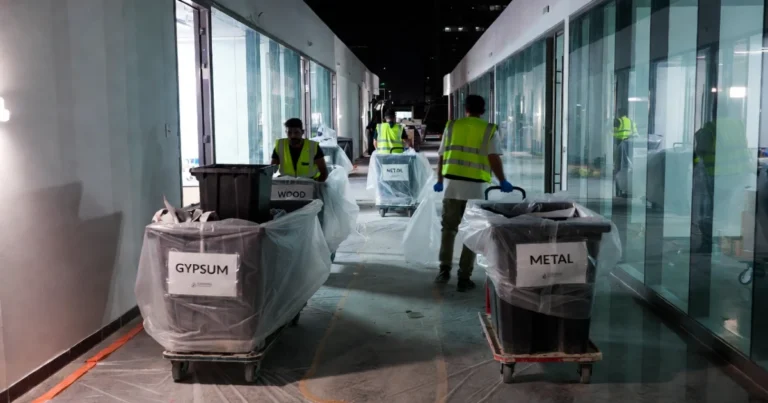
Segregation must happen where waste is generated, not at the skip or facility.
DM-Expected Waste Streams (Typical)
- Concrete & inert waste
- Metal
- Wood
- Gypsum / drywall
- General residual waste
Each stream must have:
- A dedicated, labeled container
- Clear visual identifiers
- Defined responsibility by trade
SOP Rule:
Waste must be segregated before it touches a skip.
Once mixed, AI systems treat it as contamination — even if separation is attempted later.
SOP 2: Skip Management & Placement
How should skips be positioned and managed on site?
DM-Approved Skip Requirements
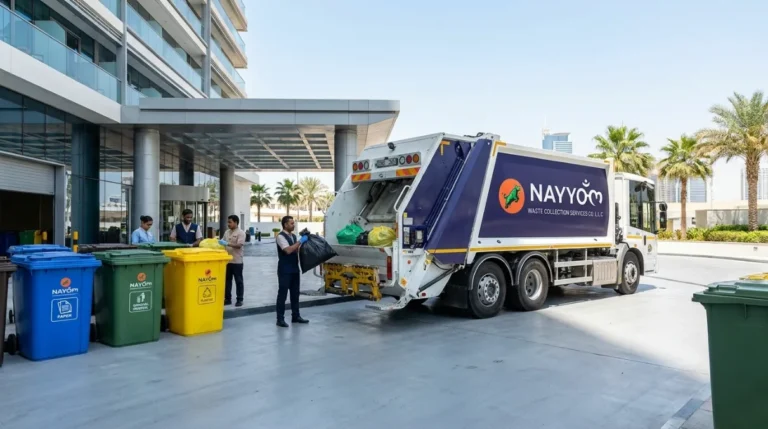
- Only DM-approved skips and haulers
- Skip size must match declared WTN category
- No overfilled or uncovered skips
Best-Practice Placement SOP
- Recycling skips placed closer than general waste
- Clear access paths (no obstruction)
- No cross-contamination between adjacent skips
- Gypsum skips physically separated from wet waste
Why this matters:
Workers choose convenience over instruction every time.
SOP 3: Worker Instructions & Daily Behavior

How do you ensure workers actually follow waste rules?
Dubai sites are:
- Multilingual
- High-pressure
- Heat-intensive
Your SOP must reflect this reality.
Mandatory Elements
- Visual signage in Arabic, English, and Urdu
- Photo-based “YES / NO” examples
- Daily toolbox talk mentions (30 seconds is enough)
High-Impact SOP Language Example:
“Incorrect segregation may result in load rejection and site penalties.”
Pair this with cost-based nudges:
“Correct segregation saves AED 200 per load.”
This works better than sustainability slogans — every time.
SOP 4: Waste Transfer Notes (WTNs)
How do you avoid WTN rejections in Dubai?
In 2026:
- Digital WTNs are mandatory
- Dubai Municipality increasingly requires digital Waste Transfer Notes (WTNs), particularly for projects linked to approved transporters, smart tracking systems, and audited facilities. While transitional practices may still exist, sites relying on paper-based records face higher rejection and audit risk.
- Every load is AI-verified
WTN SOP Checklist
Before pickup:
- Photo of skip contents
- Correct waste category selected
- Skip size matches waste type
- Approved hauler and facility confirmed
After pickup:
- GPS-verified route
- Time-stamped disposal confirmation
- WTN stored digitally for audits
SOP Rule:
No skip leaves site without WTN verification.

SOP 5: Contamination Control
What contamination level triggers rejection?
As low as 5–10%, especially for:
- Gypsum
- Metals
- Wood
SOP Controls
- Pre-pickup visual checks by supervisor
- Contamination logs by trade
- Immediate corrective action (re-segregation or rejection prevention)
In practice, contaminated gypsum loads often result in significant additional costs once re-transport, re-segregation, and higher disposal fees are factored in — frequently running into four-figure dirham amounts per incident.
SOP 6: AI Inspection Readiness
How do you prepare for AI-based inspections?
Dubai Municipality uses AI at:
- Site level
- Transport level
- Facility level
SOP Must Assume:
Dubai Municipality is rapidly expanding AI-enabled monitoring across sites, transport routes, and facilities. While not every site currently operates under continuous AI validation, enforcement is clearly moving in that direction — and sites that behave as if every load will be inspected are the ones avoiding rejections, delays, and penalties.
AI-Ready SOP Practices
- Keep skips clean externally
- Avoid “last-minute dumping”
- Maintain consistent waste categories
- Use fill-level monitoring to avoid overflow
If the AI sees chaos, it flags chaos.
SOP 7: Fire & Hazard Risk Management
Why is waste a safety issue in Dubai?
Waste piles can contain:
- Lithium batteries
- Chemical containers
- Heat-retaining materials
SOP Safety Measures
- No battery disposal in general waste
- Separate hazardous holding area
- Thermal monitoring for large sites
- Clear emergency escalation protocol
Dubai increasingly links waste SOPs to site safety scores.
SOP 8: Recordkeeping, Audits & Reporting
What records must a Dubai site maintain?
Your SOP must define:
- WTN storage method
- Audit access
- Reporting frequency
Required for:
- DM inspections
- Developer audits
- LEED & Al Sa’fat credits
- ESG reporting
WTNs are now audit-grade evidence, not admin paperwork.
SOP 9: Roles & Responsibilities
Who is accountable for waste on site?
Every SOP must assign responsibility clearly:
- Site Engineer: Daily compliance
- HSE Officer: Monitoring & reporting
- Foreman: Trade-level segregation
- Waste Partner: Transport & documentation
If responsibility is unclear, DM holds the site accountable — not the individual.
SOP 10: Continuous Improvement
How do SOPs stay effective?
Waste SOPs must be:
- Reviewed monthly
- Updated after violations
- Adjusted by project phase
Sites that treat SOPs as “living systems” consistently:
- Reduce costs
- Avoid penalties
- Improve audit outcomes
Frequently Asked Questions
Are waste SOPs mandatory in Dubai construction projects?
Yes. Dubai Municipality expects documented and implemented waste procedures on active construction sites. While formats may vary by project size, sites must demonstrate clear segregation, tracking, and compliance practices during inspections.
Can small projects use simplified waste SOPs?
Yes. Villas, fit-outs, and small developments can apply scaled SOPs with fewer waste streams and simpler controls, as long as segregation and documentation requirements are met.
Do waste SOPs help with LEED or Al Sa’fat compliance?
Absolutely. Well-defined waste SOPs support diversion rate tracking, audit documentation, and material reporting, which are essential for LEED and Al Sa’fat credits.
What happens if waste SOPs don’t match actual site practice?
If documented SOPs differ from on-site behavior, inspections may flag discrepancies. This can result in rejected waste loads, corrective actions, or penalties, depending on severity.
Who is responsible for enforcing waste SOPs on site?
Responsibility typically sits with the main contractor, supported by site engineers, HSE officers, and supervisors. Dubai Municipality holds the site entity accountable, not individual workers.
How often should waste SOPs be reviewed or updated?
Best practice is to review SOPs monthly and after:
- Project phase changes
- Rejected loads or violations
- Updates to waste streams or suppliers
Regular updates help keep SOPs aligned with actual site conditions.
Do waste SOPs need to be submitted to Dubai Municipality?
SOPs are not always required to be formally submitted, but they must be available on site during inspections and audits and reflected in daily operations.
What waste streams must be included in a Dubai site SOP?
At a minimum, SOPs should address:
- Concrete and inert waste
- Metal
- Wood
- Gypsum / drywall
- General residual waste
Additional streams may be required depending on project scope.
Are digital Waste Transfer Notes mandatory for SOP compliance?
Dubai increasingly relies on digital WTNs, especially where smart tracking systems are used. SOPs should be designed around digital documentation to reduce audit and rejection risk.
How do waste SOPs reduce project costs?
Effective SOPs help:
- Prevent load rejections
- Reduce re-transport and re-handling
- Improve segregation rebates
- Avoid delays from compliance issues
Over time, this leads to more predictable disposal costs.
Do waste SOPs apply during demolition and early works?
Yes. Demolition and enabling works often generate the highest waste volumes and face increased scrutiny. SOPs should be in place from day one of site activity.
Are waste SOPs linked to site safety performance?
Yes. Dubai inspections increasingly connect waste management, housekeeping, and safety outcomes. Cleaner sites typically experience fewer incidents and smoother inspections.
Can a waste management partner help implement SOPs?
Many contractors choose to work with DM-approved waste partners to help translate SOPs into daily site operations, digital tracking, and audit-ready documentation.
Final Word: Waste SOPs Are Now Operational Infrastructure
In 2026, construction waste management in Dubai is no longer reactive or informal.
It is a core operational system, similar to HSE, quality control, or logistics.
Sites with clear, enforced Waste SOPs:
- Experience fewer rejected loads
- Maintain stronger audit trails
- Reduce cost volatility
- Adapt more easily to tightening digital and AI-led oversight
Sites without them face increasing friction as enforcement, tracking, and reporting expectations continue to rise.
For contractors, developers, and site managers, the message is clear:
Waste SOPs are no longer administrative paperwork — they are site control mechanisms.
For official requirements and updates, always cross-check the latest guidance from Dubai Municipality (dm.gov.ae) and approved waste management channels.
Need Help Implementing Waste SOPs on Your Site?
Navyom supports Dubai construction projects with DM-aligned waste systems, including:
- Site-specific waste SOP implementation
- DM-approved skip supply & segregation planning
- Digital WTN coordination and audit readiness
- Practical, on-site compliance support
👉 Request a site-level waste review with Navyom Waste Collection Services LLC.