Commercial Office Waste Collection Dubai: Monthly Contracts & Pricing
A clean office in Dubai is not simply a housekeeping outcome. Behind it sits a repeatable system for mixed general waste, paper and cardboard, pantry waste, confidential material and occasional e-waste. The right monthly contract makes that system predictable, auditable and easier to budget.
For commercial office waste collection in Dubai, a monthly contract should be built around bin volume, collection frequency, access times, recyclable streams and documentation needs—not employee headcount alone. Small offices may begin with scheduled general waste plus paper/cardboard recycling, while larger or multi-floor offices usually save time and reduce contamination through separately serviced streams and clear reporting.
Why Office Waste Collection in Dubai Deserves a Real Contract
Office waste may look straightforward, but it repeats every working day: pantry residuals, takeaway packaging, clean paper, courier cartons and occasional electronics. Put everything into one stream and the office loses both recycling quality and reliable data for its next quotation.
Dubai Municipality’s Waste and Sewerage Agency publishes technical guidance covering waste storage, collection and transport, duty of care, waste classification and mandatory segregation. Use those requirements with your building rules and the exact waste streams your office generates.
View Dubai Municipality technical guidanceA monthly agreement turns waste collection Dubai operations into a managed service. It states when bins are collected, what can be placed in them, where containers will stand, who responds to overflow or missed pickup, and what reporting is available. This matters in towers with loading-bay booking windows, shared bin rooms, security clearances or night-only service access.
What Is Included in a Commercial Office Waste Collection Dubai Contract?
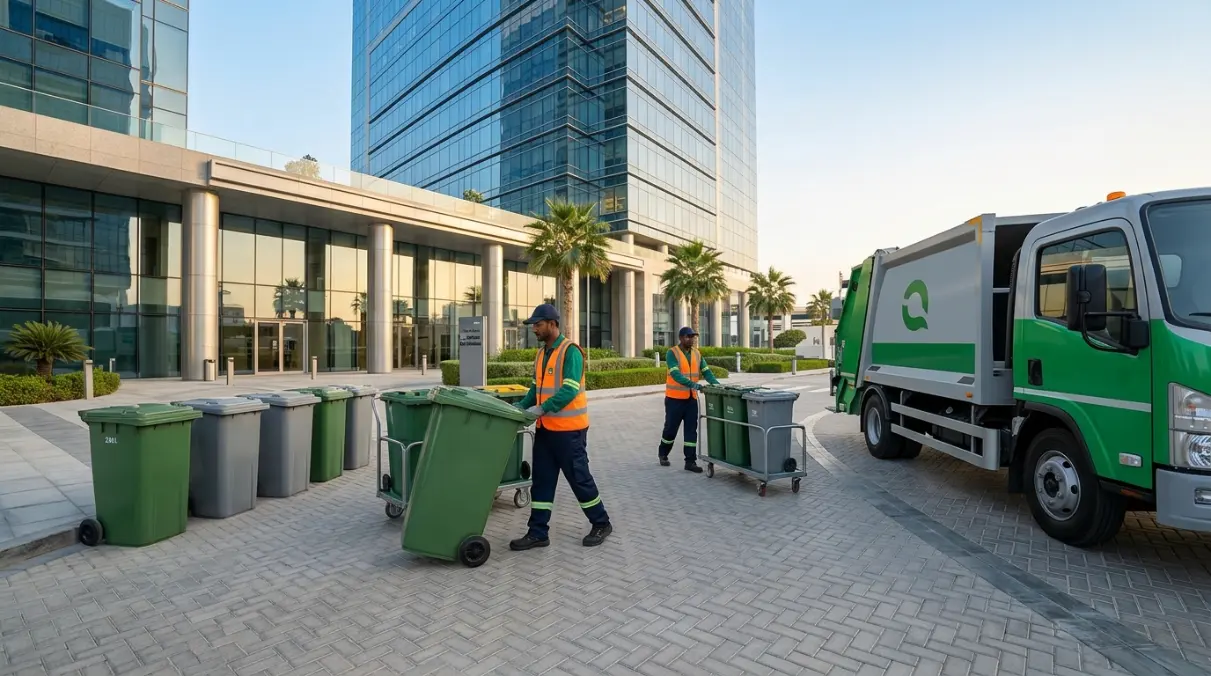
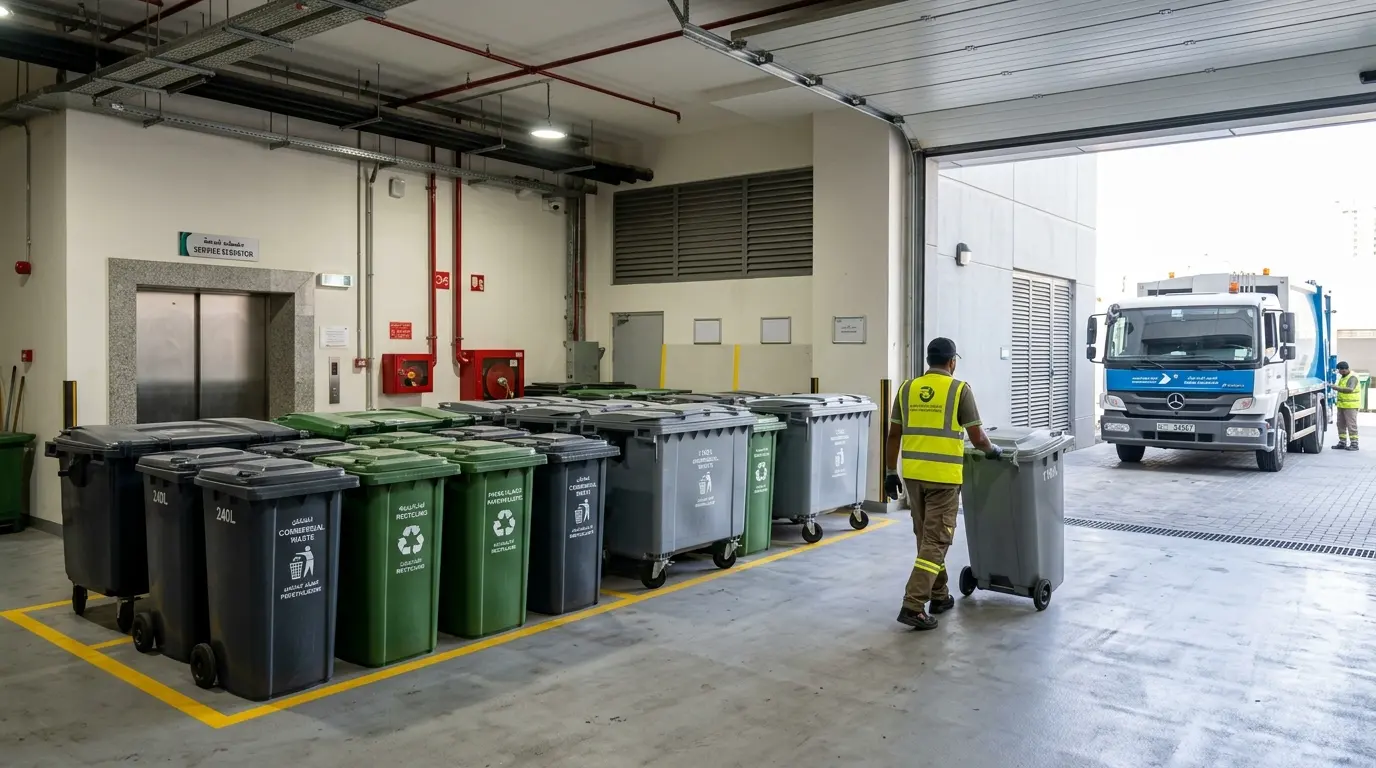
A good contract is more than “collect rubbish twice a week.” It translates your daily waste pattern into a reliable collection plan. The scope normally begins with general office waste and can extend to segregated recyclables, cardboard uplift, pantry or food-related waste, bulky office clear-outs, e-waste coordination and monthly service records.
| Contract component | What it covers | How it changes cost | What to confirm |
|---|---|---|---|
| General waste collection | Non-recyclable office and pantry residuals | Driven by bin size and lifts per week | Accepted material, overflow policy, pickup days |
| Paper/cardboard recycling | Dry office paper and flattened clean boxes | Can reduce mixed-waste volume if kept clean | Contamination threshold and reporting |
| Dry mixed recycling | Approved bottles, cans or packaging | Extra containers/collection may be needed | Exactly which items are accepted |
| Pantry/organic stream | Food scraps where a suitable route exists | Needs more frequent hygiene-led pickup | Storage, liners, odour and pest controls |
| E-waste or bulky items | Monitors, IT hardware, furniture or clean-out loads | Usually priced separately or on request | Data security, chain of custody, approved outlet |
| Reports and records | Collection logs, weights if available, diversion records | May be bundled or an enhanced service | Format needed for ESG or tenant reporting |
♻️ Dubai Waste Pro Insight
The fastest way to overpay is to quote a contract using the number of staff only. Two 80-person offices can produce very different waste: one has a busy pantry and daily deliveries; another is nearly paperless with hybrid attendance. Count bins and observe actual fill levels over five working days before seeking comparable quotes.
Monthly Office Waste Collection Pricing: What You Are Really Paying For
There is no single dependable monthly price for every Dubai office. A quote is shaped by the service pattern. Collection in a tower with controlled loading times is not identical to pickup from a low-rise unit with easy service access. Providers may price bin supply, scheduled lifts, recycling, overflow, bulky waste and reporting separately.
The budgeting bands below are an indicative planning framework for comparing proposals, not a Dubai Municipality tariff or guaranteed quotation. Actual prices vary with provider, bin capacity, waste mix, lift frequency, building arrangement, service hours, contract duration and whether specialist streams are involved.
| Office profile | Typical starting setup | Indicative monthly budget band* | Most common price trigger |
|---|---|---|---|
| Small office Up to about 25 staff | General waste pickup plus dry paper/cardboard arrangement | AED 600–1,500 | Extra lifts caused by pantry waste or shared-bin limits |
| Growing office 25–75 staff | General waste + separate paper/cardboard; scheduled recycling | AED 1,200–3,000 | Collection frequency, access windows and recycling volumes |
| Large corporate floor 75–200 staff | Multi-stream stations, regular service, basic reporting | AED 2,500–6,500 | Multiple floors, pantry activity and reporting requirements |
| Multi-floor/HQ site 200+ staff | Managed service with stream reviews and escalation plan | Site survey and tailored quotation | Loading-bay logistics, volume and service-level commitments |
*Planning ranges only. Request a site-specific quote before approving budgets or a service contract. Regulated, hazardous, clinical, chemical or specialist waste is outside ordinary office general-waste pricing.
The lowest monthly total is not automatically the lowest operating cost. A quote that excludes overflow, after-hours access, recycling records or missed-pickup response time may fail as soon as the office gets busy. Require each bidder to price the same scope.
Try the Waste Management Cost Estimator with your estimated general, paper/cardboard, plastic and occasional e-waste quantities before requesting quotes. It gives procurement a structured starting point and helps identify which stream needs measurement, not guesswork.

General Waste vs Segregated Recycling: Which Office Plan Works Better?
A single general-waste service can make sense for a very small office producing minimal, low-risk material where the building already operates a central recycling system. It becomes a poor fit where paper, cartons or beverage containers form a consistent share of the waste and are being contaminated by pantry residuals.
| Decision point | Mixed-only plan | Segregated office plan |
|---|---|---|
| Setup effort | Quick to start; fewer internal bins | Requires labels, staff briefing and cleaner stations |
| Recycling quality | Recoverable paper/cardboard may be spoiled | Dry recyclables remain easier to collect and account for |
| Cost visibility | Low detail: one recurring residual stream | Shows which materials drive service frequency |
| Reporting value | Limited landfill diversion evidence | Better support for internal sustainability tracking |
| Best use case | Tiny office or building-managed system | Most staffed offices with regular deliveries/pantries |
Segregation is not successful because bins are colourful. It works when bins are placed where the waste occurs: a paper receptacle near print areas, cardboard collection near receiving or stores, and clearly signed residual/recycling points near pantries. The biggest office contamination problem is usually food or liquid entering a dry recycling stream. Emptying drinks and keeping food-soiled packaging out of paper makes a greater difference than adding another decorative recycling station.
How to Set Up a Monthly Office Collection Contract That Actually Works
Before signing a twelve-month agreement, gather one ordinary working week of evidence. Avoid using a company event week or a low-occupancy holiday period unless that is your normal operation. Your goal is to price the normal pattern and separately plan for exceptional loads.
Details to put in the service scope
- Bin specification: container type, quantity and capacity for each stream, plus responsibility for cleaning or replacement.
- Collection schedule: service days, time windows, access route, loading-bay booking needs and holiday arrangements.
- Accepted-waste list: particularly for dry recycling, e-waste, confidential paper or any material that cannot go into a routine office bin.
- Exception handling: the cost and response time for overflow, office moves, furniture disposal, events or IT refresh projects.
- Records: what collection, weight, recycling or diversion data the contractor can supply, and how frequently.
- Change mechanism: how your plan is adjusted if occupancy rises, hybrid work reduces volume or a new pantry changes the waste mix.
📊 Compliance Snapshot
Routine office waste should not be treated as a route for every unwanted item. Batteries, lamps, chemicals, electronic equipment, clinical items or other specialist material can require a different handling route. Dubai Municipality publishes waste technical guidance and information on relevant waste operators; confirm the current applicable process with your contractor or competent compliance adviser before arranging specialist waste movement.
Situation-Based Advice: Match the Plan to Your Office Reality
A small professional office in Business Bay or JLT
Start lean. If the building manages communal waste, first confirm what is already provided and whether your office can access recycling channels. Internally, focus on paper/cardboard and residual waste. A one-off disposal procedure for printer cartridges, batteries and retired electronics is often more appropriate than paying monthly for a stream generated only occasionally.
A corporate office with large pantry areas
Pantry behaviour often dictates frequency. Food, coffee cups with liquid residue and takeaway packaging can fill bins rapidly and contaminate nearby paper recovery. Put residual bins next to food points, keep dry paper/cardboard away from wet areas, and review daily cleaning-team feedback. More frequent residual pickup may be hygienically sensible even when paper collection can remain less frequent.
A serviced office or multi-tenant commercial building
Do not assume the tenant owns the full waste decision. The property manager may control bin rooms, loading bays, access permits and central waste contractor arrangements. Request reporting at tenant or floor level if sustainability data matters to you. Without measurement boundaries, your office cannot credibly claim a specific diversion performance.
An office undergoing a fit-out, relocation or technology refresh
Normal monthly collection is not designed for furniture, fit-out debris or large IT clear-outs. Treat that period as a separate project stream: fit-out waste needs an appropriate route, while computers and screens require suitable e-waste handling and attention to data security.
A Realistic Office Scenario: Finding the Cost Leak Before Renewal
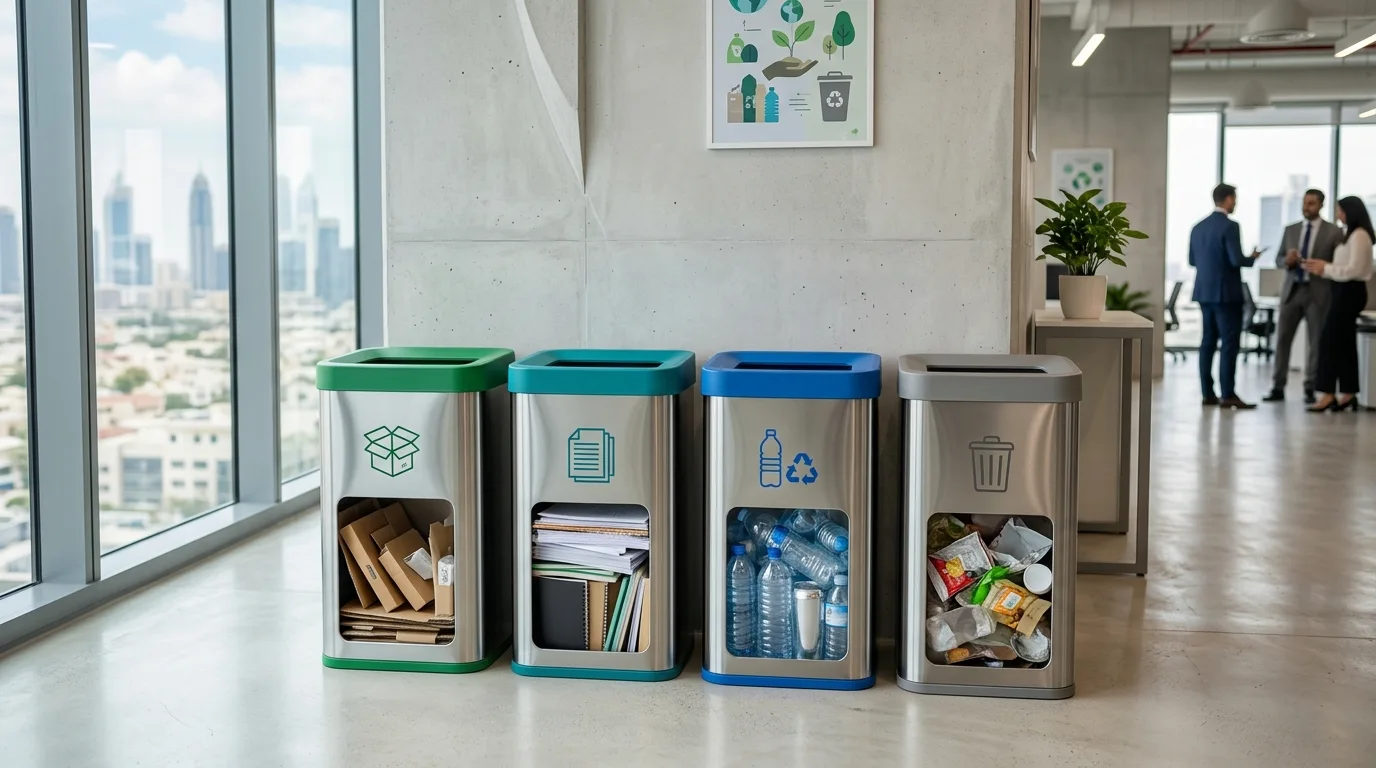
Consider a 120-person office with one main pantry, frequent courier deliveries and shared meeting facilities. Its general bins appear full before every scheduled pickup, so the immediate suggestion is to add more general-waste lifts. A short waste check shows something else: flattened cartons are occupying considerable bin volume, and clean printer paper is being mixed with cups and food remnants.
Instead of buying extra residual capacity first, the manager introduces a cardboard point, paper bins near printers and clearer pantry signs. The next quote requests separate paper/cardboard collection and residual service based on the waste left behind. No saving is assumed; the office now has cleaner data for comparing offers.
Common Pitfalls & When to Ignore This Advice
- Choosing only by monthly price: a cheaper service that omits overflow, access requirements or reporting can become more expensive after operations begin.
- Ordering too many streams too early: if staff cannot follow a complex system, contamination rises. Begin with the streams your office produces consistently and can keep clean.
- Using general bins for irregular specialist items: electronics, batteries, chemicals or regulated materials should not simply disappear into routine office waste.
- Copying another office’s collection frequency: pantry use, occupancy, deliveries, building rules and cleaning shifts change the required service.
- Ignoring the cleaners and security team: they often see bin failures first—overflow, poor labels, blocked access or collections attempted outside authorised times.
There are cases where a separate office-level monthly waste contract is not the best first move. If your landlord already provides a well-documented central collection and recycling programme, duplicating it may add cost without improving outcomes. Similarly, a very small low-waste office may need better internal segregation and an occasional specialist uplift rather than a complex multi-stream subscription. Review the building arrangement before procuring a standalone service.
How DubaiWaste.com Tools Help You Make a Better Decision
Before procurement, describe your office in measurable terms: number and capacity of bins, observed fill levels, access windows and the clean recyclable streams you can actually maintain. Use the Waste Management Cost Estimator as a planning worksheet, then review mixed waste vs segregated waste in Dubai before finalising the service scope.
Where your office produces unfamiliar materials during refurbishment, an IT replacement or special operation, consult the waste types in Dubai guide before placing those materials into an ordinary collection. This is where cost-saving advice must stop and classification advice must begin.
Put your monthly contract on a measurable basis
Before renewing a contract, record one normal week of bin use and identify what is entering residual waste unnecessarily. That evidence gives a provider a fair scope to price and gives your office a defensible basis for reviewing performance.
Try the Cost Estimator Request a tailored office waste quoteFrequently Asked Questions
How much does commercial office waste collection cost in Dubai per month?
It depends on bin capacity, number of pickups, building access, recycling streams and service extras. As an indicative budgeting guide, smaller offices may plan from hundreds to low thousands of dirhams monthly, while large offices require tailored quotes. Always compare quotes against an identical scope.
Is a monthly office waste contract better than booking pickups when bins are full?
Typically, yes for an occupied office with predictable waste. Scheduled service helps prevent overflow, clarifies budgeting and supports regular recycling. Ad-hoc pickups may still suit a very small office or occasional bulky and electronic waste that is not part of routine operations.
Should a Dubai office separate paper and cardboard from general waste?
Usually, yes where clean paper and cardboard are generated consistently. Keeping dry recyclables separate from food and liquids improves their recovery potential and makes the office’s waste profile easier to measure. Confirm accepted materials and collection routes with your service provider.
Can office electronics and batteries go into a normal general waste bin?
No. Electronics, batteries and other specialist items should be identified separately and directed through an appropriate collection or recycling route. For IT equipment, the business should also manage data security and request suitable records where required.
Do Dubai offices need waste collection records or Waste Transfer Notes?
It depends on the waste stream, premises arrangement and applicable collection process. Businesses seeking audit or ESG evidence should request appropriate service records. For specialist or regulated waste, confirm current documentation and contractor requirements rather than relying on a routine office waste arrangement.
Can a tenant use the building’s existing office waste contractor?
Often, yes, if the building provides an adequate collection and recycling system. Ask the property manager about accepted streams, service access and whether tenant-level reporting is available. A separate contract is useful only where the shared system cannot meet operational or reporting needs.
How do I reduce the cost of office waste collection without risking poor service?
Measure bin fill for a normal week, separate clean high-volume recyclables, reduce contamination and quote a consistent service scope. The aim is not simply fewer pickups; it is the right pickups for the remaining residual waste and separately recoverable materials.
Your Fast-Track Cheat Sheet: 3 Actions to Take
1. Measure before you quote. Log bin size, fill level, collection frequency and the visible paper/cardboard share across one normal working week.
2. Keep simple dry recyclables clean. For most offices, paper and flattened cardboard are the practical first streams to separate from wet pantry residuals.
3. Contract for your real operation. Include access windows, accepted waste, overflow terms, specialist-waste exclusions, reporting and a review point after the first month.