Scheduled Waste Collection Plans Dubai: Smart Service Contracts for Businesses
Scheduled Waste Collection Plans Dubai are no longer just an admin decision for facilities teams. For offices, restaurants, warehouses, clinics, retail centres, factories, and construction-linked sites, the right collection plan can reduce overflow, improve recycling value, support documentation, and prevent messy last-minute disposal problems.
The Short Answer
The best scheduled waste collection plan in Dubai matches your waste volume, waste type, storage space, operating hours, segregation setup, and documentation needs. A cheap monthly pickup can become expensive if bins overflow, recyclable material is contaminated, regulated waste is handled incorrectly, or collection records are missing.
A good service contract should not simply say “collect waste weekly.” It should define what is collected, how often it is collected, how waste is stored, which streams are segregated, what happens during peak periods, who keeps records, and what action is taken if volumes change. That level of detail matters in Dubai because many sites operate in high-density commercial buildings, industrial zones, free zones, shopping districts, hospitality clusters, and construction-heavy areas where access, timing, and compliance expectations can vary.
For a small office, the right plan may be a compact general waste and cardboard collection schedule with a recycling add-on. For a restaurant, organic waste, packaging, glass, grease-related controls, odour prevention, and evening collection windows may be more important. For a warehouse in Jebel Ali, DIP, Dubai Industrial City, or Al Quoz, the plan may need pallet wrap, cartons, scrap, wood, metal, plastic, mixed commercial waste, and occasional bulky loads. The contract must fit the site, not the other way around.
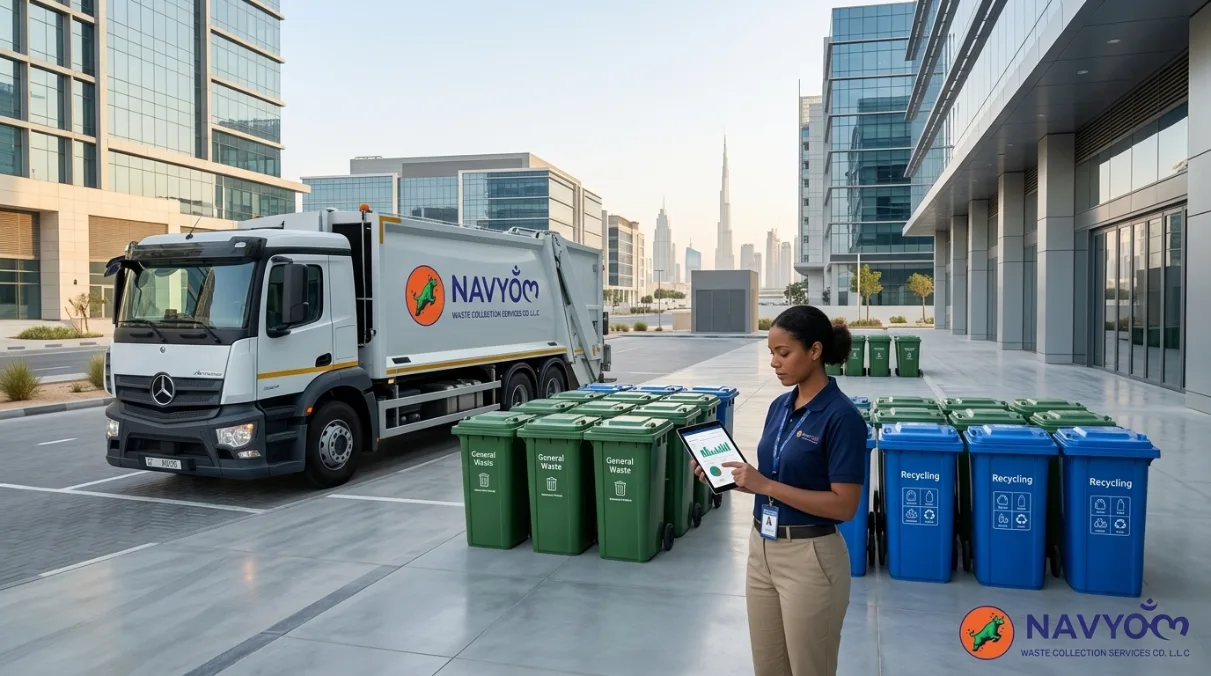
Why Scheduled Waste Collection Plans Dubai Matter More Than One-Off Pickups
One-off waste collection works when waste is irregular: a renovation clean-out, a stockroom purge, an end-of-lease clearance, or a short-term skip requirement. Scheduled waste collection is different. It is designed for waste that appears every day or every week because the business is operating normally.
That difference matters. Daily waste behaves like a system. If cardboard is not collected often enough, it blocks corridors and loading areas. If food waste sits too long, odour and pest pressure rise. If general waste is mixed with recyclables, recycling value falls. If a clinic treats all waste like normal office waste, it creates risk. If a warehouse lets stretch film, carton, wood, and damaged stock pile up, the site becomes harder to manage and more expensive to clear.
In Dubai, scheduled plans are especially useful because businesses often deal with tight service roads, shared loading bays, tower access rules, mall timings, gated communities, industrial security, free zone procedures, and hot weather that makes storage discipline more important. A plan that looks fine on paper can fail quickly if trucks arrive at the wrong gate, bins are not accessible, the collection window clashes with deliveries, or the waste stream was estimated too low.
📊 Compliance Snapshot
For normal commercial waste, the priority is usually correct collection, cleanliness, storage, segregation, and records. For medical, hazardous, industrial, construction, oily, chemical, or special waste streams, the process can require more specific handling, contractor approval, transport controls, and documentation. The safest contract language says exactly which waste streams are included and which are excluded.
What a Proper Scheduled Waste Collection Plan Should Include
A professional collection plan should be more specific than a price and pickup frequency. The best service contracts describe how the waste operation will run, who is responsible for each step, and how the plan will be adjusted when site conditions change.
At minimum, your plan should cover these areas:
- Waste stream list: general waste, cardboard, plastic, metal, glass, food waste, e-waste, scrap, construction debris, medical waste, hazardous waste, or other site-specific materials.
- Bin and container setup: bin size, skip size, compactor use, colour coding, labels, cage storage, or dedicated recycling zones.
- Collection frequency: daily, alternate-day, weekly, monthly, on-call, or hybrid scheduling for peak days.
- Access plan: loading bay, gate number, security process, service lift timing, route restrictions, and truck access clearance.
- Documentation: invoices, service logs, waste transfer records where applicable, recycling reports, and internal sign-off.
- Contamination handling: what happens if food, liquid, hazardous material, or non-accepted waste enters a recycling stream.
- Review period: monthly or quarterly checks to adjust frequency, bin capacity, segregation, or service scope.
The review period is often where businesses save money. Many companies choose a contract based on a rough guess, then keep paying for a plan that no longer fits. A new tenant mix, higher footfall, seasonal hospitality demand, warehouse expansion, Ramadan operations, school term changes, or construction phase shift can change waste volume fast. A scheduled plan should have enough structure to control risk and enough flexibility to adapt.
Step-by-Step: How to Build a Better Waste Collection Schedule
Use this process before signing a new waste management Dubai contract or renewing an existing one. It is simple enough for a facility manager but detailed enough to prevent the common mistakes that cause overflow, rejected recyclable loads, and unclear service expectations.
1. Map your waste streams honestly
Walk the site and list what is actually thrown away. Do not rely only on invoices or assumptions. Office floors may produce paper, pantry waste, plastic bottles, and cardboard from deliveries. A restaurant may produce food waste, glass, cans, packaging, and general waste. A warehouse may produce shrink wrap, cartons, pallets, damaged stock, straps, labels, and mixed waste from staff areas.
2. Estimate volume by day, not just by month
Monthly volume can hide operational stress. A site may look manageable on average but overflow every Thursday, after weekend events, during stock deliveries, or after large housekeeping shifts. Ask the team which days bins are full before collection. That answer is often more useful than a spreadsheet.
3. Separate clean recyclables from wet or mixed waste
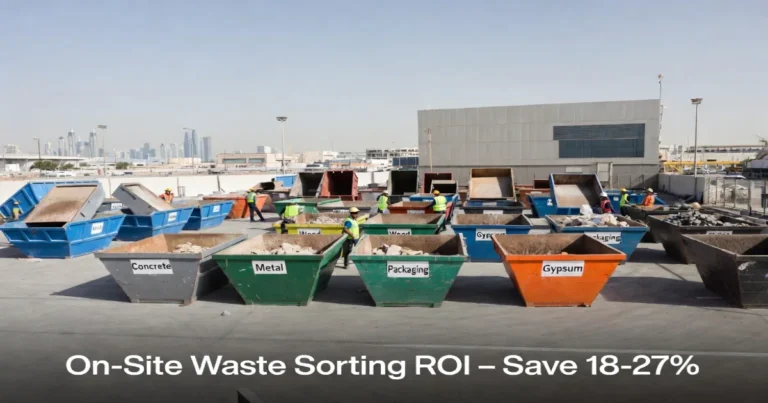
Recycling in Dubai becomes easier and more cost-effective when material is clean, dry, and separated close to the source. Cardboard should not sit under leaking food bags. Plastic film should not be mixed with oily material. Glass should not be buried inside general waste. Segregation does not need to be complicated, but it must be consistent.
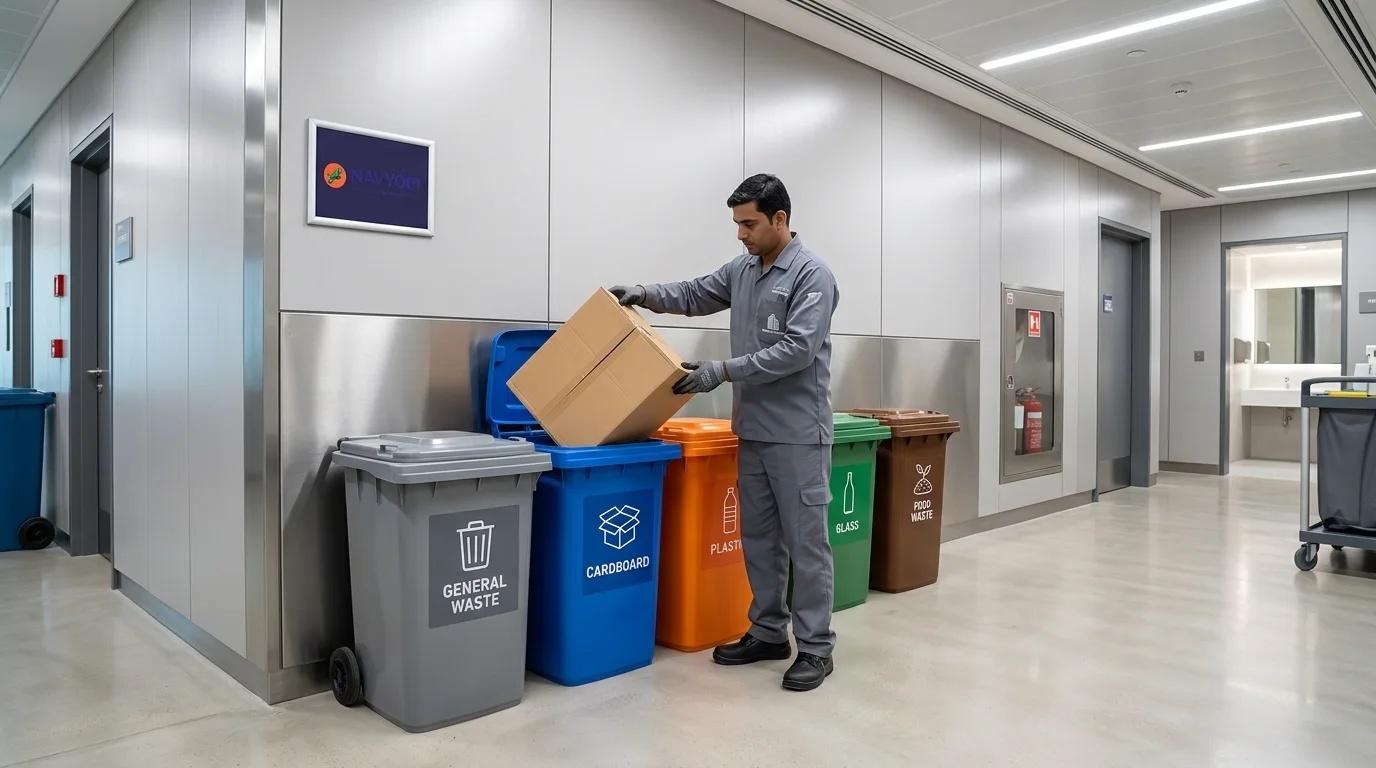
4. Match frequency to risk
Dry office recyclables may tolerate less frequent pickup. Food waste, odour-prone waste, high-volume general waste, and waste stored in warm outdoor areas usually need tighter scheduling. A clinic, laboratory, industrial site, or construction project should not copy an office plan just because the monthly price looks attractive.
5. Confirm what the contractor will not collect
This is where many service contracts become weak. A provider may collect general waste but not hazardous waste. They may collect cardboard but not contaminated packaging. They may provide skips but not handle specific regulated materials. Your contract should state exclusions clearly so staff do not place the wrong waste into the wrong container.
6. Add reporting that matches your business needs
A small shop may only need service confirmation and invoices. A hotel, ESG-led business, school, developer, or industrial operator may need diversion estimates, recycling reports, disposal documentation, and monthly summaries. If you need reporting, build it into the contract at the start.
♻️ Dubai Waste Pro Insight
The cheapest plan is not always the lowest-cost plan. If a low-frequency contract causes overflow, extra pickups, contamination, pest complaints, rejected recyclable material, or emergency clearances, the monthly invoice may look small while the operational cost quietly rises.
Scheduled Collection vs Skip Hire vs On-Demand Pickup
Businesses often compare collection options only by price. A better comparison looks at predictability, waste type, storage space, staff discipline, documentation, and whether the waste is recurring or occasional.
| Option | Best use case | Strengths | Watch-outs |
|---|---|---|---|
| Scheduled waste collection | Recurring business waste from offices, hospitality, warehouses, retail, schools, clinics, and industrial sites | Predictable, cleaner storage, easier reporting, better for recycling routines, fewer emergency pickups | Needs accurate volume estimates and periodic review when operations change |
| Skip hire | Construction waste Dubai, renovation debris, bulky clear-outs, fit-out works, landscaping waste, and short-term projects | Good for large volumes, heavy material, and project-based disposal | Wrong skip size, mixed prohibited waste, poor placement, or delayed exchange can cause cost and access problems |
| On-demand pickup | Irregular waste, one-time clearances, overflow recovery, event cleanup, or temporary surges | Flexible and useful when volume is uncertain | Can become expensive and reactive if used for waste that appears every week |
| Hybrid plan | Businesses with regular waste plus seasonal, event-based, or project-based spikes | Combines baseline control with flexible extra collections | Requires clear triggers for extra pickups and a named contact for approvals |
How Advice Changes by Business Type
There is no universal scheduled waste collection plan for Dubai businesses. The right setup depends on what the site produces, how quickly waste becomes a hygiene issue, and how much recycling value can be protected through segregation.
Offices and corporate floors
Focus on pantry waste, paper, cardboard from deliveries, plastic bottles, and general waste. Weekly or twice-weekly recycling may work if storage is clean and dry, but pantry and general waste often need more frequent collection in busy offices.
Restaurants, cafés, and hotels
Prioritise odour control, food waste, packaging, glass, cans, and back-of-house timing. Collection windows should avoid guest disruption and delivery congestion. Wet waste should never be allowed to contaminate clean cardboard or dry recyclables.
Warehouses and logistics sites
Cartons, stretch film, pallets, straps, labels, damaged stock, and staff-area waste usually need separate handling. The best plans often combine scheduled recycling collection with flexible bulky or mixed waste pickups.
Clinics and regulated facilities
Normal office waste, packaging, and regulated healthcare-related waste should not be treated as one stream. Confirm the exact waste categories, storage rules, collection route, and documentation with a qualified provider before signing a general contract.
Retail stores and malls
Backroom space is usually limited, so timing matters. Packaging waste often spikes after stock deliveries. A plan should respect mall access rules, service corridors, and the need to move waste without disrupting customers.
Construction and fit-out projects
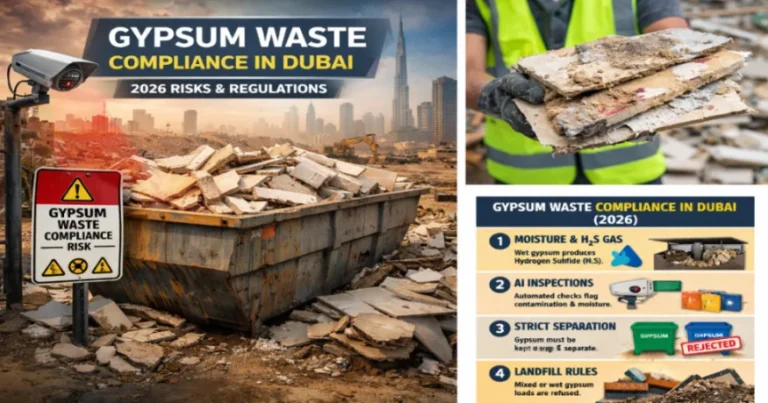
Do not rely on a normal commercial bin plan for rubble, gypsum, wood, tiles, metal, or fit-out debris. Use a skip or project-specific route and review how to avoid construction waste fines in Dubai before work starts.
What Businesses Usually Get Wrong in Dubai
The most common mistake is choosing a scheduled collection plan based only on monthly price. Procurement wants a neat figure, operations wants bins gone, sustainability wants recycling, and finance wants fewer extras. A good contract has to balance all four.
Another common mistake is treating “mixed waste” as harmless. Mixed waste may be convenient at the bin, but it can reduce recycling value and make disposal less transparent. If clean cardboard, plastic film, metal, or glass are mixed with wet general waste, the site loses the chance to divert material from landfill or recovery routes. For many businesses, the easiest first improvement is not an advanced recycling system. It is simply keeping clean dry material away from wet contaminated waste.
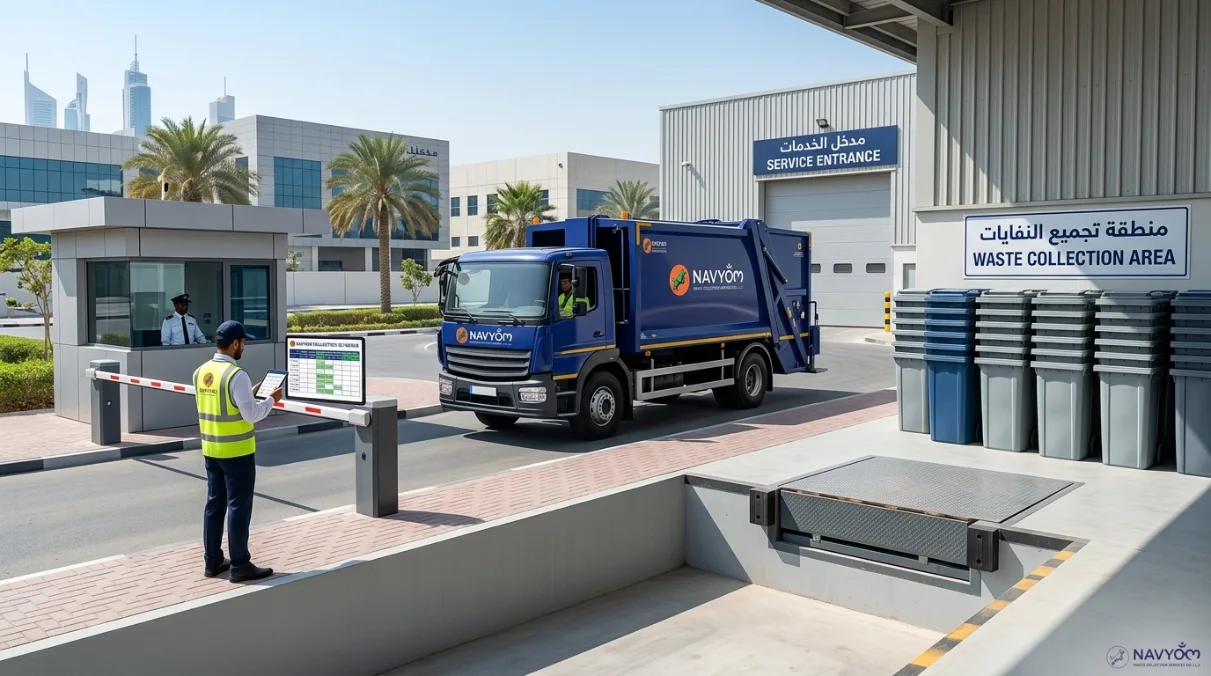
Businesses also underestimate access. A collection schedule can fail because a truck cannot enter at the agreed time, a security gate has no approval, the bin room is blocked, the loading bay is occupied, or staff place waste outside the agreed location. These are not minor details. They decide whether a plan works every week.
Common Pitfalls & When to Ignore This Advice
Most businesses benefit from structured scheduled collection, but there are moments when a fixed plan is not the best answer. The key is knowing when routine helps and when flexibility is safer.
Common pitfalls to avoid
- Under-sizing bins to save money: this often leads to overflow, odour, complaints, and extra pickups.
- Copying another tenant’s plan: two businesses in the same building can produce completely different waste streams.
- Mixing clean recyclables with wet waste: contamination can destroy recycling value quickly.
- Ignoring peak days: a weekly average does not reveal the days when the site actually fails.
- Leaving exclusions vague: unclear contracts lead to disputes when unusual waste appears.
- Forgetting documentation: service records and waste-related documents matter more when the site has compliance, ESG, or audit requirements.
When not to rely on a standard scheduled plan
Ignore standard advice if your waste is temporary, heavy, regulated, hazardous, medical, chemical, construction-based, or generated by a short project. In those cases, use a project-specific plan, a specialist waste contractor, a skip arrangement, or a regulated collection route. A normal business waste contract should not be stretched to cover waste it was never designed to handle.
How to Use DubaiWaste.com Tools Before Choosing a Contract
Before signing a 6-month or 12-month service contract, use simple numbers to test the plan. You do not need perfect data. You need enough clarity to avoid a contract that is obviously too small, too vague, or too reactive.
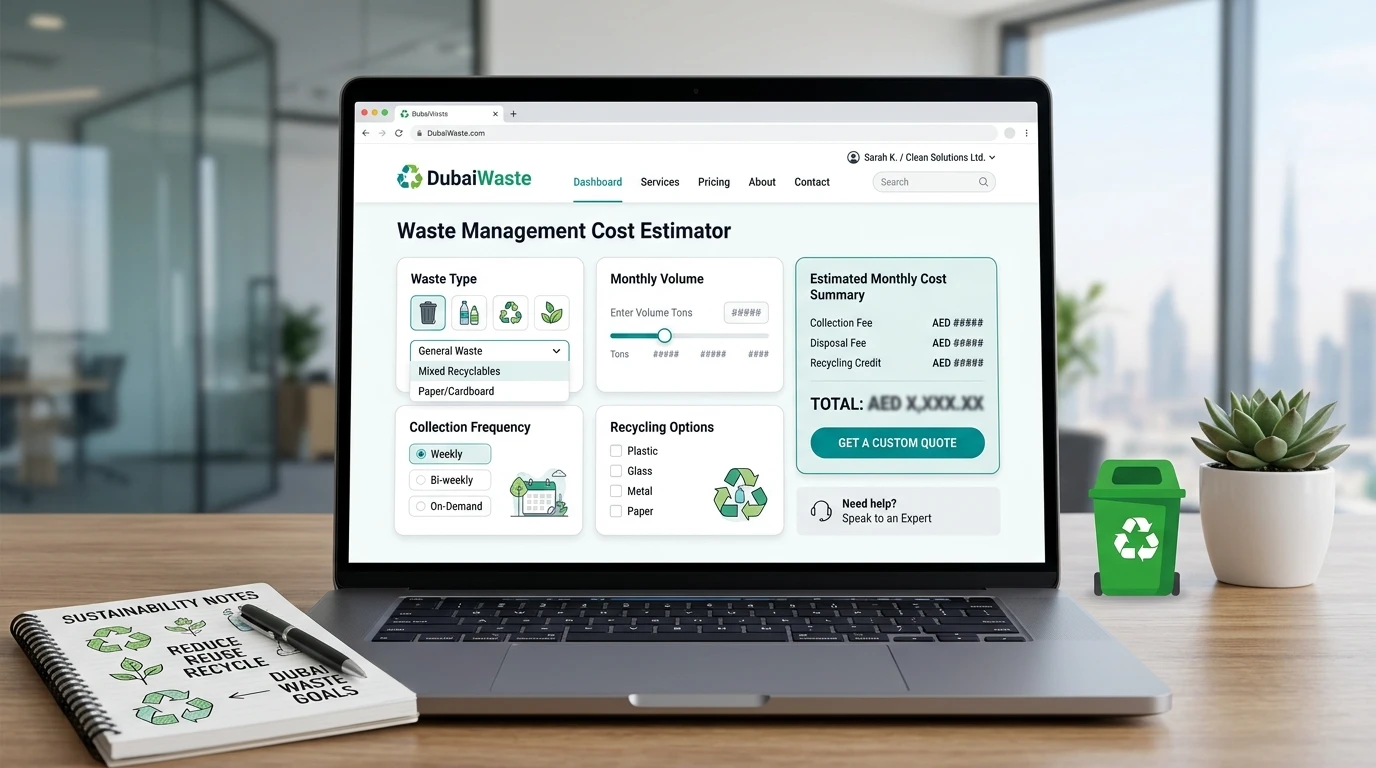
Start with the waste management cost estimator to compare likely costs by waste type, volume, and service pattern. If your site separates cardboard, plastic, metal, or other recyclable material, use the recycling savings calculator to see whether diversion may improve cost control or reporting value. For businesses worried about documentation gaps, the waste fine risk checker can help you spot weak points before a problem appears.
Real-World Example: A Dubai Warehouse with Rising Waste Costs
Imagine a mid-size warehouse in Jebel Ali receiving imported goods five days a week. The site started with two weekly general waste pickups because the monthly price looked reasonable. After three months, staff began leaving flattened cartons near the bin area. Plastic wrap was mixed with pantry waste. Pallets stacked near the loading bay. The contractor added extra pickups, but the site still looked untidy before collection days.
The better plan was not simply “more pickups.” The warehouse needed a separate cardboard and plastic film stream, a defined pallet storage area, a general waste schedule tied to staff-area volume, and an on-call bulky waste clause for damaged stock or seasonal surges. Once dry material was separated, the general waste load reduced and the site became easier to manage. The monthly contract became more useful because it matched the real waste stream mix.
Put This Into Practice
If your bins overflow, your recycling is contaminated, or your contractor terms are unclear, your scheduled collection plan probably needs a reset. Start with your waste stream mix, estimate the weekly volume honestly, then request a service plan that separates normal waste, recyclable material, and any regulated streams properly.
Need a clearer starting point? Try the Waste Management Cost Estimator, then request a free site audit or tailored quote for your actual waste stream, pickup frequency, and storage setup.
FAQs About Scheduled Waste Collection Plans Dubai
How often should a business schedule waste collection in Dubai?
It depends on waste type, volume, odour risk, storage space, and building access. Offices may manage with weekly or twice-weekly recycling, while restaurants, hotels, clinics, and busy warehouses often need more frequent collection for general or wet waste.
Is scheduled waste collection cheaper than on-demand pickup?
Typically, scheduled collection is more cost-effective for recurring waste because it reduces emergency pickups and overflow issues. On-demand pickup is better for occasional clear-outs, temporary projects, or unusual bulky waste that does not appear every week.
Do businesses in Dubai need a licensed waste contractor?
For commercial waste, businesses should use an appropriately approved or permitted waste service provider for the waste stream being handled. This is especially important for regulated, hazardous, medical, construction, oily, chemical, or industrial waste types.
Can mixed waste and recycling be collected under one service contract?
Yes, but the contract should define each stream clearly. Mixed general waste, cardboard, plastic, glass, metal, food waste, and regulated materials may need different bins, timings, vehicles, documentation, or handling routes depending on the site.
What should I check before signing a waste collection contract?
Check waste types included, exclusions, bin sizes, pickup frequency, access timing, overflow charges, reporting, recycling options, contamination rules, and documentation responsibilities. A clear contract prevents confusion when volumes change or unusual waste appears.
Can restaurants use the same waste collection plan as offices?
No, not usually. Restaurants create more wet, odour-prone, packaging, glass, and food-related waste. They normally need tighter collection timing, better back-of-house segregation, and clearer hygiene controls than a typical office waste plan.
What happens if recyclable waste is contaminated?
Contaminated recyclables may lose value or be redirected to a different handling route. Food residue, liquids, oily packaging, mixed general waste, or hazardous material can make otherwise recyclable cardboard, plastic, or metal harder to recover.
When should I review my scheduled collection plan?
Review it monthly during the first contract period, then quarterly once the system is stable. Review sooner if you add staff, change tenants, expand operations, open a new kitchen, start fit-out work, or see repeated overflow.
Your Fast-Track Cheat Sheet: Top 3 Actions to Take
1. Audit your real waste streams. Do a site walk and separate recurring general waste from recyclable, bulky, wet, construction, medical, hazardous, or special waste.
2. Match collection frequency to operational risk. High-volume, wet, odour-prone, or tightly stored waste needs a more disciplined schedule than clean dry recyclables.
3. Put the details in the contract. Define bins, timing, access, exclusions, contamination rules, records, reporting, review periods, and extra pickup triggers before service starts.